
How To
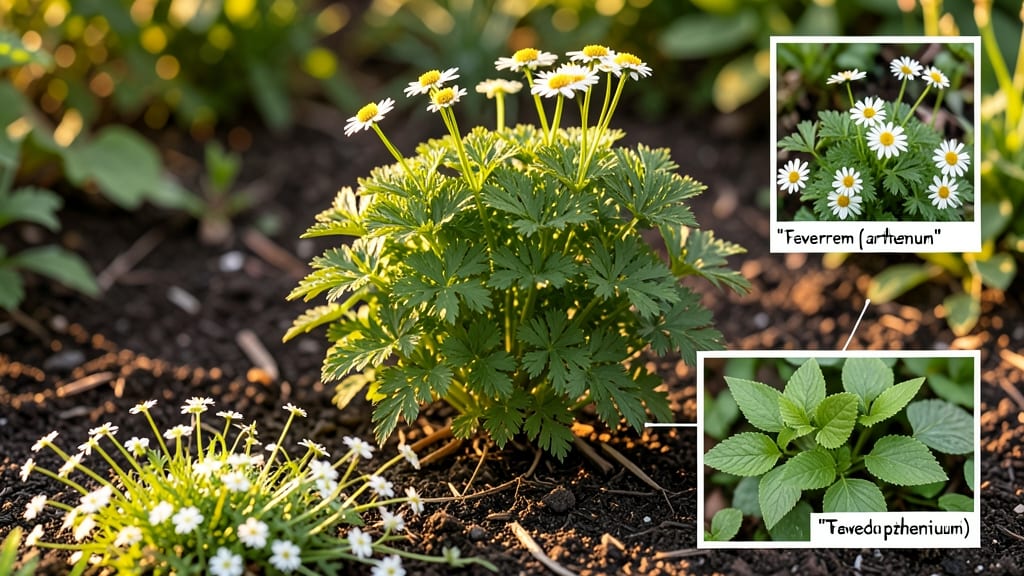
Feverfew isn't a weed but a fast-spreading perennial herb that gardeners often treat like one because of its aggressive growth habits. Its self-seeding nature and ability to colonize disturbed soil make it behave invasively, especially when left unchecked in home gardens.
Feverfew's reputation as a garden nuisance comes from its rhizomatous roots and prolific seed production, which allow it to outcompete other plants. 🌱 Unlike true weeds, however, feverfew has valuable medicinal properties—its leaves contain compounds used for migraines and inflammation.
The key difference lies in intent: while weeds are unwanted by definition, feverfew's spread is simply a natural survival strategy when given space. Many gardeners intentionally grow it in contained areas to enjoy its benefits while preventing unwanted spread.
This dual nature makes feverfew a fascinating case study in plant management. The herb's ability to thrive in poor soil conditions and its rapid colonization rate mirror invasive weeds, but its controlled cultivation reveals its true value as a beneficial plant.
Understanding these traits helps gardeners decide whether to embrace or eradicate feverfew in their landscapes.
💡 In This Article
- Botanical Traits That Make Feverfew Act Like a Weed
- Garden Control Strategies for Feverfew Spread
Botanical traits that make feverfew act like a weed
Feverfew's weed-like behavior stems from its rhizomatous root system, which spreads horizontally underground, creating new shoots every 10-15 centimeters. This growth pattern mirrors invasive weeds like creeping charlie (Glechoma hederacea), allowing feverfew to quickly colonize garden beds.
The roots store nutrients, enabling the plant to regrow vigorously even after mowing or partial removal. 🌱
Its self-seeding habit is equally aggressive—each mature plant produces 50-100 seeds per stem, which scatter easily via wind or water. Unlike annual weeds that die back yearly, feverfew's perennial nature means it returns stronger each season.
The leaves also contain parthenolide, a compound that suppresses competing plants' growth, giving feverfew a competitive edge in disturbed soils.
Visually, feverfew resembles common weeds with its fine, fern-like foliage and white daisy-like flowers that bloom from spring to fall. The key difference is its controlled growth when managed properly—unlike true weeds, feverfew's spread is preventable with the right techniques.
Its ability to thrive in poor, compacted soil (pH 5.5-7.5) further contributes to its weed-like persistence.
Gardeners often confuse feverfew with dandelions because both emerge early in spring and spread rapidly. However, feverfew's aromatic leaves (releasing a minty scent when crushed) and yellow-green stems distinguish it from true weeds. The plant's medicinal value—used historically for headaches and fever—adds another layer to its complex reputation.
What most people don't realize is that feverfew's spread is an evolutionary adaptation for survival, not malice. Its fast growth rate (up to 30 cm/year) and deep root penetration (reaching 60 cm deep) allow it to outcompete slower-growing plants in disturbed environments.
This biological strategy explains why it thrives in garden edges, pathways, and neglected areas.
Consider these key differences between feverfew and true weeds:
- Growth Intent: Feverfew spreads naturally, while weeds are unwanted by definition
- Root System: Feverfew's rhizomes store energy for regrowth; most weeds rely on annual seeds
- Soil Tolerance: Feverfew thrives in poor-quality soil; weeds often need fertile conditions
- Value: Feverfew has medicinal uses; weeds provide no benefits