
Advice
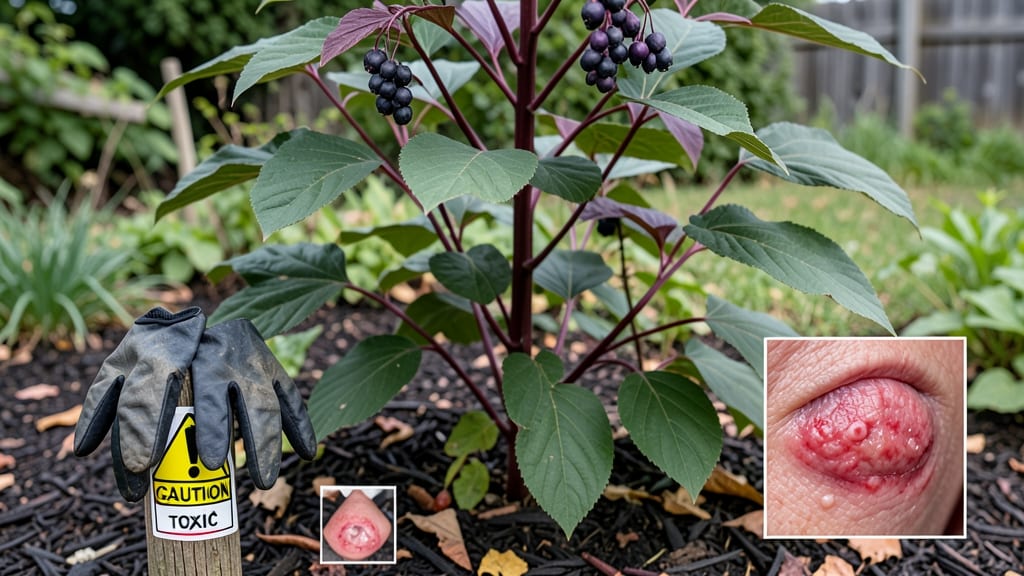
This pokeweed is poisonous to touch because its sap and berries contain harmful phytochemicals like phytolaccatoxin, which may trigger rashes or allergic reactions. Always wear protective gloves and wash your skin immediately after contact to minimize risks.
Pokeweed's toxicity comes from its phytochemical cocktail, primarily phytolaccatoxin, which disrupts skin cells upon contact. Some people experience mild redness, while others develop severe blisters or swelling, especially with prolonged exposure. 🌿 The plant's sap is particularly aggressive—even brushing against it can leave lingering irritation.
If you're working in gardens or foraging, treating pokeweed with caution is non-negotiable, as its effects can persist for hours after contact.
For those who accidentally touch it, immediate action is key: wash the affected area with soap and water, then apply a cold compress to reduce inflammation. Over-the-counter hydrocortisone cream can help alleviate discomfort, but severe reactions may require medical attention.
Always dispose of pokeweed properly—burning or sealing it in a bag prevents accidental spread of its irritating compounds.
💡 In This Article
- Chemical Irritants in Pokeweed and Skin Reaction Mechanisms
- Safe Handling and Removal of Pokeweed from Gardens
Chemical irritants in pokeweed and skin reaction mechanisms
The real danger of pokeweed lies in its phytolaccatoxin, a potent irritant found in all plant parts but concentrated in the sap and ripe berries.
This compound belongs to a class of phytochemicals called resiniferatoxins, which disrupt skin cell membranes by binding to receptors that regulate pain and inflammation.
When the sap touches your skin, it triggers an immune response similar to a mild chemical burn, causing redness, itching, or blistering within 15-30 minutes of exposure.
Pokeweed also contains saponins (up to 1.5% dry weight in leaves), which create a soapy texture when mixed with water and further irritate skin by breaking down cell walls.
The severity of reactions varies: some people develop mild rashes, while others experience severe dermatitis or even secondary infections if they scratch the affected area. Children and those with sensitive skin are particularly vulnerable, as their thinner skin absorbs these compounds more easily.
What makes pokeweed uniquely dangerous is how its toxins persist. The sap remains active for hours after contact, meaning even indirect exposure—like touching contaminated tools or clothing—can cause reactions.
The plant’s purple-black berries are especially risky: their high moisture content makes the toxins more accessible to skin, while their sticky residue clings to fingers, spreading irritation further.
Interestingly, the plant’s toxicity isn’t uniform. Younger leaves contain less phytolaccatoxin than mature ones, but they still pose risks. The roots, however, are the most concentrated source of toxins, with levels 3-5 times higher than leaves.
This explains why accidental ingestion (e.g., from foraging mistakes) can lead to systemic symptoms like nausea or vomiting, while skin contact primarily causes localized irritation.
Your skin’s natural oils actually amplify the irritation by helping the phytochemicals penetrate deeper. This is why washing with soap and water immediately after contact is critical—it removes both the sap and your skin’s oils, reducing absorption.
For comparison, pokeweed’s irritants are roughly 10 times more potent than those in poison ivy, though less likely to cause systemic reactions.
Here’s what happens under the microscope: phytolaccatoxin binds to TRPV1 receptors on nerve endings, triggering a cascade of inflammatory mediators like histamine and prostaglandins. This explains the classic symptoms—redness, swelling, and intense itching—that can last 3-7 days without treatment.
The good news? Most reactions resolve on their own, but severe cases may require medical intervention to prevent secondary infections.