
Flowers
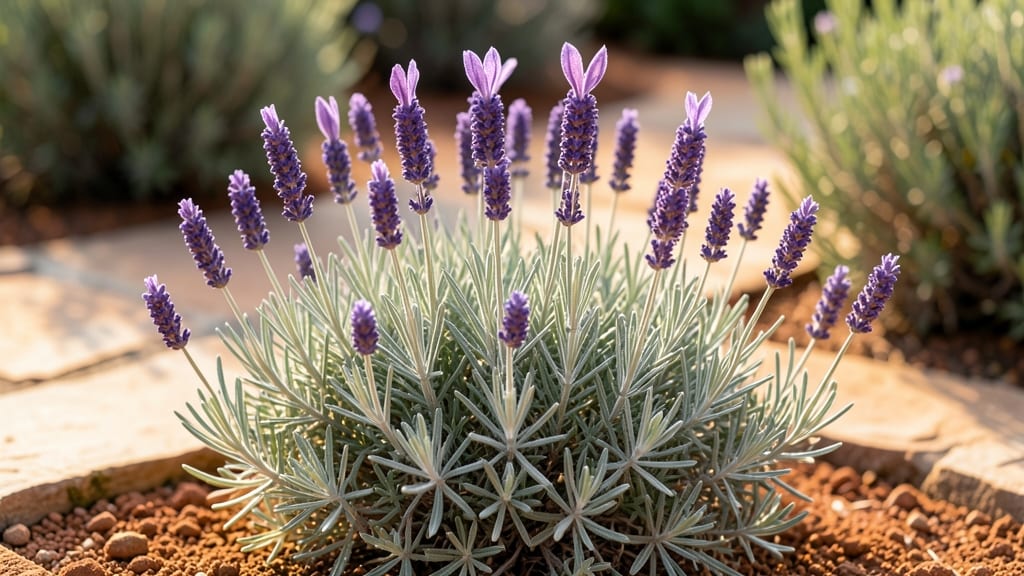
Spanish lavender is a perennial but behaves like a half-hardy annual in cold climates due to its sensitivity to frost, often dying back to the ground before regrowing from the roots in spring.
Spanish lavender's perennial nature becomes a bit tricky when winter rolls around. 🌱 While its roots stay alive underground in USDA zones 7-9, even a light frost can kill the above-ground growth, making it appear annual in colder regions.
This Mediterranean native thrives in warm weather but struggles with prolonged cold—think of it as a plant that goes dormant until spring warmth triggers regrowth from those hardy roots. The key difference from true annuals? Spanish lavender's roots survive, giving it a second chance each spring when conditions improve.
What sets Spanish lavender apart from other perennials is its root resilience. Even if the stems blacken and fall away in winter, those roots remain dormant until temperatures rise.
This freeze-dieback cycle means gardeners in colder zones can still enjoy Spanish lavender year after year, though they'll need to protect it during winter months. The plant's ability to regenerate from roots is what truly defines it as a perennial, despite its annual-like behavior during cold snaps.
💡 In This Article
- Why Spanish Lavender Dies Back in Winter
- Protecting Spanish Lavender Through Freeze-Prone Seasons
Why Spanish lavender dies back in winter
Spanish lavender's winter behavior stems from its Mediterranean heritage. This plant evolved in regions with mild winters and hot summers, where temperatures rarely drop below 30°F. When exposed to colder climates—especially below 20°F—its above-ground growth freezes and dies back, a survival mechanism called dormancy.
The roots, however, contain specialized cells that can withstand USDA zones 7-9 by storing carbohydrates and water, allowing them to remain alive underground until spring warmth triggers regrowth.
The freeze-dieback cycle begins when cell membranes in the stems rupture from ice crystal formation. Unlike hardy perennials, Spanish lavender lacks the protective waxy coatings or deep root systems to insulate against prolonged cold.
Its stems turn black and crispy, but the root crown—where the roots meet the stem—contains meristematic cells that can regenerate new growth when temperatures rise above 50°F for several weeks.
This process is why gardeners in colder zones often see Spanish lavender return each spring, even after seemingly total winter kill.
The Mediterranean climate's influence also explains why Spanish lavender thrives in full sun and well-draining soil. In its native habitat, it experiences dry summers and wet winters, which means it's adapted to drought but not to prolonged soil moisture during cold months.
When planted in heavy or poorly drained soils in colder regions, the roots can suffocate from excess moisture, weakening their ability to survive winter. This is why container-growing Spanish lavender often fares better in cold climates—pots allow for better drainage and easier winter protection.
What makes this freeze-dieback cycle unique is the plant's ability to regenerate from just a few centimeters of root. Even if 90% of the root system appears dead, the remaining 1-2 inches of root crown can produce new shoots when conditions improve.
This resilience is what distinguishes Spanish lavender from true annuals, which would need to be replanted each year. The key difference lies in the root's capacity for secondary growth, where dormant buds along the root system activate when temperatures warm.
Interestingly, Spanish lavender's winter behavior varies by cultivar. Some varieties, like 'Hidcote', are slightly more cold-tolerant than others, withstanding brief dips to 15°F if protected. Others, like 'Munstead', are more sensitive and may require additional winter care.
The variation comes from selective breeding—some cultivars have been developed to better tolerate colder conditions, but none match the hardiness of true perennials like lavender's cousin, English lavender (Lavandula angustifolia), which can survive USDA zone 5 with proper care.
Understanding this freeze-dieback cycle helps explain why Spanish lavender often looks dead in winter but returns with vigor in spring.
The plant's ability to regenerate from roots is a testament to its adaptability, though it does require gardeners in colder regions to provide some winter protection to ensure those roots survive until the next growing season. 🌿