
Flowers
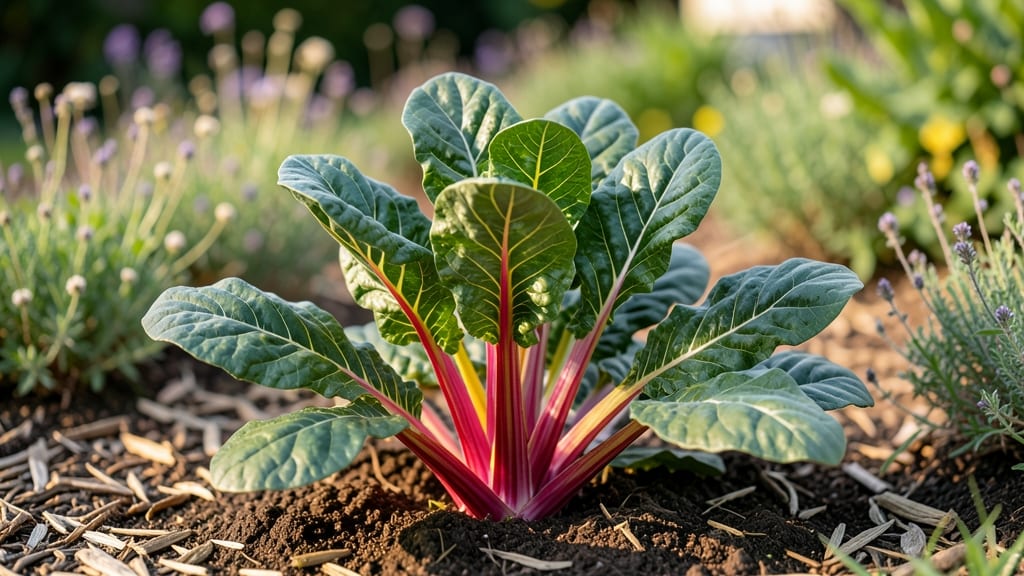
Swiss chard behaves as a perennial in mild climates but is typically treated as an annual in colder regions because frost kills its above-ground growth, though its roots survive underground to regrow when conditions warm again.
This dual nature comes from Swiss chard's deep root system, which stores energy to sprout new leaves when temperatures rise. 🌱 In USDA zones 7-10, it thrives year-round, while in colder zones (3-6), gardeners often replant annually unless they protect it with heavy mulch or row covers.
The key difference lies in how long the plant can sustain itself through winter dormancy—something that varies dramatically by region.
What this means for gardeners is that Swiss chard's classification depends entirely on your local climate. In warmer areas, you'll enjoy continuous harvests with minimal effort, while colder climates require more strategic planning to preserve the plant through winter.
The good news? Even in harsh winters, the roots often survive, meaning you might get a surprise regrowth in spring if you leave the soil undisturbed.
💡 In This Article
- How Swiss Chard Survives Winter in Different Climates
- Tips for Overwintering Swiss Chard in Cold Regions
How Swiss chard survives winter in different climates
Swiss chard's cold resilience stems from its robust root system, which can extend 12-18 inches deep into the soil. This extensive network stores carbohydrates and nutrients during winter dormancy, allowing the plant to regenerate when temperatures rise above 50°F.
The roots themselves contain specialized cells that produce antifreeze proteins—similar to those in winter wheat—which prevent ice crystals from forming and damaging cellular structures. 🌱 In USDA hardiness zones 7-10, these adaptations let Swiss chard persist year-round, making it a true perennial.
The plant's above-ground growth, however, is far less frost-tolerant. Leaves begin to yellow and wilt when temperatures drop below 25°F, a process called "dieback" that protects the root system from further damage.
What's fascinating is how Swiss chard prioritizes energy storage: as daylight shortens in fall, the plant redirects sugars from leaf production to root development, creating a natural survival mechanism.
This explains why you might see Swiss chard "reappear" in spring—it's not a new plant, but the same roots sending up fresh shoots.
Climate plays the decisive role in classification. In zones 3-6, where winters regularly drop below -10°F, Swiss chard's roots often fail to survive prolonged freezing, forcing gardeners to treat it as an annual. The transition happens around zone 7, where 10-15°F winters allow enough root survival for perennial behavior.
This creates a 3-zone gradient where Swiss chard shifts from annual to semi-perennial to full perennial status based solely on winter severity. 💛
What most gardeners overlook is the plant's regenerative capacity. Even in colder zones, Swiss chard roots can survive 3-4 weeks of sub-freezing temperatures if protected by 6+ inches of organic mulch.
The key threshold is soil temperature—roots remain viable as long as they don't freeze solid, which typically requires -20°F conditions. This explains why some northern gardeners successfully overwinter Swiss chard with proper insulation.
Botanically, Swiss chard belongs to the Chenopodium family, which includes other cold-hardy greens like spinach and quinoa. What sets Swiss chard apart is its two-phase growth cycle: the first phase focuses on leaf production, while the second prioritizes root storage.
This dual strategy gives it the flexibility to adapt to both warm perennial climates and cold annual regions. The plant's ability to "reset" each season makes it one of the most adaptable leafy greens in home gardens. ✨
For visual comparison, imagine Swiss chard's root system as a 12-inch carrot with multiple lateral branches, while its leaves function like temporary solar panels that convert sunlight into stored energy.
This architectural design explains why Swiss chard can regenerate so vigorously after winter dieback—it's not just surviving, but actively preparing for the next growing season. 🌿