
Flowers
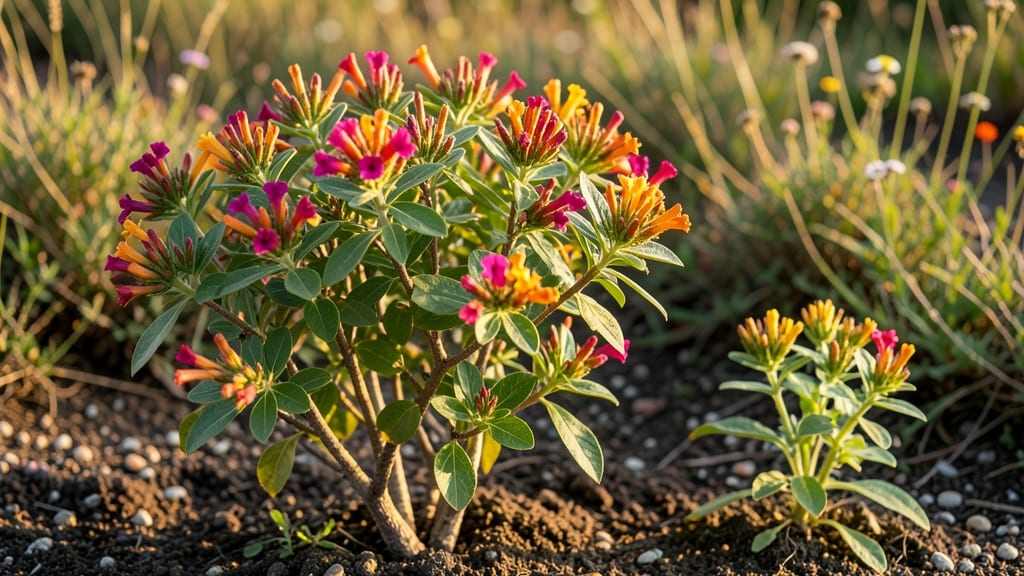
Determining whether lantana is annual or perennial depends on your climate: it grows as a hardy perennial in warm zones (8-11) but behaves like an annual where frost occurs, dying back to the ground each winter. Only cold-resistant varieties like Lantana camara tolerate brief freezes, while most need overwintering protection to survive.
In warmer climates, lantana thrives year-round as a perennial, returning with vibrant blooms after winter dormancy. 🌿 However, when temperatures drop below 28°F, even cold-hardy varieties suffer damage, forcing gardeners in zones 7 and colder to treat it as an annual or take special overwintering precautions.
The key difference lies in how each region's frost patterns interact with lantana's natural growth cycle—what's a reliable perennial in Florida becomes a seasonal showstopper in New England without intervention.
For those in transitional zones (7a-7b), the challenge becomes managing lantana's seasonal behavior. While some varieties push their limits, most gardeners in these areas find success by either digging up potted plants before frost or providing heavy mulch and frost blankets.
The plant's ability to regrow from the roots in spring makes these efforts worthwhile, but timing is everything—waiting too long risks losing the entire plant to winter kill.
💡 In This Article
- Lantana Cold Hardiness Zones Explained
- Overwintering Lantana Indoors and Out
Lantana cold hardiness zones explained
Lantana's perennial nature hinges on USDA hardiness zones 8-11, where winter temperatures rarely drop below 28°F. In these regions, the plant naturally enters dormancy during mild winters, conserving energy in its woody stems and roots.
The key mechanism is its ability to withstand temperatures as low as 20°F for short periods, thanks to a waxy cuticle on leaves that reduces moisture loss and cellular damage. This explains why lantana thrives in Florida, California, and Texas year-round—its growth cycle synchronizes with the climate's predictable frost-free winters.
The magic number for lantana survival is 28°F. When temperatures fall below this threshold for more than 24 hours, cellular membranes rupture due to ice crystal formation, causing irreversible damage.
In zones 7a-7b, where winters occasionally dip to 0-10°F, lantana behaves like an annual because sustained cold triggers complete dieback. The plant's natural response is to shed all above-ground growth, but the root system remains viable if protected from prolonged freezing.
This is why gardeners in these zones often see lantana regrow in spring—it's not dead, just dormant until warmer temperatures signal new growth.
What sets cold-hardy varieties like Lantana camara apart is their genetic tolerance for brief freezes. These cultivars can survive 20-25°F temperatures for short durations because their stems contain higher concentrations of antifreeze proteins that lower the freezing point of their cell fluids.
Think of it like the difference between a tropical fish and a goldfish—one is adapted to thrive in cooler waters. In contrast, most lantana hybrids lack these proteins and succumb to even light frosts, which is why they're classified as annuals in colder climates.
For gardeners in transitional zones (7a-7b), the challenge becomes managing this delicate balance. A single unexpected freeze can turn a thriving perennial into an annual, which is why many opt for container growing.
Potted lantana can be moved to protected locations when temperatures approach 32°F, giving it a fighting chance to survive winter. The root system's resilience is the real secret here—lantana roots can remain dormant for months, waiting for spring's warmth to trigger regrowth from the base.
Here's what happens at different temperature thresholds:
- Above 28°F: Lantana remains active or dormant but survives with minimal damage
- 20-28°F: Cold-hardy varieties may survive with leaf damage; tender varieties suffer dieback
- Below 20°F: All but the most cold-resistant varieties die back completely
Understanding these thresholds helps explain why lantana's growth habit shifts from perennial to annual—it's not a fundamental change in the plant's biology, but rather a response to environmental conditions. The same genetics that make it a reliable bloomer in warm climates become a seasonal limitation when faced with frost. 🌡️