
Pests
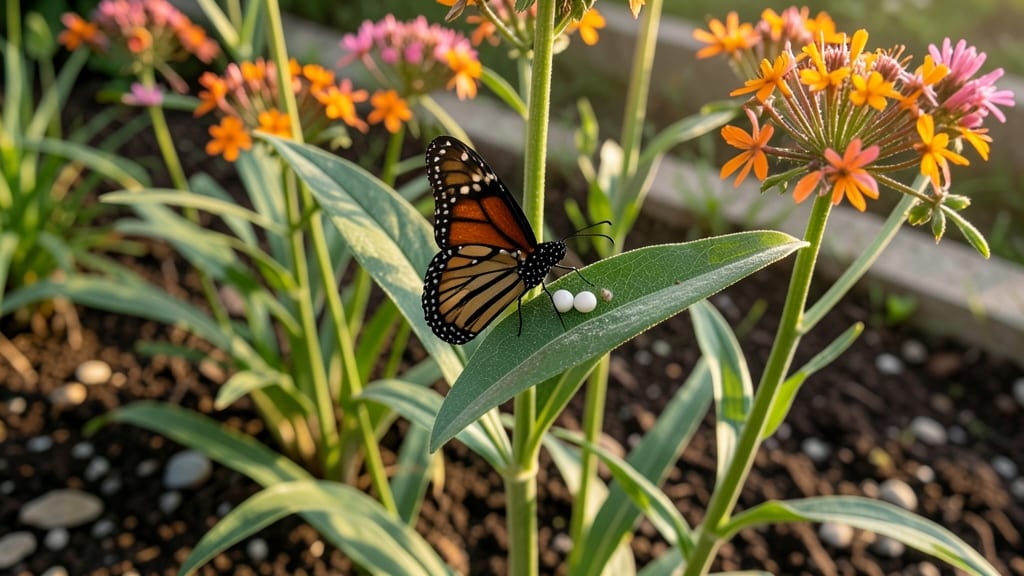
Monarch butterflies lay eggs exclusively on milkweed, carefully selecting the undersides of tender leaves, particularly on younger growth. Their eggs hatch in 3-8 days, producing caterpillars that rely entirely on milkweed before transforming into pupae. Planting native milkweed varieties directly supports their entire life cycle.
Monarchs use chemical signals in milkweed leaves to identify the best spots for egg-laying, often favoring plants with higher concentrations of cardiac glycosides—compounds that make milkweed toxic to most predators. 🌿 This precision explains why hybrid nursery plants sometimes fail to attract them: commercial varieties often lack these natural chemical cues.
Once eggs are laid, the caterpillars emerge with an instinctive craving for milkweed, which they'll devour within days before pupating.
Native milkweed species like common milkweed (Asclepias syriaca) or swamp milkweed (Asclepias incarnata) provide the ideal environment, offering both food and shelter. Planting these varieties in clusters creates a "monarch waystation," while avoiding pesticides ensures the caterpillars thrive.
The timing of milkweed growth—especially in early summer—directly impacts how many monarchs your garden can support.
💡 In This Article
- Monarch Butterfly Egg-Laying Behavior and Milkweed Preferences
- Creating an Ideal Milkweed Habitat for Monarchs
Monarch butterfly egg-laying behavior and milkweed preferences
Monarch butterflies don't randomly deposit their eggs—they rely on a sophisticated combination of visual cues and chemical signals.
Their antennae detect specific compounds like cardenolides (toxic cardiac glycosides) in milkweed leaves, which act as a "quality stamp" confirming the plant's suitability. 🌿 The undersides of tender, younger leaves are preferred because they offer both protection from predators and optimal nutrition for the emerging caterpillars.
Interestingly, monarchs can distinguish between native milkweed varieties and commercial hybrids, often avoiding the latter due to lower cardenolide concentrations.
The eggs themselves are tiny—about 1 millimeter in diameter—and shaped like tiny footballs with a distinctive white, dome-like appearance. You'll typically find them laid singly on leaves rather than in clusters. Hatching occurs within 3-8 days depending on temperature, with warmer conditions (80°F) accelerating development.
The newly hatched caterpillars immediately begin feeding on the milkweed, which contains toxins that make them unpalatable to predators—a clever survival adaptation.
Here's what makes milkweed selection so precise: monarchs use pheromone trails left by previous butterflies to locate suitable plants, creating a communal knowledge system.
This explains why planting milkweed in clusters rather than isolated patches dramatically increases egg-laying success rates. 🦋 The chemical cues aren't just about food—they're about survival, as the toxins in milkweed provide both nutrition and protection throughout the caterpillar's development.
One fascinating detail is how leaf texture influences egg placement. Monarchs prefer leaves that are smooth and slightly waxy—these surfaces provide better adhesion for their eggs and may offer subtle protection from wind.
Older, thicker leaves are avoided because they're harder for caterpillars to consume after hatching. This preference explains why late-season milkweed growth often sees fewer eggs, as the leaves become tougher and less nutritious.
The entire process is finely tuned to seasonal patterns. Monarchs time their egg-laying to coincide with milkweed's peak growth periods, typically May through July in most regions.
This synchronization ensures the caterpillars have abundant food before they pupate. 🌱 What's particularly striking is how this behavior varies by region—monarchs in cooler climates may lay eggs later in the season compared to their southern counterparts, adapting their timing to local milkweed cycles.
For gardeners, understanding these preferences means planting native milkweed species like Asclepias tuberosa (butterfly weed) or Asclepias incarnata (swamp milkweed) rather than commercial varieties. These native plants contain the proper chemical signals and provide the ideal leaf texture for successful egg-laying.
The key is creating an environment where monarchs feel confident their offspring will thrive.