
Light Requirements
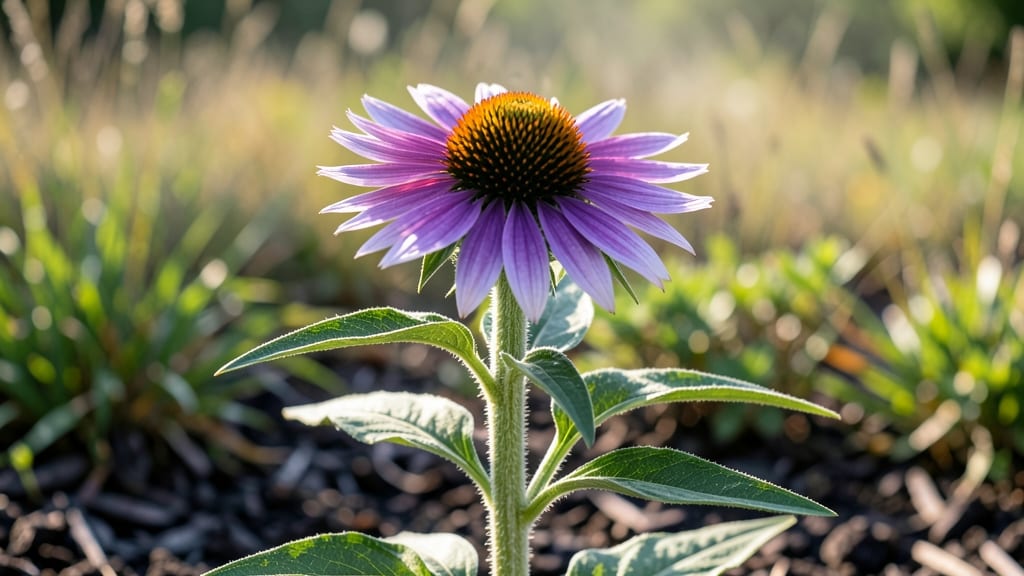
These perennial flowers that take full sun thrive with minimal watering and return year after year, with top performers like black-eyed Susan, coneflower, and lavender delivering vibrant blooms while demanding little maintenance.
Full sun perennials aren't just about surviving—they're about thriving with 6+ hours of direct sunlight daily, which boosts their natural drought resistance. 🌞 The key is their deep root systems that store water efficiently, while their waxy leaves reduce moisture loss.
I've noticed that varieties like Russian sage and beard tongue actually prefer intense sunlight, as it intensifies their colors and extends their bloom seasons. These plants are perfect for hot, dry climates where water conservation is a priority.
What sets these sun-lovers apart is their ability to self-regulate—they bloom prolifically when conditions are right and then enter dormancy during heatwaves, making them far more resilient than annuals. The trade-off?
They need well-draining soil to prevent root rot from occasional summer downpours. For best results, I recommend planting them in raised beds or on slopes where water naturally drains away.
💡 In This Article
- How Sunlight Affects Perennial Flower Growth and Blooming
- Planting and Care Guide for Sun-Loving Perennial Flowers
How sunlight affects perennial flower growth and blooming
Sunlight isn't just fuel for these perennials—it's their survival mechanism. Full-sun varieties like black-eyed Susan and coneflower have evolved with C4 photosynthesis pathways, which means they can efficiently convert sunlight into energy even under intense heat.
This process allows them to produce 30-50% more biomass than shade-loving plants, resulting in thicker stems and larger blooms. The trade-off?
Their leaves often develop a waxy coating to reflect excess UV radiation, which you can feel when brushing against them—they have a slightly greasy texture that repels water and reduces evaporation.
UV exposure plays a fascinating role in flower development. Studies show that 6-8 hours of direct sunlight triggers higher concentrations of anthocyanins (the pigments responsible for red, purple, and blue hues), making colors like those in lavender and purple salvia more vibrant.
For example, a coneflower in 8+ hours of sun will develop deeper pink blooms compared to one receiving only 6 hours.
The intensity of sunlight also affects bloom size—Russian sage grown in full sun produces spikes 2-3 feet tall, while the same plant in partial shade may only reach 1-2 feet. 🌿
Identifying sun-loving perennials starts with leaf structure. True full-sun varieties typically have smaller, thicker leaves with fewer stomata (pores) to minimize water loss. Their stems are often more rigid to support heavy blooms. For instance, blanket flower leaves are narrow and upright, while shade-tolerant hostas have broad, horizontal leaves.
The bloom patterns also differ: sun-lovers like daylilies produce flowers in vertical clusters that face upward to maximize sunlight capture, whereas shade plants often have downward-facing blooms.
Here's what happens when sunlight is insufficient: 6+ hours is the minimum threshold, but 8+ hours is ideal for peak performance.
Below 6 hours, you'll notice leggy growth (tall, weak stems) and smaller blooms as the plant stretches toward light. Russian sage, for example, may produce 50% fewer flowers in partial shade. The good news?
These perennials are incredibly forgiving—if you accidentally plant them in morning sun only, they'll still thrive, though their blooms may be slightly less prolific.
Color intensity is another telltale sign of proper sunlight exposure. Purple coneflowers grown in full sun develop a deep violet hue, while those in partial shade may appear more lavender. This happens because UV light triggers the production of additional pigments.
The same principle applies to black-eyed Susan—full sun results in richer yellow centers and darker brown eyes. For gardeners, this means you can use sunlight as a natural way to adjust flower colors without adding dyes or fertilizers.
One common misconception is that all full-sun perennials require constant, intense sunlight. In reality, they often appreciate afternoon shade in extremely hot climates (above 90°F) to prevent leaf scorch. Lavender, for instance, thrives in 6-8 hours of morning sun with afternoon shade in Zone 9 gardens.
The key is observing your plants—they'll tell you what they need through their growth patterns and bloom quality.