
Flowers
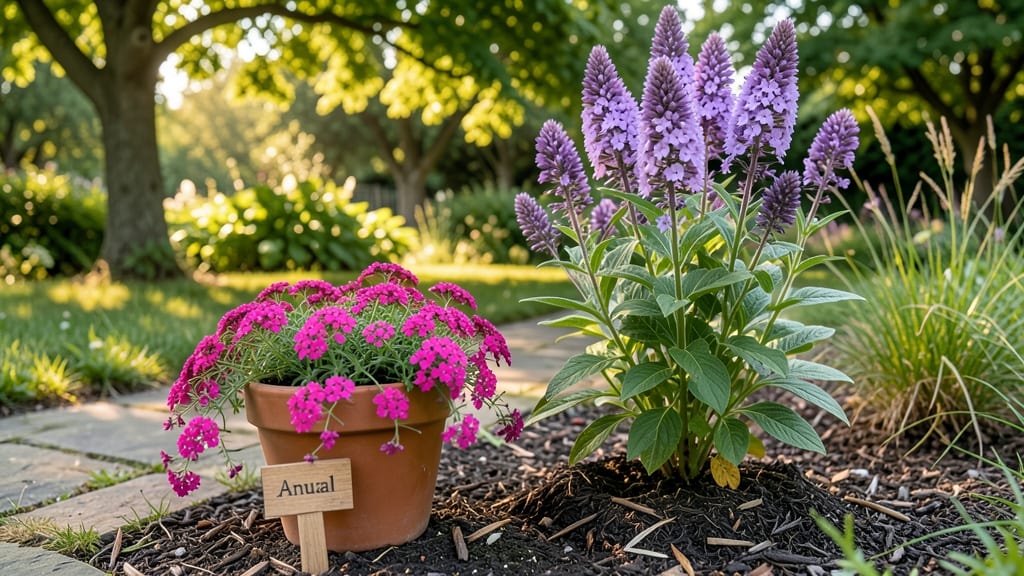
Whether phlox is perennial or annual depends on the type: garden phlox (Phlox paniculata) grows back each year as a hardy perennial in zones 3-8, while sweet william (Phlox drummondii) blooms vibrantly for just one season before needing replacement. Perennials establish roots for long-term growth, while annuals deliver quick seasonal color.
Understanding whether your phlox is perennial or annual changes everything about how you care for it. 🌸 Perennial varieties like garden phlox develop deep root systems that survive winter dormancy, making them ideal for gardeners who want lasting beauty with minimal replanting.
Annual types like sweet william, however, focus their energy on rapid spring growth and summer blooming, which means you'll need to replant them each year for continuous displays. The choice between the two often comes down to your climate zone and how much maintenance you're willing to commit to.
For gardeners in colder regions, perennial phlox offers the advantage of returning year after year with proper winter care, while annual varieties provide vibrant color that's perfect for seasonal gardens or container planting.
The key difference lies in their growth strategies: perennials invest energy in root development for long-term survival, while annuals prioritize quick above-ground growth and flowering. This fundamental distinction affects everything from planting timing to watering needs and pest management strategies.
💡 In This Article
- Perennial vs Annual Phlox Growth Habits and Climate Adaptations
- Planting and Maintenance Guide for Phlox Varieties
Perennial vs annual phlox growth habits and climate adaptations
Perennial phlox, particularly Phlox paniculata, thrives in zones 3-8 thanks to its deep taproot system that stores nutrients and moisture. This root structure allows it to survive winter dormancy by entering a state of metabolic slowdown, where growth pauses but the plant remains alive underground.
The roots can extend 2-3 feet deep, providing stability and access to water during dry spells. In contrast, annual phlox like Phlox drummondii focuses all its energy on rapid above-ground growth during its single growing season, producing vibrant blooms in 6-8 weeks from seed.
The key difference lies in their frost tolerance mechanisms. Perennial phlox develops a protective layer of insulating leaves and stems that shield the crown from freezing temperatures down to -30°F in some varieties.
Annual phlox, however, lacks this adaptation and typically survives only until the first hard frost, which is why it's often grown as a summer annual in colder climates. 🌱 The trade-off is that annual phlox produces more abundant flowers in a single season compared to perennial types, which may take 2-3 years to reach full bloom potential.
Native habitats play a crucial role in these adaptations. Garden phlox originates from North American woodlands and meadows where it experiences distinct seasonal changes, while sweet william hails from Texas and Mexico's coastal regions with milder winters.
This explains why perennial phlox handles colder temperatures better—its ancestors evolved in harsher climates. Annual phlox, however, excels in warm climates where it can complete its entire life cycle in one season without needing to survive winter conditions.
Seasonal bloom patterns also differ significantly. Perennial phlox typically flowers in mid-to-late summer (July-August) and may produce a second, smaller flush in fall if deadheaded properly. Annual phlox, on the other hand, blooms continuously from early summer until frost, creating a longer display window.
This makes annual varieties particularly popular for cut flower gardens and seasonal arrangements, while perennial types are favored for their long-term presence in landscape designs.
Consider these growth habit comparisons when selecting phlox:
- Root depth: Perennial (2-3 feet) vs Annual (shallow, fibrous)
- Frost tolerance: Perennial (-30°F capability) vs Annual (dies with first frost)
- Bloom duration: Perennial (4-6 weeks) vs Annual (3-5 months)
- Establishment time: Perennial (2-3 years) vs Annual (6-8 weeks)
The choice between perennial and annual phlox ultimately depends on your climate zone and gardening goals. Perennial varieties offer long-term beauty with less replanting effort, while annuals provide immediate, vibrant color that's perfect for seasonal displays or areas with harsh winters where perennials might struggle. 🌸