
Flowers
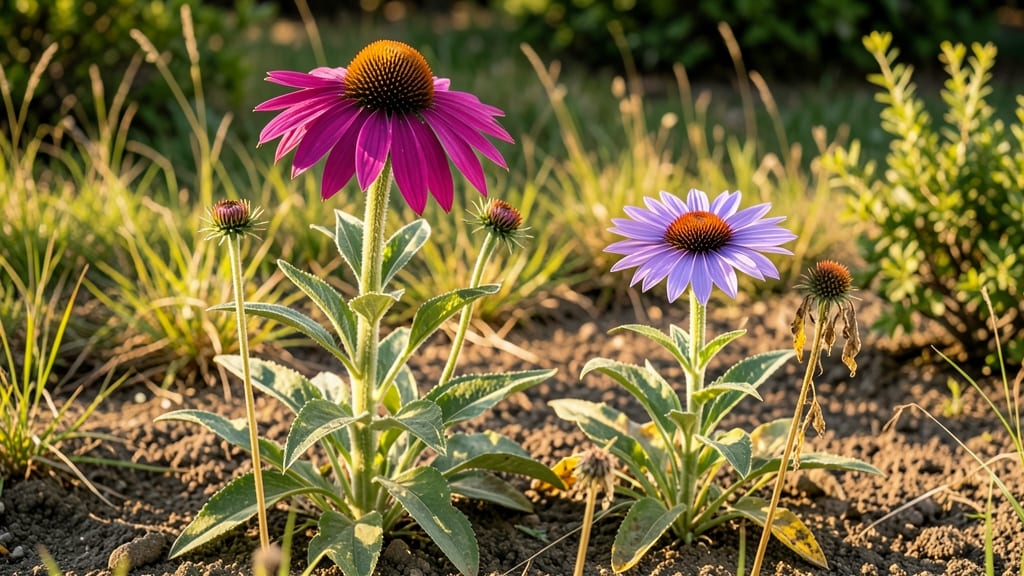
Deciding whether purple coneflower is annual or perennial depends on your gardening goals: it's a perennial that naturally lives 3 to 5 years or longer with proper care, but many gardeners opt to replant it yearly for consistent seasonal blooms. Its deep taproot system and drought tolerance make it a resilient garden favorite in full sun and well-draining soil.
Purple coneflower's perennial nature comes from its ability to regrow from the same root system year after year, which is why it's often called a "self-sustaining" plant. 🌱 Unlike annuals that complete their life cycle in one season, this hardy flower sends up new stems each spring from its established roots, provided it gets enough sunlight and water during its first growing season.
The key to treating it as a perennial lies in mimicking its natural habitat—dry, open meadows where it thrives without competition.
That said, many gardeners choose to replant purple coneflower annually because its blooms tend to diminish after 3-5 years as the plant matures. This practice ensures vibrant flowers each season while avoiding the gradual decline that comes with age.
The trade-off? Annual replanting means more upfront work but guarantees showstopping blooms year after year with minimal effort.
💡 In This Article
- Why Purple Coneflower Thrives as a Perennial
- Tips for Maximizing Purple Coneflower’s Lifespan
Why purple coneflower thrives as a perennial
Purple coneflower's perennial status stems from its deep taproot system, which can extend 2-3 feet into the soil. This root structure allows it to access moisture and nutrients deep underground, making it highly drought-tolerant once established.
Unlike annuals that rely on seasonal growth, these roots remain dormant in winter but regenerate new stems each spring from the same base, a process called crown regrowth.
This biological mechanism explains why purple coneflower often outlives other wildflowers like black-eyed Susans (which typically last 2-3 years) while requiring less frequent replanting.
The plant's disease resistance also plays a crucial role in its longevity. Purple coneflower naturally produces compounds that deter common garden pests and fungal infections, particularly in its native USDA Hardiness Zones 3-9. Its thick, waxy leaves contain echinacein, a compound that acts as a natural fungicide.
This resilience means it rarely needs chemical interventions that could harm its root system. In contrast, annual flowers like zinnias often succumb to powdery mildew or aphids without such built-in defenses. 🌿
Seasonal regrowth patterns further explain its perennial nature. After blooming in mid-summer, the plant stores energy in its roots during fall, then pushes out new growth in early spring before the first frost. This cycle repeats annually, provided the plant receives at least 6-8 hours of direct sunlight daily.
In cooler climates (Zones 3-5), the roots may become slightly dormant but remain viable, while warmer zones (6-9) allow for more vigorous regrowth each year. This adaptability is why purple coneflower thrives in both prairie gardens and urban landscapes.
Climate zones significantly influence its persistence. In Zone 4, where winters dip below -20°F, purple coneflower may need mulch protection to survive, while in Zone 8, it can bloom nearly year-round with minimal care.
The plant's ability to thrive across such diverse conditions—from Minnesota to Florida—demonstrates its evolutionary adaptation to varying moisture levels and temperatures. This hardiness is why it's often recommended as a low-maintenance perennial for pollinator gardens.
Comparing it to other perennials reveals its unique advantages. While daylilies (Hemerocallis) can live decades, purple coneflower's 3-5 year bloom cycle makes it ideal for gardeners seeking consistent color without long-term commitment.
Its self-seeding habit also ensures natural propagation, though gardeners often deadhead spent blooms to redirect energy into root development rather than seed production. This balance between longevity and manageability is why it's a favorite among both novice and experienced gardeners. 🌸