
Flowers
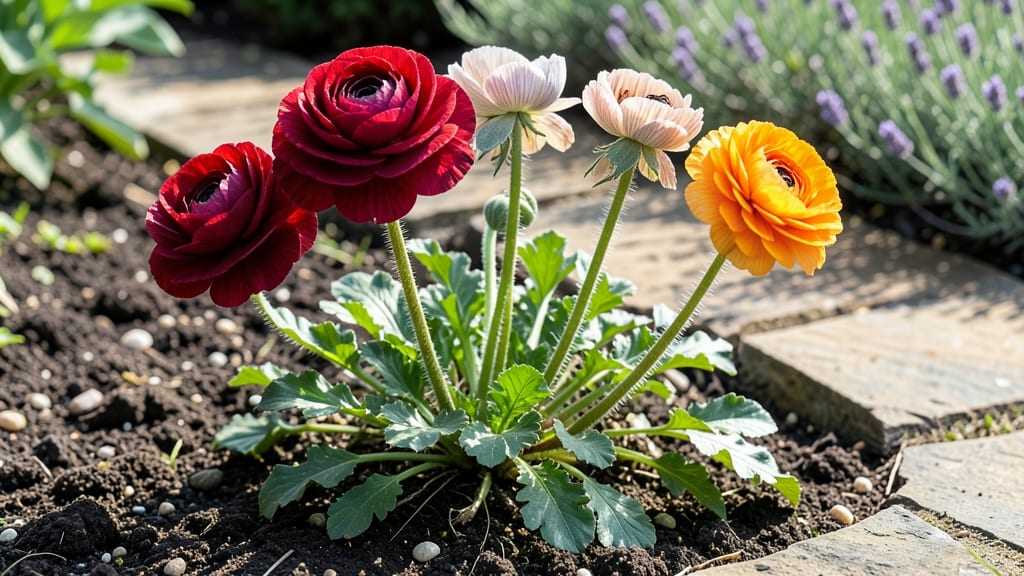
Whether ranunculus are annual or perennial depends on your climate: they thrive as perennials in mild winters but die back in frost and regrow from tubers each spring in colder regions. Their growth cycle adapts to temperature and care routines.
Ranunculus grow from tubers that naturally enter dormancy when temperatures drop below 40°F.
In frost-free zones (like USDA zones 8-11), they'll happily return year after year, but in colder areas, gardeners must treat them as annuals or take special overwintering steps. 🌱 The key difference lies in how well those tubers survive winter—some varieties handle chill better than others, which is why you'll see them sold as both annuals and perennials depending on your growing region.
What's interesting is that even in perennial climates, ranunculus often behave like annuals if not properly maintained. Without consistent moisture and protection from extreme heat or cold, their tubers can fail to regenerate.
That's why many gardeners in marginal zones dig up tubers after the first frost and store them in a cool, dry place until spring planting.
💡 In This Article
- How Climate and Growing Conditions Determine Ranunculus Lifespan
- Tips for Extending Ranunculus Growth Beyond One Season
How climate and growing conditions determine ranunculus lifespan
Ranunculus tubers contain stored energy that powers regrowth each spring, but their survival hinges on winter temperatures. In USDA zones 8-11, where winters rarely drop below 30°F, these tubers naturally overwinter in the soil, emerging as perennials.
The secret lies in their dormancy mechanism: when soil temps fall below 40°F, the tubers enter a metabolic slowdown, conserving energy until warmth returns. This biological adaptation explains why ranunculus thrive as perennials in frost-free Mediterranean climates but struggle in colder regions.
The critical threshold is 25°F—below this, tuber cells begin freezing damage. Even brief exposure can kill the delicate meristem tissue responsible for new shoots. 🌱 In zone 7 and colder, gardeners often see ranunculus behave as annuals because the tubers simply don't survive winter exposure.
The difference between annual and perennial growth becomes a matter of whether your region's coldest nights stay above 28°F consistently. For example, in Southern California's mild winters, ranunculus can reliably return year after year, while in New England they typically require winter protection.
Another factor is soil moisture during dormancy. Tubers need consistently moist (but not soggy) conditions to prevent desiccation. In dry winters, even mild climates can see reduced regrowth because the tubers lose too much water.
The ideal overwintering soil moisture is around 40-50% field capacity—think of a well-drained sponge that's damp but not dripping. This explains why ranunculus often perform better as perennials in coastal areas with consistent humidity than in inland desert climates, where winter dryness stresses the tubers.
Light exposure also plays a subtle role. Ranunculus tubers planted too deep (below 4 inches) struggle to reach light in spring, while those too shallow (1 inch) dry out.
The sweet spot is 2-3 inches deep, where they get enough moisture protection while still accessing light for photosynthesis. In colder climates, this depth becomes even more critical because the ground freezes deeper, potentially burying tubers beyond their recovery zone.
Varietal differences matter too. Some ranunculus hybrids like 'Buttercup' or 'Persian Jewel' have thicker tubers that handle cold better than delicate 'Papa's Favorite' types. This explains why nurseries often label ranunculus as "hardy" or "tender" in their descriptions—what might survive in Portland may not make it through Chicago's winters.
The tuber's ability to store carbohydrates (up to 30% of its dry weight) determines how well it resists cold stress, with thicker tubers lasting longer in harsh conditions.
What most gardeners don't realize is that even in perennial climates, ranunculus can revert to annual behavior if their tubers aren't properly cared for. Overwatering in summer can cause rot, while summer drought stresses the plant before winter.
The key to perennial growth is maintaining consistent moisture (about 1 inch per week) and avoiding fertilizer after mid-summer, which encourages tuber development rather than foliage growth. This balance between water, nutrients, and light is what turns a one-season plant into a reliable garden staple.