
Flowers
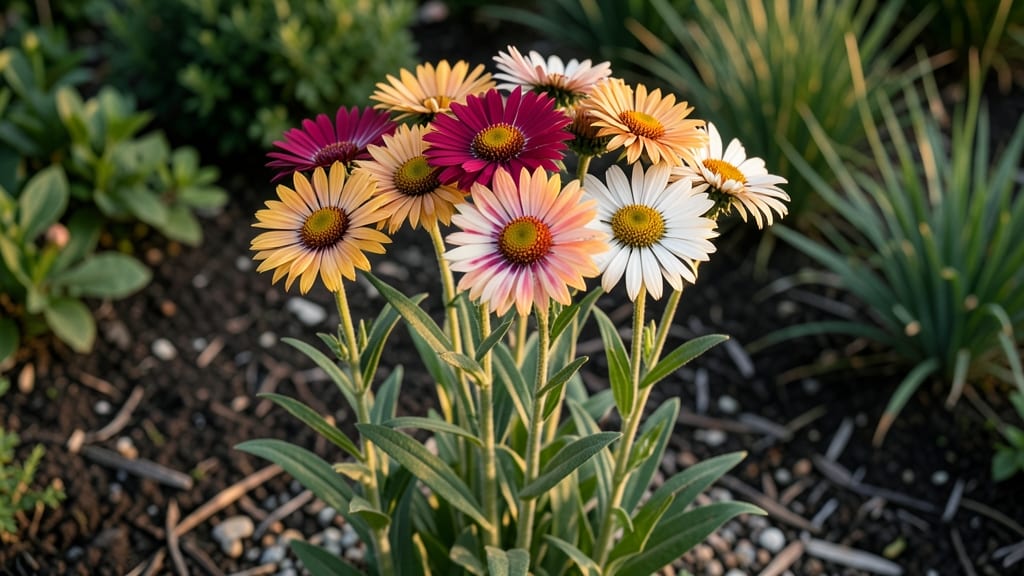
Straw flowers are technically perennials but often treated as annuals because their foliage dies back in winter, only to regrow from their hardy root systems when warmer weather returns. Their resilience makes them a low-maintenance choice for gardeners in mild climates or with proper winter protection.
This dieback-and-regrowth cycle is what sets straw flowers apart from true annuals like marigolds, which complete their entire life cycle in one season. 🌱 The key to their perennial nature lies in their deep root systems, which store energy underground during dormancy.
In warmer zones (USDA 8-10), they'll often bounce back without extra care, while colder regions may need mulch or frost blankets to protect those roots through winter.
What makes them especially appealing as perennials is their ability to self-seed and spread over time, creating natural clusters that multiply each year. Unlike annuals that require replanting, established straw flowers will reward you with more blooms and fuller growth as they mature.
The trade-off? Their first year may be sparser as they focus on root development rather than flowering.
💡 In This Article
- Why Straw Flowers Die Back and Regrow
- How to Overwinter Straw Flowers for Perennial Growth
Why straw flowers die back and regrow
Straw flowers (Helichrysum) enter dormancy when temperatures drop below 40°F, triggering a survival mechanism that conserves energy in their deep root systems. Unlike true annuals like marigolds—which complete their entire life cycle in one season—straw flowers store nutrients underground in fibrous roots that can reach 12-18 inches deep.
This root network acts like a natural battery, storing carbohydrates and sugars to fuel regrowth when spring arrives. 🌱
The dieback process begins when cold temperatures cause the above-ground foliage to brown and crisp, but the roots remain alive and dormant. This adaptation is common in Mediterranean plants, where straw flowers originated, as a way to survive dry summers and cold winters.
What's fascinating is how these roots can remain viable for years—even through multiple freeze-thaw cycles—thanks to their ability to produce antifreeze proteins that protect cell membranes from ice damage.
Regrowth typically starts when soil temperatures reach 55-60°F, signaling the roots to push new shoots upward. You'll often see the first signs of life as tiny green sprouts emerging from the base, sometimes even before the last frost.
This delayed emergence is why gardeners in colder zones might assume straw flowers died completely—when in reality, they're just following their natural perennial life cycle.
The contrast with annuals is striking: marigolds would never regrow from roots, but straw flowers treat winter like a forced vacation rather than an extinction event.
One key difference between straw flowers and true annuals is their flowering pattern. Annuals like zinnias bloom heavily in their first season, then fade entirely.
Straw flowers, however, may produce fewer blooms in their first year as they prioritize root establishment, then reward gardeners with 2-3 years of abundant flowering once established. This delayed gratification is part of their perennial strategy—building a strong foundation before putting energy into reproduction.
The science behind this regrowth involves a hormone called abscisic acid, which accumulates in plant tissues during stress (like cold). This hormone helps the plant "shut down" non-essential functions and redirect energy to root storage.
When conditions improve, another hormone called gibberellin kicks in, promoting cell elongation and shoot growth. It's like the plant has an internal thermostat that knows exactly when to nap and when to wake up. 🌿
What this means for gardeners is that straw flowers are far more forgiving than they appear. Even if you forget to protect them over winter, those buried roots might still have the energy to bounce back—though proper care (like mulching) gives them the best chance.
The ability to regrow from roots is what truly classifies them as perennials, even if their annual-like growth habits in the first year can be confusing.