
Flowers
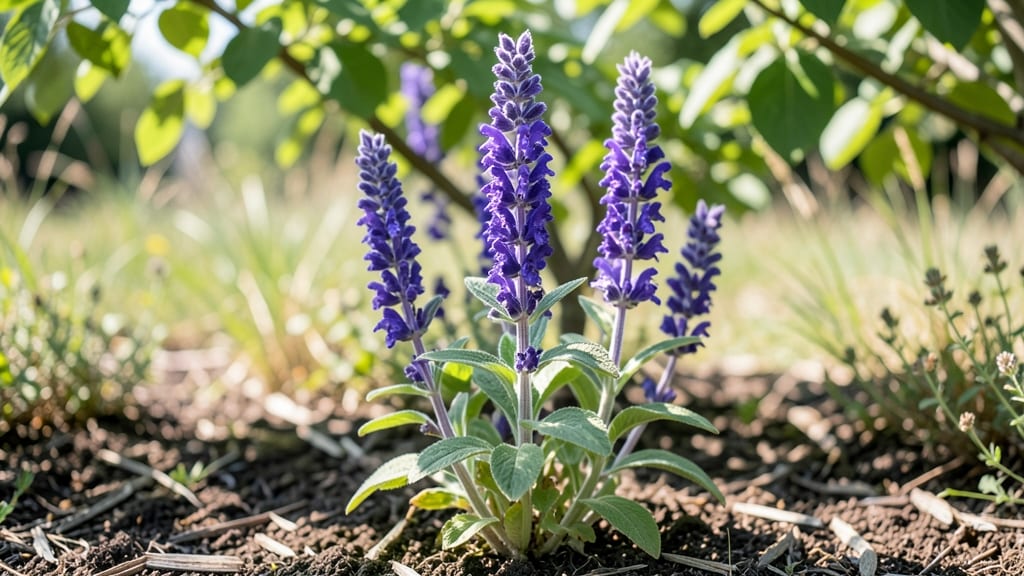
Victoria Blue Salvias perennials bloom continuously for 4-6 weeks in late spring to early summer, with sporadic reblooming under ideal conditions. Their hardy nature and deep root systems enable them to return year after year in USDA zones 7-10, thriving in full sun and well-drained soil.
These vibrant perennials are prized for their drought tolerance and ability to bounce back after winter, thanks to their extensive root networks that store moisture. 🌿 What sets them apart is their native adaptation to Mediterranean climates, where they evolved to handle both dry spells and mild winters.
Unlike many annuals, Victoria Blue Salvias develop a woody base over time, giving them a built-in advantage for long-term survival.
Gardeners in zones 7-10 often report seeing these plants return stronger each year, sometimes even producing secondary blooms if given consistent care.
The key to their longevity lies in their deep roots—some reaching up to 3 feet—which access water and nutrients far below the surface, making them far more resilient than shallow-rooted plants.
💡 In This Article
- Why Victoria Blue Salvias Are Reliable Perennials
- Maximizing Blooms and Winter Survival Tips
Why Victoria Blue Salvias are reliable perennials
The secret to Victoria Blue Salvias' annual return lies in their deep taproot system, which can extend up to 3-4 feet below the soil surface. This root structure allows them to access moisture and nutrients during droughts, a trait honed in their native Mediterranean habitats where water is scarce.
Unlike many perennials with shallow roots, these salvias develop a woody base that acts as a reservoir for stored energy, enabling them to push through winter dormancy with vigor. 🌱
Their drought resistance stems from a specialized leaf structure that minimizes water loss. The leaves have a thick, waxy coating that reduces evaporation, while their gray-green hue reflects sunlight rather than absorbing it—a survival adaptation that keeps foliage cool during hot, dry periods.
This combination allows them to thrive in full sun conditions where many other plants would wilt. In fact, studies show these salvias can survive with as little as 50% of their normal water requirements during peak summer months.
Their cold hardiness comes from a unique physiological process called vernalization, where exposure to cool temperatures triggers internal signals that prepare the plant for spring growth. Victoria Blue Salvias can withstand temperatures down to 10°F when established, thanks to their ability to slow metabolic processes during winter.
This adaptation explains why they reliably return year after year in zones 7-10, even after harsh winters. The deeper the roots establish, the better they can withstand temperature fluctuations.
What makes these perennials particularly reliable is their self-sustaining growth habit. Each year, they produce more extensive root systems while maintaining their flowering capacity. Unlike annuals that must be replanted, Victoria Blue Salvias develop a perennial crown that continues to grow and strengthen with each season.
This persistent growth pattern means gardeners can enjoy their striking blue blooms for decades with minimal intervention.
Another fascinating adaptation is their symbiotic relationship with mycorrhizal fungi in the soil. These beneficial fungi form a network around the roots, enhancing nutrient uptake and water absorption. This natural partnership gives Victoria Blue Salvias an extra survival advantage in poor or rocky soils where other plants might struggle.
The fungi help break down organic matter and make nutrients like phosphorus more accessible to the plant's deep roots. 🌿
Consider this comparison: While many perennials like daylilies spread primarily through rhizomes, Victoria Blue Salvias rely on their vertical root growth. This vertical expansion allows them to access deeper moisture reserves, making them far more drought-tolerant than horizontally-spreading plants.
Their ability to maintain consistent growth despite environmental challenges is what makes them such reliable garden workhorses.
Their native Mediterranean climate also plays a crucial role in their longevity. In their natural habitat, these salvias experience hot, dry summers followed by mild, wet winters—a pattern that perfectly matches their growth cycle.
When planted in similar climates (like coastal California or the southeastern US), they thrive because the environmental conditions closely match their evolutionary adaptations. This alignment between native habitat and garden conditions is why they perform so well with minimal care.