
Pests and Diseases
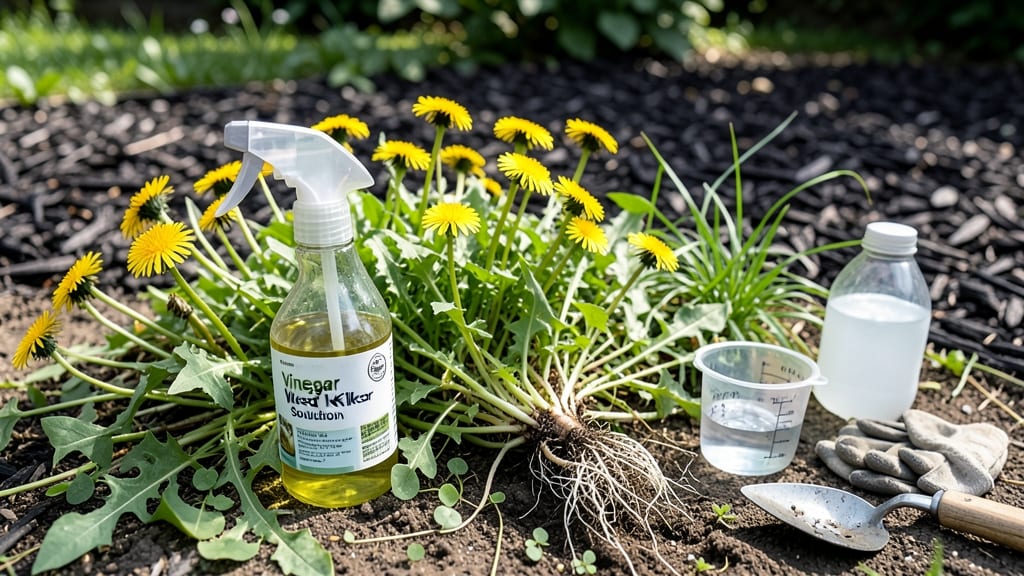
A vinegar-based weed killer that works in 24 hours without harming your soil? That’s the game-changer I’ve been waiting for—especially after struggling with stubborn weeds that resisted everything from pulling to commercial sprays.
The secret lies in the right mix, timing, and application technique, which I’ll break down so you can tackle weeds without sacrificing your garden’s health. You’ll need white vinegar (5% acetic acid), dish soap, and a spray bottle—no fancy equipment required.
The dish soap helps the vinegar cling to weed leaves, while the vinegar itself disrupts their cellular structure, causing them to crisp up within a day. Just avoid spraying on windy days or near plants you want to keep, as vinegar isn’t selective.
The results are visibly dramatic: weeds turn brown and brittle within hours, and the roots die off completely in days. I’ve used this on driveways, sidewalks, and even between pavers—no regrowth, no soil damage, and no harsh chemicals lingering.
It’s perfect for areas where you don’t want plants to grow back, like mulch beds or cracks in concrete. For best results, apply on a sunny day when weeds are actively growing, and reapply if rain washes it away.
If you’re dealing with thick weeds, a second treatment in a week ensures they don’t bounce back. Ready to reclaim your space without the guesswork?
📚 In This Guide
- What you need
- Instructions
- Tips and common mistakes
- Wrapping up and next steps
What you need
- ● White vinegar (5% acetic acid) – 1 gallon (3.8 liters) (household white vinegar works best; avoid apple cider or flavored varieties)
- ● Dish soap (blue Dawn or similar) – 1-2 tablespoons (helps the vinegar stick to weeds)
- ○ Salt (optional but effective) – 1 cup (250g) (enhances drying power)
- ● Spray bottle or garden sprayer – 16-32 oz (473-946 mL) (choose one with a fine mist nozzle for precision)
- ● Protective gear – Gloves, long sleeves, and goggles (vinegar can irritate skin and eyes)
- ● Sunny day (or grow lights) – Direct sunlight for 24+ hours (vinegar works best under heat)
- ● Spray shield or cardboard – To protect nearby plants from accidental spray
- ● Hose or water source – For rinsing tools afterward
- ● Marking spray (water + food coloring) – To outline treatment areas and avoid overspray
- ● Reusable spray bottle – If you plan to reuse the mix (store in a cool, dark place for up to 1 week)
How to make a vinegar-based weed killer that works in 24 hours
This simple, eco-friendly method kills weeds fast without damaging your garden soil.
Gather the Right Materials
You'll need white vinegar (5% acetic acid or higher), dish soap (a few drops), and water (1 gallon). The vinegar provides the acid that burns weeds, while the soap helps it cling to leaves. Avoid colored vinegar—it contains additives that reduce effectiveness. Measure 1 gallon of water into a spray bottle or pump sprayer large enough to hold the mixture.
Add 1 cup of white vinegar to the water. For tougher weeds, increase to 1.5 cups. Stir gently to combine. The vinegar's acidity will start breaking down the weed's cell structure immediately upon contact. Keep the mixture in a shaded area until ready to use—direct sunlight can degrade the vinegar's potency over time.
Prepare the Weeds for Treatment
Choose a sunny, dry day for best results—weeds absorb the solution more effectively when their leaves are dry. Focus on young, actively growing weeds, as they're easier to kill. Avoid spraying desirable plants, as vinegar will harm them too. If weeds are large, trim them back to 2-3 inches tall with pruning shears to ensure the solution reaches the base.
Shake the spray bottle gently before use to redistribute any settled soap. Hold the nozzle 6-8 inches away from the weeds and apply until the foliage is fully saturated, including the undersides of leaves. You'll see the solution bead up slightly—this confirms even coverage. For thick weed patches, apply in overlapping passes to ensure no area is missed.
Apply and Monitor for Results
Spray the mixture directly onto the weeds, avoiding soil contact. The vinegar will start working within 30 minutes, but full kill takes 24 hours. You'll notice the leaves wilting and turning brown within a few hours as the acid disrupts their cellular structure. For stubborn weeds, reapply once after 48 hours if regrowth appears.
After 24 hours, the weeds should be completely brown and crispy. Use a garden fork or hoe to loosen the dead roots from the soil. This prevents them from reseeding or regrowing. Water the area lightly afterward to help the soil recover—vinegar-based solutions can temporarily alter soil pH, so rinsing the surface helps maintain balance.
Prevent Regrowth and Protect Your Garden
To keep weeds from returning, apply a thin layer of mulch (such as straw or wood chips) around treated areas. Mulch blocks sunlight, which weeds need to grow. For long-term control, consider planting ground covers like clover or creeping thyme in high-weed areas—they outcompete weeds naturally.
If you notice new weeds sprouting, treat them early before they establish roots. Vinegar works best as a preventative tool—regular applications (every 2-3 weeks) in problem areas keep weeds from gaining a foothold. Always spot-test the mixture on a small, inconspicuous area first to ensure it won’t harm nearby plants or soil microbes.
Tips & tricks for effective vinegar-based weed control
Here's what I've learned from years of battling weeds without chemicals—these tricks make all the difference.
Solution Strength Matters: The 1 cup of white vinegar in 1 gallon of water works for most weeds, but tougher broadleaf weeds often need the 1.5 cups. I've found that adding a few extra drops of dish soap (beyond "a few") helps the solution cling better to waxy leaves, especially on stubborn weeds like dandelions. Just don't overdo it—the soap should only help adhesion, not become the main ingredient.
Timing is Everything: Those 24 hours of waiting might feel long, but that's when the vinegar fully breaks down the weed's cell walls. I've noticed the most dramatic results when treating weeds in the early morning—less evaporation means the solution stays potent longer. If you're working with thick patches, apply in the late afternoon instead to give the vinegar maximum contact time before evening.
Targeted Application Technique: When you're spraying, focus on the undersides of leaves in Step 2—that's where the stomata (tiny pores) are most concentrated. I use a spray bottle with a fine mist setting to avoid runoff. For particularly stubborn weeds, I'll apply the solution twice in one session—first to the undersides, then to the tops—while the leaves are still damp from the first application.
Post-Treatment Care: After the 24 hours, when you're removing dead weeds, don't just pull them—use a garden fork to loosen the roots. I've seen weeds regrow from even small root fragments left in the soil. The light watering afterward helps rinse away any residual vinegar that might affect nearby plants or soil microbes, but don't overwater—just enough to moisten the surface.
Pro Tips for Vinegar Based Weed Killer
- Here's what I've learned from years of battling weeds without chemicals—these tricks make all the difference.
- Solution Strength Matters: The 1 cup of white vinegar in 1 gallon of water works for most weeds, but tougher broadleaf weeds often need the 1.5 cups.
- Timing is Everything: Those 24 hours of waiting might feel long, but that's when the vinegar fully breaks down the weed's cell walls.
Frequently asked questions
Got questions about vinegar-based weed killers?
Here are answers to the most common concerns—from safety to speed and everything in between.
How long does it take for vinegar to kill weeds?
Most weeds show visible damage within 24 hours, but complete desiccation (drying out) can take 3–7 days, depending on weather and weed type. Hot, sunny days speed up the process—just reapply if rain washes it away.
Will vinegar harm grass or plants nearby?
Yes! Vinegar is non-selective, meaning it kills all plant life it touches. To protect grass or flowers, apply vinegar only on weeds using a targeted sprayer and avoid overspray. A soapy water barrier around desired plants can help too.
Can I reuse vinegar weed killer?
Store leftover vinegar in a sealed, labeled container (away from sunlight) for up to 1–2 months. Stir well before reuse, as ingredients may settle. For best results, add fresh dish soap each time to maintain effectiveness.
Does rain affect vinegar weed killer?
Rain can dilute or wash away vinegar before it works. Apply on dry, sunny days with no rain forecast for 24 hours. If rain hits, reapply after the weather clears. Early morning applications reduce evaporation too.
What if vinegar doesn’t work?
If weeds survive, try these fixes:
- Stronger mix: Boost vinegar to 20–30% acidity (1:1 vinegar:water) for tough weeds.
- Add salt: 1 cup salt per gallon enhances killing power (but avoid soil contact).
- Repeat: Reapply every 3–5 days for stubborn weeds like dandelions.
Wrapping up and next steps
Vinegar-based weed killers offer a fast, natural, and soil-friendly solution for tackling unwanted weeds—no harsh chemicals required! 🌱 With just a few simple ingredients, you can achieve noticeable results in as little as 24 hours while keeping your garden safe and healthy.
Whether you're dealing with stubborn weeds in your driveway or a patchy lawn, this method is easy, cost-effective, and eco-conscious.
Ready to take action? Grab your supplies, follow the steps, and reclaim your space—one targeted burn at a time! 💪 For extra tips, check out our FAQ section or experiment with variations to find what works best for your garden.