
Advice
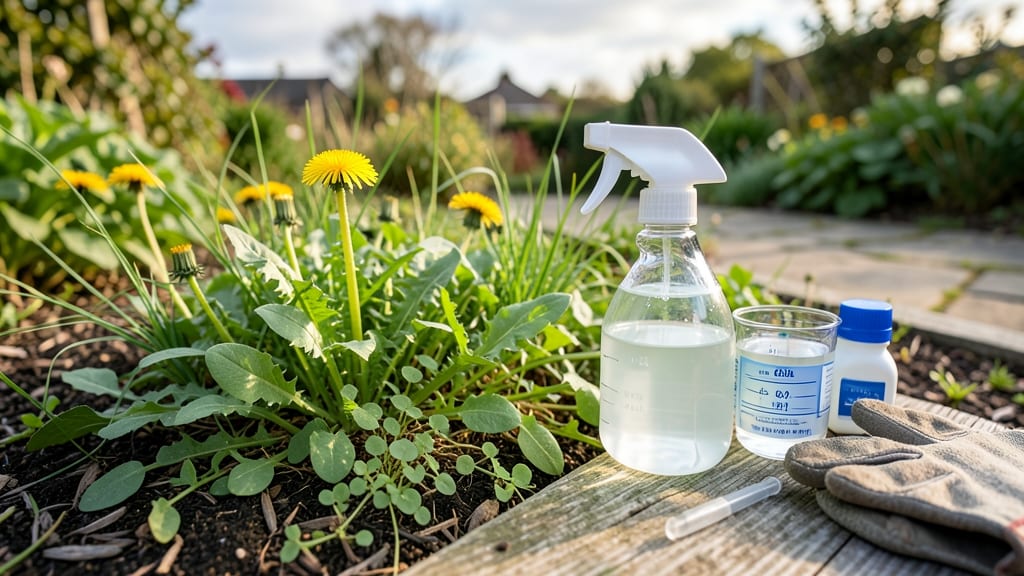
A vinegar dish soap weed killer eliminates unwanted plants by leveraging white vinegar's acetic acid (5-10%) to disrupt cell membranes, while dish soap enhances penetration. This combo dries out weeds in 24-48 hours when sprayed in a 1:1 ratio on sunny, calm days—avoid wind or spraying near desirable plants.
A vinegar dish soap weed killer is a budget-friendly, chemical-free alternative that harnesses the power of household ingredients.
The acetic acid in vinegar acts as a natural herbicide by breaking down plant cell walls, while the dish soap reduces surface tension, allowing the solution to cling better to weed leaves. 🔥 For best results, apply this mixture on a bright, sunny day when weeds are actively growing—this maximizes the solution's effectiveness by accelerating evaporation and focusing the acid's impact.
The key is precision: target only the weeds to protect your lawn or garden plants from accidental damage.
This method works particularly well for young weeds or those with broad leaves, as their thinner cell walls are more vulnerable to the vinegar's corrosive effects. However, for tougher weeds like dandelions or deep-rooted grasses, you may need to reapply the solution after a few days to ensure complete eradication.
Always test a small area first to confirm the solution doesn't harm nearby plants.
💡 In This Article
- How Vinegar and Dish Soap Kill Weeds (Science Behind the Mix)
- Best Vinegar-Dish Soap Weed Killer Ratios for Different Weeds
How vinegar and dish soap kill weeds (science behind the mix)
White vinegar's acetic acid (typically 5-10%) works like a chemical scalpel, dissolving the waxy cuticle layer that protects plant leaves. This layer acts as a barrier against moisture loss and pathogen invasion—when disrupted, the plant's cells begin to dehydrate rapidly.
The acetic acid also lowers the pH of the leaf surface to around 2-3, creating an environment where essential enzymes that drive photosynthesis and respiration can no longer function. 🔥 Without these enzymes, the weed's metabolic processes grind to a halt within hours, leading to wilting and death within 24-48 hours.
The dish soap plays a critical support role by breaking surface tension, allowing the vinegar solution to spread evenly and penetrate deeper into the leaf structure. Without soap, vinegar would bead up and roll off the waxy surfaces of many weeds.
Studies show that adding just 1 teaspoon of dish soap per quart of vinegar solution improves coverage by up to 40%. The soap's emulsifying agents also help suspend any plant oils that might otherwise repel the acidic solution, ensuring maximum contact with the leaf cells.
Sunlight becomes a crucial accelerator in this process. The heat from direct sunlight increases evaporation rates, concentrating the acetic acid on the leaf surface and intensifying its corrosive effects. This is why applications on bright, sunny days yield faster results compared to cloudy conditions.
The combination of acidity, soap penetration, and solar amplification creates what botanists call a "triple-action herbicidal effect"—a rare trait in natural weed killers that makes this mixture particularly effective for broadleaf weeds like dandelions and chickweed.
However, this method has limitations with grassy weeds. Their thicker, silica-rich cell walls provide more resistance to acetic acid penetration. For these stubborn plants, you'll need to increase the vinegar concentration to 10% (using undiluted white vinegar) and apply it multiple times over 3-5 days.
The dish soap remains essential even in these cases, as it helps the solution cling to the upright grass blades that would otherwise shed liquid quickly.
What most gardeners overlook is the vinegar's secondary effect on soil microorganisms. While it won't kill beneficial bacteria in the top inch of soil, repeated applications can temporarily reduce microbial diversity.
This is why many experts recommend using this method sparingly—only when absolutely necessary—and always applying it directly to weeds rather than spraying broadly. The solution's effectiveness drops dramatically when it contacts soil, as organic matter quickly neutralizes the acetic acid.
For maximum impact, time your application when weeds are actively growing—typically in the morning hours when dew has evaporated but temperatures remain moderate (70-85°F).
This timing allows the solution to work its magic before the heat of midday causes rapid evaporation. 🌞 The key is persistence: while you'll see visible wilting within 6-12 hours, complete eradication often requires 3-5 days of follow-up applications for persistent weeds.