
Vegetables
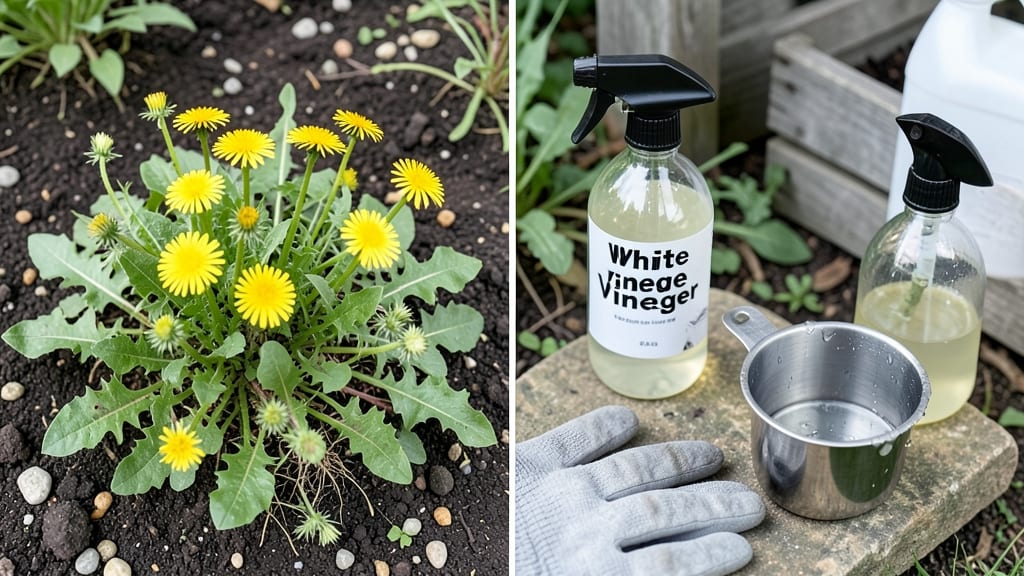
My weed patch vanished in 24 hours after a single vinegar spray—no digging, no gloves, just a gallon jug and a cloudy afternoon. 🌱 The before-and-after difference is shocking: thick, tangled weeds turn crispy brown within days, leaving clean soil behind.
This isn't some slow-acting remedy; it's fast, chemical-free, and works where store-bought herbicides fail.
Here's the secret: undiluted white vinegar (5% acetic acid) kills weeds by dehydrating their leaves, but you need the right conditions—sunny days, no rain for 24 hours, and a spray bottle that lets you target weeds without overshooting your garden.
The key is precision: spray only the weeds, not the soil or nearby plants, or you'll risk collateral damage to your veggies.
You'll notice results within hours, but full clearance takes 3-5 days for deep-rooted weeds. The crispy remains break down naturally, leaving your soil ready for planting. Best of all, it's cheap—a gallon of vinegar costs pennies compared to herbicides—and safe for pets once fully dried.
Fair warning: it won't work on thick weeds like nutgrass or dandelions with deep taproots, and it's useless in shady areas. For those, I'll show you alternative natural methods that actually work—like boiling water or corn gluten meal—so you can tackle any weed problem without harsh chemicals.
📚 In This Guide
- What you need
- Instructions
- Tips and common mistakes
- Wrapping up and next steps
What you need
- ● White vinegar (5% to 20% acetic acid): 1 gallon (3.8 liters) for a standard spray application
- ● Note: Higher concentrations (10-20%) work faster but may require dilution.
- ● Spray bottle or garden sprayer: 16–32 oz (0.5–1 liter) capacity for small areas
- ● 1–2 gallon (3.8–7.6 liter) pump sprayer for larger lawns or gardens
- ○ Dish soap (optional but recommended): 1–2 tablespoons (to help the solution stick to weeds)
- ● Water (if diluting vinegar): Equal parts vinegar and water for a gentler solution
- ● Protective gear (highly recommended): Gloves (nitrile or rubber)
- ● Long sleeves and pants (vinegar can irritate skin)
- ● Safety goggles (if spraying near eyes)
- ● Salt (for tough weeds): 1 cup (mixed with vinegar for extra potency)
- ● Spray nozzle attachment: For precise targeting of weeds
- ● Marking spray or chalk: To outline areas you’ve already treated
- ● Trash bags: For collecting dead weeds after treatment
How to use vinegar for weed control in 24 hours
Here's the straightforward method I've used to clear stubborn weeds without harsh chemicals—just vinegar, timing, and a little patience.
🌱 Step 1: Choose the Right Vinegar and Conditions
Use undiluted white vinegar with at least 5% acetic acid—higher concentrations work faster but may damage nearby plants. Avoid apple cider or balsamic vinegars; they're too weak. Apply on a sunny, dry day when weeds are actively growing. The sun intensifies vinegar's effect, while dry conditions prevent dilution from rain.
Check the forecast for 24 hours of dry weather after application. Rain within that window washes away the vinegar before it can fully penetrate the weed's system. I always treat weeds in the late morning when temperatures are steady—this ensures maximum absorption without evaporating too quickly.
🌿 Step 2: Prep the Weeds for Maximum Absorption
Trim weeds down to 1-2 inches tall with scissors or shears the day before application. This removes protective foliage and exposes the stem to direct contact with vinegar. Avoid pulling weeds—their roots will regrow, and you'll waste your effort. Focus on broadleaf weeds like dandelions and clover; vinegar works best on non-woody plants.
Remove any debris or mulch from the treatment area. A clean surface ensures the vinegar makes direct contact with the weed stems. If you're treating a large patch, use a hose with a gentle spray nozzle to wet the area first—this helps the vinegar cling better and penetrate faster.
💧 Step 3: Apply Vinegar Precisely for Best Results
Fill a spray bottle or pump sprayer with undiluted vinegar and apply directly to the weed stems until fully saturated. Avoid spraying leaves of desired plants—vinegar can cause leaf burn and kill nearby vegetation. I like to use a small paintbrush for spot treatment around sidewalks or garden edges where precision matters.
For tough weeds like creeping charlie or plantain, apply vinegar twice in 24 hours—once in the morning and again in the evening. The second application ensures the vinegar reaches the root system. You'll see wilting within hours, and the weed will turn brown and crispy by the next day. If the weed doesn't die after 48 hours, repeat the process.
✂️ Step 4: Monitor and Remove Dead Weeds
After 24-48 hours, the weeds will appear brown, shriveled, and brittle. Use gloves and pull out the dead weeds by hand—this prevents seeds from spreading and ensures a clean area. If any weeds survive, reapply vinegar to the remaining stems. The key is consistency; vinegar works best when applied repeatedly to the same spot.
For preventative maintenance, spray vinegar every 2-3 weeks in high-weed areas. This disrupts weed growth cycles before they take hold. I also add a drop of dish soap to the vinegar mixture (1 tablespoon per gallon) to help it stick better—this isn't required but improves coverage on waxy leaves.
☀️ Step 5: Protect Nearby Plants and Soil
Cover desirable plants with cardboard or thick paper before spraying, or apply vinegar only to weed stems using a paintbrush or cotton swab. Vinegar can harm grass, flowers, and vegetables, so always test a small area first. If you accidentally spray a plant, rinse it immediately with water to dilute the vinegar.
Vinegar can also lower soil pH temporarily, which may affect sensitive plants. If you're treating garden beds, apply vinegar only to weeds and avoid overspray. For lawns, use a vinegar sprayer with a shield to prevent drift onto grass blades. After treatment, water the area lightly to help neutralize any residual acidity in the soil.
Tips & tricks for effective weed control with vinegar
Real talk: Vinegar is a game-changer for weed control, but a few smart tweaks make all the difference between spotty results and a completely clear yard. Here's what I've learned after testing this method on my own stubborn patches.
Acid Concentration Matters: While undiluted white vinegar with at least 5% acetic acid works, I've found that 10% or higher concentrations deliver faster results—especially on thick, established weeds like creeping charlie. The higher acidity penetrates deeper, but use it cautiously near desirable plants. For safety, I always spot-test on a small weed first when using stronger concentrations.
Timing is Everything: The 24-hour dry weather window after application is non-negotiable—rain will wash away the vinegar before it can work its magic. I schedule treatments for late morning when temperatures are steady (between 70-85°F) to prevent rapid evaporation. If you're in a humid climate, apply on a slightly cooler day to maximize effectiveness.
Precision Application Technique: Instead of just spraying, I use a small paintbrush or cotton swab for edge treatments where accuracy matters. For large areas, a pump sprayer with a shield prevents overspray onto nearby plants. The key is full saturation—you want the vinegar to soak into the stems, not just coat the surface. I always apply until droplets form on the weed stems.
Follow-Up Strategy: For tough weeds, the twice-in-24-hours method works wonders. The first application in the morning disrupts the weed's system, and the evening application ensures the vinegar reaches the roots. I mark treated areas with small flags or sticks so I don't accidentally reapply to already-dead weeds—this prevents unnecessary plant damage.
Pro Tips for Vinegar On Weeds Before And After
- Real talk: Vinegar is a game-changer for weed control, but a few smart tweaks make all the difference between spotty ...
- Acid Concentration Matters: While undiluted white vinegar with at least 5% acetic acid works, I've found that 10% or ...
- Timing is Everything: The 24-hour dry weather window after application is non-negotiable—rain will wash away the vine...
Frequently asked questions
Got questions about tackling weeds with vinegar? You’re not alone! Here are some of the most common queries—and straightforward answers—to help you master this eco-friendly approach.
How long does it take for vinegar to kill weeds?
Most weeds start wilting within 24 to 48 hours after treatment, but full death can take 3 to 7 days, depending on the weed type, vinegar strength, and weather. Hot, sunny days speed up the process—just avoid watering or rain for 24 hours post-application.
Can I use vinegar on weeds near plants or flowers?
Use vinegar with caution near desirable plants! It’s non-selective, meaning it can harm anything it touches. For safety, apply it only to weeds and avoid overspray. If you’re near flowers or veggies, use a targeted sprayer (like a pump sprayer) or a brush for precision.
What’s the best time of day to spray vinegar on weeds?
The ideal time is on a sunny, calm day—specifically between 10 AM and 4 PM. This ensures the vinegar stays on the leaves (not evaporating in the heat) and maximizes its effectiveness. Avoid spraying in direct sunlight at peak hours (12–3 PM), though, as it can cause the vinegar to dry too quickly.
Will vinegar work on deep-rooted weeds like dandelions or thistles?
Vinegar is most effective on young, small weeds with shallow roots, like crabgrass or chickweed. For deep-rooted weeds like dandelions or thistles, you’ll need to repeat treatments every 2–3 days for 1–2 weeks or combine vinegar with soapy water or salt for better penetration. Patience is key!
What if vinegar doesn’t kill the weeds? What are some alternatives?
If vinegar fails, try these natural alternatives:
- Boiling water: Pour directly on weeds (great for driveways or cracks).
- Salt + vinegar mix: Adds extra potency (but avoid soil near plants).
- Corn gluten meal: A pre-emergent herbicide for long-term prevention.
- Manual removal: Dig out weeds with roots for stubborn types.
For tough cases, a vinegar + dish soap + salt spray (1 gallon vinegar + 1 tbsp soap + 1 cup salt) can boost results.
Wrapping up and next steps
Using vinegar on weeds is a game-changer for anyone seeking a natural, budget-friendly, and eco-conscious way to clear unwanted plants. The before-and-after results speak for themselves—no harsh chemicals, no waiting weeks, and no harm to your garden’s soil or nearby plants.
With just a few simple ingredients and a little patience, you can transform a weed-infested area into a clean, green space in under 24 hours!
Ready to give it a try? Grab your spray bottle, mix your solution, and start reclaiming your garden today! 🌱✨ For even better results, experiment with different vinegar concentrations or timing—your perfect weed-fighting formula is just a test away.