
Plants
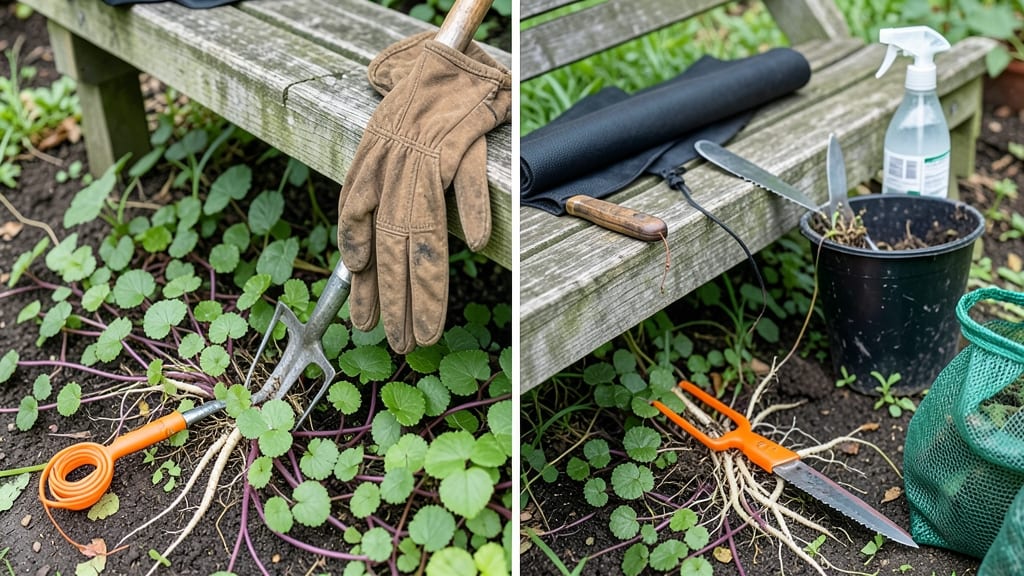
Weeds with underground runners, like creeping Charlie and nutsedge, spread aggressively through rhizomes or stolons that regrow even after cutting. Digging deeply and applying natural vinegar or corn gluten meal can disrupt their growth cycle before they take over your garden.
These persistent weeds thrive because their underground stems store nutrients and energy, allowing them to bounce back stronger after mowing or pulling. 🌱 Unlike surface weeds that die when their tops are removed, these runners can regenerate from even small fragments left in the soil.
I’ve found that the key to stopping them is targeting both the visible foliage AND the hidden root network—simply chopping the tops just encourages faster regrowth.
For best results, combine manual removal with organic treatments. After digging out the roots (aim for at least 6 inches deep), apply a 10% vinegar solution directly to the soil to kill any remaining fragments.
Corn gluten meal works preventatively by blocking seed germination, while smothering with thick mulch starves out new growth over time.
💡 In This Article
- How Underground Runners Help Weeds Survive and Spread
- Natural Removal Methods for Stubborn Underground Weeds
How underground runners help weeds survive and spread
Underground runners—whether called rhizomes or stolons—are nature's survival superpowers for weeds. Rhizomes are thick, horizontal underground stems that store starches and nutrients, like a weed's emergency food supply.
Take creeping Charlie (Glechoma hederacea): its rhizomes can grow up to 1 foot deep and spread 12 inches horizontally per season, creating a dense network that outcompetes garden plants for water and sunlight.
Stolons, on the other hand, are above-ground runners that root at nodes, but many weeds (like nutsedge) combine both systems for maximum resilience.
The real challenge lies in their regenerative ability. When you cut or mow these weeds, the remaining root fragments can regrow into entirely new plants—a process called "sprouting." Studies show that even a 1-inch rhizome piece left in soil can produce a new shoot within 7-14 days.
This is why surface-level removal fails: the plant's energy reserves remain intact. Unlike annual weeds that die when pulled, these perennials have built-in redundancy, making them harder to eradicate than surface weeds, which rely solely on their current season's growth.
These runners also act as aggressive competitors in your garden. Nutsedge, for example, can produce 300 seeds per plant AND spread via rhizomes, creating a dual invasion. The underground network steals nutrients from your desired plants, while the above-ground growth shades them out.
The result? Your vegetables or flowers end up stunted while the weeds thrive. 🌱 What's worse, many of these weeds release chemicals called allelochemicals that suppress nearby plant growth, giving them an unfair advantage in the ecosystem.
Understanding this biology explains why traditional methods—like spot-treating with herbicides—often fail. A single application might kill the visible leaves, but the rhizomes remain dormant in the soil, ready to regrow when conditions are favorable.
The key to breaking this cycle is targeting the entire system: roots, runners, AND any residual fragments. Without this holistic approach, you're essentially playing whack-a-mole with your garden's persistence.
Consider the case of Bermuda grass, which spreads via stolons. Each node along the stem can root independently, creating a carpet-like spread. When you mow it, the stolons continue growing horizontally, producing new shoots from every contact point.
This is why lawns invaded by Bermuda often require complete removal—including the root zone—to prevent regrowth. The same principle applies to weeds like field bindweed, whose rhizomes can extend 15 feet deep in some cases, making manual removal nearly impossible without specialized tools.
What most gardeners don't realize is that these weeds have evolved to exploit human habits. When you pull a weed and leave a small rhizome fragment, you've just planted a time bomb.
The fragment will grow into a mature plant, often more aggressively than the original, because it has access to all the stored nutrients. This is why professionals recommend digging at least 6-12 inches deep and inspecting soil for any remaining pieces—even the tiniest fragment can become a new infestation.