
Plants
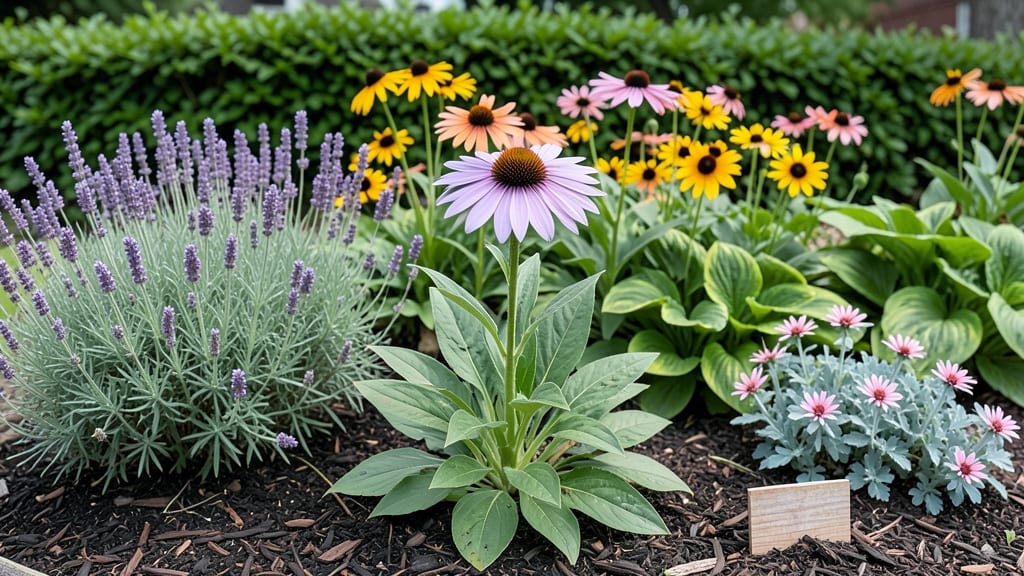
Perennials are plants that return year after year from their root systems, producing flowers or foliage seasonally without needing to be replanted, unlike annuals that live only one growing season. Their ability to regenerate makes them ideal for long-term garden design.
These hardy plants store energy underground through specialized structures like bulbs, tubers, or deep root systems, allowing them to survive winter dormancy and reemerge when conditions improve. 🌱 Unlike annuals that complete their entire life cycle in one season, perennials build resilience over time, often becoming more robust with each passing year.
This makes them perfect for low-maintenance gardens where you want lasting color and structure without annual replanting.
Many gardeners favor perennials because they establish themselves quickly, requiring less effort than annuals once established. Their seasonal blooms provide continuous interest, and some varieties even produce edible parts like herbs or vegetables. For example, asparagus and rhubarb are perennial favorites that reward patience with years of harvest.
💡 In This Article
- How Perennial Plants Survive Winter and Reemerge
- Choosing Perennials for Your Garden Climate and Space
How perennial plants survive winter and reemerge
The secret to a perennial's longevity lies in its specialized underground storage organs, which act like nature's own energy banks. These structures—such as rhizomes (horizontal underground stems), bulbs (modified leaves), and tubers (thickened roots)—store carbohydrates, nutrients, and moisture during dormancy.
For example, a peony stores energy in its thick, fleshy roots, while a daylily relies on its rhizomes to regenerate each spring. These systems can survive temperatures as low as -30°F in hardy varieties, thanks to antifreeze-like proteins that prevent ice crystal formation in their cells.
Seasonal dormancy is the key mechanism that keeps perennials alive through harsh winters. When temperatures drop, the plant's growth slows, and metabolic processes shift to preserve energy. In deciduous perennials like hostas, the above-ground foliage dies back completely, but the roots remain active, respiring at a minimal rate.
Evergreen perennials, such as heucheras, reduce water loss by producing thick, waxy leaves that retain moisture. This adaptation allows them to survive freezing temperatures without permanent damage.
The transition back to growth in spring is triggered by a combination of increasing daylight and soil temperatures, signaling the plant to resume photosynthesis.
Not all perennials are created equal when it comes to cold hardiness. Hardy perennials, such as coneflowers or black-eyed Susans, can withstand Zone 3-4 climates (as low as -40°F), while tender perennials like canna lilies or dahlias need to be dug up and stored indoors in colder regions.
The difference lies in their cellular structure: hardy perennials produce more antioxidants and osmolytes (organic compounds that stabilize proteins) to protect against frost damage. For instance, a Russian sage can survive extreme cold because its cells are packed with protective sugars that act like antifreeze.
Another fascinating adaptation is the ability of some perennials to reproduce vegetatively, meaning they can spread and create new plants from their root systems without seeds. Creeping thyme spreads via stolons (above-ground runners), while irises multiply through rhizomes.
This ensures the plant's survival even if part of it is damaged or dies. In contrast, annuals rely solely on seeds to propagate, which is why they complete their life cycle in one season.
The perennial's ability to regenerate from the same root system year after year is what makes them the backbone of sustainable gardens.
What most gardeners don't realize is that perennials often perform better in their second or third year. This is because their root systems become more extensive, allowing them to access deeper water and nutrients.
For example, a lavender plant may take two years to establish itself fully but will then thrive for decades with minimal care. This gradual improvement is due to the plant's ability to allocate more energy to root growth during its early years, creating a stronger foundation for future blooms. 🌿
To maximize a perennial's survival and growth, it's essential to mimic their natural conditions. Mulching with 2-3 inches of organic material (like wood chips or straw) insulates the roots in winter and retains moisture in summer.
Avoid over-fertilizing in the fall, as this can encourage tender new growth that's vulnerable to frost. Instead, focus on building soil health with compost, which provides slow-release nutrients that support root development. By understanding these biological mechanisms, you can create a garden that thrives year after year with minimal effort.