
Advice
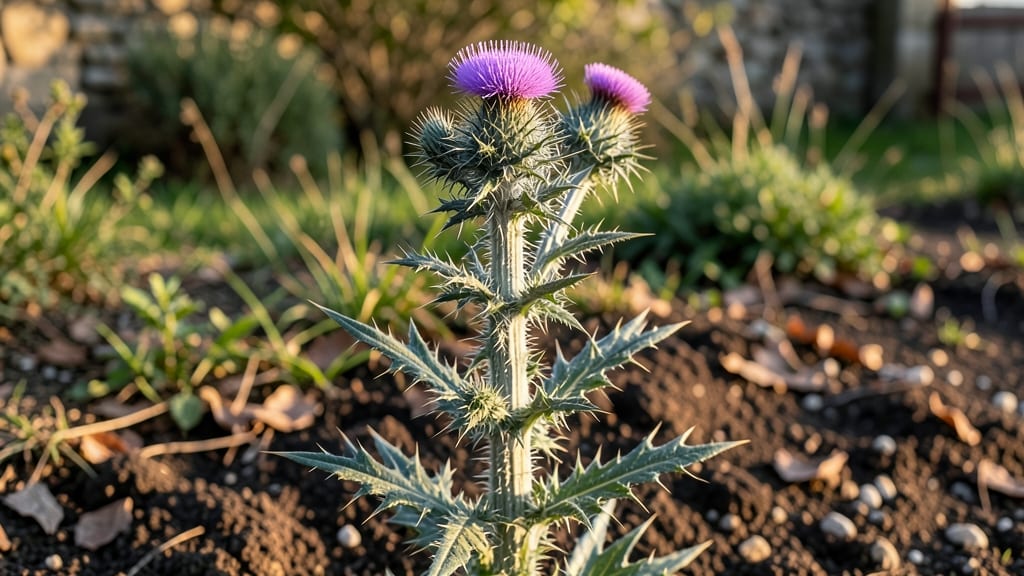
The spiky weeds you're likely seeing are called crabgrass (digitaria species) or field bindweed (convolvulus arvensis), though others like purslane (with tiny spikes) or goosegrass may also fit. Identify them by leaf shape, seed heads, and growth patterns before treating or removing them.
The spiky weeds popping up in your yard likely belong to one of these common troublemakers: crabgrass spreads with its distinctive finger-like seed heads, while field bindweed twines aggressively with arrow-shaped leaves. 🌱 Purslane, though less aggressive, has those tiny red-tipped stems that many mistake for prickly weeds.
The key to telling them apart lies in how they grow—some sprawl while others shoot straight up—and their seed structures, which reveal their next move before you even see them.
Once you've identified them, your removal strategy changes completely. Crabgrass thrives in lawns and needs pre-emergent herbicides in early spring, while bindweed requires persistent vinegar treatments or targeted herbicides. Purslane, being an edible weed, might just need a gentle tug—no chemicals required!
Understanding these differences saves you time and keeps your yard looking its best without unnecessary harsh treatments.
💡 In This Article
- Identifying Common Spiky Weeds by Leaf and Seed Structure
- Best Organic and Chemical Removal Methods for Spiky Weeds
Identifying common spiky weeds by leaf and seed structure
Crabgrass stands out first with its flat, finger-like seed heads that resemble a crab's claws—hence the name. These seeds grow on stiff, upright stems that can reach 6-12 inches tall, and the leaves are rough-edged and V-shaped, with a slightly blue-green hue.
The key visual clue? Its spreading root system creates dense patches that crowd out grass, often appearing in late spring when lawns are still thin. 🌱 This weed thrives in compacted soil and full sun, which is why it dominates sidewalks and driveways.
Field bindweed, on the other hand, has arrow-shaped leaves with pointed tips and a waxy texture that feels almost slippery to the touch. Its stems are twining and aggressive, growing up to 10 feet long if left unchecked.
Unlike crabgrass, bindweed produces white or pink funnel-shaped flowers in summer, followed by seed pods that burst open when mature. The real giveaway? Its creeping underground rhizomes, which can survive for decades and regrow from tiny fragments—making it one of the hardest weeds to eradicate.
Purslane, though less aggressive, has those tiny, red-tipped stems that feel slightly succulent when pinched. Its leaves are thick and oval-shaped, arranged in pairs along the stem, and the plant sprawls low to the ground rather than standing upright.
The "spikes" you might notice are actually tiny hair-like structures on the stems, not true thorns.
This weed loves dry, sandy soil and often appears in cracks of pavement or garden beds where moisture is scarce. 🌿 Unlike its prickly cousins, purslane is edible and packed with omega-3s—so it might be worth keeping if you're growing a vegetable garden!
Goosegrass, another common spiky intruder, has long, narrow leaves that grow in a rosette pattern close to the ground. Its seed heads resemble tiny broomsticks, with stiff, spiky bristles that can irritate bare skin.
This weed spreads via underground stolons and thrives in disturbed soil, often popping up after construction or heavy foot traffic. The difference? Goosegrass leaves are smooth and waxy, while crabgrass leaves feel rough like sandpaper.
To identify these weeds accurately, examine three key features: leaf shape (V-shaped vs. arrow-shaped vs. oval), growth habit (upright vs. creeping vs. sprawling), and seed head structure (clusters vs. spikes vs. broom-like bristles).
For example, crabgrass's blue-green V-shaped leaves and finger-like seed heads are dead giveaways, while bindweed's twining stems and arrow-shaped leaves make it unmistakable once you know what to look for. 🔍