
How To
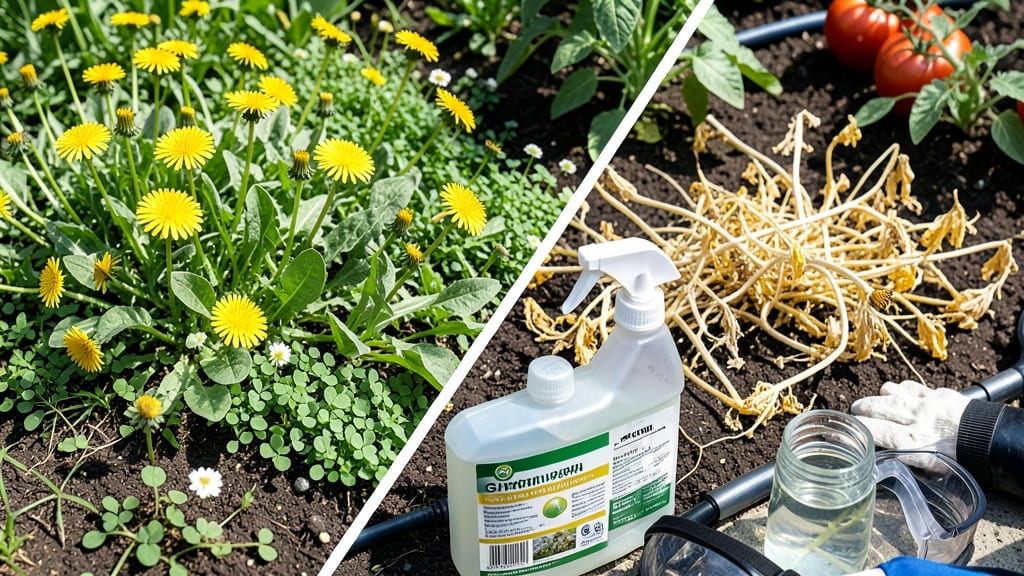
Non-selective weed killers destroy all plant life they contact—grasses, broadleaf weeds, flowers, vegetables, and even trees—by disrupting cellular processes and stopping photosynthesis. These chemicals are engineered to eliminate vegetation indiscriminately.
These herbicides work by either absorbing into plant tissues (systemic) or burning on contact (contact), effectively shutting down growth processes. 🌱 The most common active ingredients, like glyphosate or paraquat, target enzymes critical for plant survival, leaving no room for selectivity.
While effective for clearing large areas, their lack of discrimination means they'll kill anything green they touch—so timing and application method matter greatly for minimizing collateral damage.
For gardeners or landscapers, this means using protective barriers or spot treatments when dealing with desirable plants nearby. Organic alternatives like vinegar-based sprays or corn gluten meal offer targeted control but require more effort. Always follow label instructions to avoid unintended damage to soil or surrounding flora.
💡 In This Article
- How Non-Selective Herbicides Kill Plants at a Cellular Level
- Safety Precautions and Alternatives for Targeted Weed Control
How non-selective herbicides kill plants at a cellular level
Non-selective herbicides work by targeting fundamental biological processes that all plants rely on for survival. The most common active ingredients like glyphosate (found in Roundup) and paraquat disrupt the shikimic acid pathway, which plants need to produce essential amino acids.
Without these building blocks, cells can't grow or repair themselves, leading to rapid decline. Glyphosate, for instance, binds to an enzyme called EPSP synthase, which is critical for synthesizing proteins—this stops new growth within 24-48 hours of contact.
Another mechanism involves membrane disruption. Contact herbicides like glufosinate or diquat attack the cell membranes directly, causing them to leak vital nutrients and water. This is why you'll see wilting and browning almost instantly after application—it's not just dehydration, but a complete breakdown of cellular integrity.
Systemic herbicides (like glyphosate) are absorbed through leaves or roots and transported throughout the plant, ensuring total eradication even from hidden growth points.
Photosynthesis is another primary target. Herbicides like atrazine block the electron transport chain in chloroplasts, preventing plants from converting sunlight into energy. Without this process, the plant starves itself from the inside out.
The difference between systemic and contact herbicides lies in their absorption: systemic types move through the plant's vascular system, while contact herbicides only affect what they touch. This is why systemic herbicides can kill plants even if they miss the foliage entirely.
Temperature and humidity play critical roles in effectiveness. Most non-selective herbicides work best in 70-85°F conditions with moderate humidity—this ensures proper absorption and activation.
In dry or cold weather, the chemicals may not penetrate as effectively, reducing their potency. 🌡️ For example, glyphosate requires at least 6-8 hours of leaf wetness after application to work optimally, which is why early morning spraying is often recommended.
One often-overlooked aspect is the plant's growth stage. Young, actively growing plants are far more susceptible because their cells are rapidly dividing and absorbing nutrients. Mature plants with thick bark or waxy leaves may require higher concentrations or repeated applications.
This is why large-scale clearing often uses concentrated formulations—older vegetation demands more aggressive treatment to achieve the same results as younger plants.
The speed of action varies by herbicide type. Contact herbicides like paraquat can kill plants within hours, causing immediate browning, while systemic herbicides like glyphosate may take 7-14 days to show full effects.
This delayed action is why many gardeners prefer contact herbicides for quick results, though they don't provide the same long-term root system destruction as systemic options.