
Plants
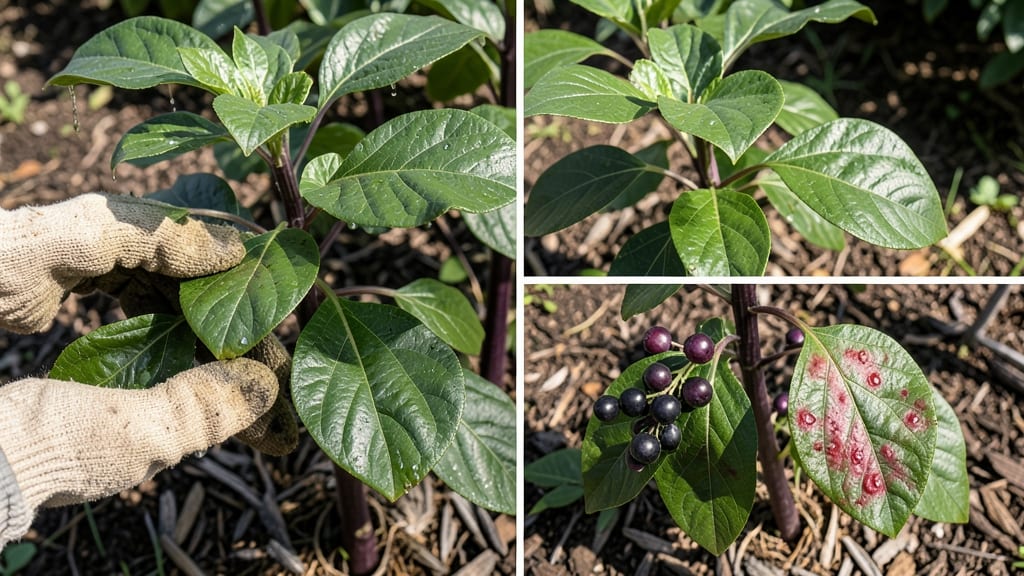
Pokeweed rash looks like clusters of small, raised red bumps or fluid-filled blisters that often form linear patterns where skin brushed against the plant's purple berries or sap. The reaction typically starts with intense itching within hours, progresses to oozing or crusting, and usually clears up in 1-3 weeks without medical treatment.
Pokeweed rash often begins with a fiery redness that quickly develops into itchy, raised welts along the exposed skin—think arms, legs, or hands after handling the plant. Unlike poison ivy's classic "line" pattern, pokeweed reactions can appear more scattered but still follow the path of contact.
The key identifier? The plant itself: pokeweed has deep purple stems, clusters of berry-like fruit, and broad leaves with a slightly waxy texture. 🌿 If you see these features growing wild, avoid touching them—your skin will thank you later.
What sets pokeweed rash apart is how it evolves: after the initial blisters form, they may burst and crust over, leaving temporary brownish patches. While most cases resolve on their own, severe reactions can spread or become infected, so keeping the area clean and dry is critical.
Over-the-counter antihistamines and hydrocortisone cream can ease symptoms, but if the rash covers large areas or shows signs of infection (pus, fever), it's time to see a dermatologist.
💡 In This Article
- Pokeweed Rash Visual Progression and Plant Identification
- First-Aid Treatments for Pokeweed Rash Relief
Pokeweed rash visual progression and plant identification
Pokeweed rash begins as a fiery redness that develops within 12-24 hours of contact, often concentrated along the skin's creases or where the plant's sap or berries touched.
The reaction starts with tiny, pinpoint red dots that quickly swell into 1-3mm raised bumps, similar in texture to a mosquito bite but more clustered.
These bumps often form linear patterns—think of tiny red streaks following the path of contact, like a trail of tiny blisters along your forearm or leg. 🌿 The key difference from poison ivy is that pokeweed's rash tends to be more scattered and less "connected" in a single line, though both can cause intense itching.
The next stage involves fluid-filled blisters that may appear 24-48 hours after exposure. These blisters are typically clear or straw-colored, ranging from 2-5mm in diameter, and can burst within 3-5 days, leaving behind moist, weeping sores.
Unlike poison oak's deeper red-brown patches, pokeweed's blisters often appear more translucent, with a slightly shiny, wet surface that can crust over within 5-7 days. The crusting phase leaves behind brownish or yellowish scabs, which eventually flake off as the skin heals over 1-3 weeks.
Identifying the plant itself is crucial to prevention. Pokeweed (Phytolacca americana) has distinctive deep purple stems that can reach 3-10 feet tall, topped with clusters of berry-like fruit that start green and ripen to a dark purple-black color.
The leaves are 6-12 inches long, oval-shaped, and arranged alternately along the stem, with a slightly waxy, leathery texture.
The berries are toxic and often mistaken for edible fruits, which is why children and pets are at higher risk. 🚨 Unlike poison ivy's "leaves of three, let it be," pokeweed has no such rhyme—its broad leaves grow singly along the stem, making it easier to misidentify if you're not paying close attention.
One of the most confusing aspects is how pokeweed rash can mimic other reactions. For example, poison ivy's blisters often form in a more continuous line, while pokeweed's may appear more patchy or clustered, especially if the contact was with the berries or sap.
Contact dermatitis from other plants (like sumac) might look similar, but pokeweed's rash tends to itch more intensely within the first 24 hours and progresses faster to the blistering stage.
If you're unsure whether you've encountered pokeweed, look for the purple stems and berries—these are dead giveaways that should make you steer clear.
The plant's sap contains phytolaccatoxin, a compound that triggers an allergic reaction in most people. This toxin disrupts the skin's barrier function, causing inflammation and the characteristic blistering.
Interestingly, some people develop a delayed reaction, where symptoms appear 3-5 days after exposure, making it harder to pinpoint the cause.
This is why it's essential to wash exposed skin with soap and cold water within 10 minutes of contact—this reduces the toxin's ability to bind to your skin and trigger a reaction. 💧
If you're outdoors frequently, you might encounter pokeweed in wooded areas, fence rows, or disturbed soils, where it thrives as an invasive species. The plant's berries are particularly dangerous because they can explode when touched, spreading the sap and increasing the risk of exposure.
Unlike poison ivy, which requires direct skin contact with the oil (urushiol), pokeweed's reaction can occur even if you don't break the skin—simply brushing against the leaves or berries can trigger a response. This makes it especially insidious in areas where the plant grows densely.