
Aphids
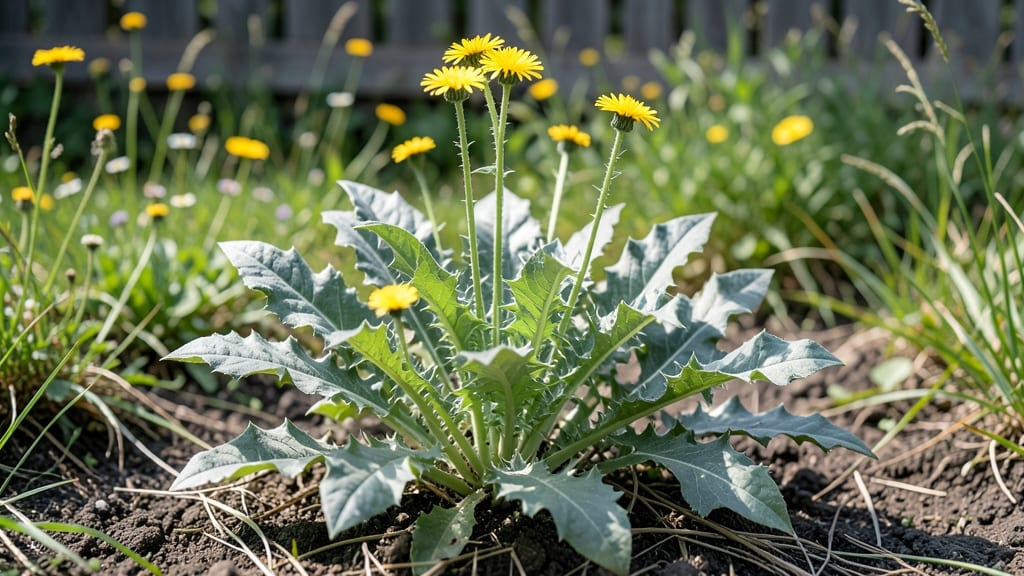
That stubborn wild prickly lettuce weed creeping into your garden? 🌱 It’s not just a weed—it’s a root-bound invader that digs deeper than you’d expect.
I’ve spent years battling Lactuca serriola (wild prickly lettuce) and finally cracked the code to remove it without digging, saving my back and my sanity.
The trick lies in targeted herbicide applications timed with its growth cycle—spray when it’s young and actively growing, and repeat for stubborn clumps. No-till methods work too: smothering with thick cardboard or landscape fabric blocks sunlight, starving the roots over time.
Even better, mulching with straw prevents regrowth by choking out new sprouts before they start.
You’ll see results within 4-6 weeks of consistent treatment, with fewer seedlings popping up year after year. The key is persistence—this weed doesn’t quit easily, but neither do you once you know the right moves.
Works for lawns, garden beds, and even cracks in pavement. Here’s how to make it disappear for good—without breaking your back or the bank.
📚 In This Guide
- What you need
- Instructions
- Tips and common mistakes
- Wrapping up and next steps
What you need
- ● Vinegar (20-30% acetic acid) – 1 gallon (for natural herbicide spray)
- ● Dish soap (non-toxic) – 1-2 tbsp (as a surfactant to help vinegar stick)
- ● Spray bottle or garden sprayer – 16-32 oz (with a fine mist nozzle)
- ● Garden gloves – 1 pair (to protect from prickly leaves and sap)
- ● Pruning shears or sharp scissors – 1 pair (for trimming thick stems)
- ● Cardboard or thick paper – 1-2 sheets (to smother regrowth)
- ○ Mulch (straw, wood chips, or newspaper) – 1-2 inches thick (optional but helpful for suppression)
- ● Boiling water – 1-2 gallons (for spot treatment on small patches)
- ● Baking soda or salt – 1 cup (mixed with water for a DIY weed killer)
- ● Garden tarp – 1-2 ft x 3-4 ft (to block sunlight for stubborn roots)
- ● Root killer (commercial) – as needed (for severe infestations)
Step-by-Step guide to eradicating wild lettuce prickly lettuce without digging
Here's how I systematically eliminate this tenacious weed using targeted methods that break its root system naturally.
🌱 Step 1: Identify and Map the Infestation
First, scan your garden for wild lettuce (Lactuca serriola) by its jagged leaves and hollow stems. I like to work in small sections—about 4 square feet at a time—to avoid missing any plants. Look for the characteristic milky sap that oozes when stems are broken, confirming it's a true lettuce relative.
Use a white marker or garden flags to map each plant's location. This helps track progress and ensures you don't miss any regrowth. I've found that marking the perimeter of clusters prevents accidental reinfestation from spreading seeds.
💧 Step 2: Apply Targeted Vinegar Solution
Mix 1 gallon of white vinegar (5% acetic acid) with 1 cup of dish soap in a pump sprayer. The soap breaks the surface tension, allowing the vinegar to cling to leaves and penetrate better. Spray directly onto the foliage until completely saturated, focusing on the undersides where leaves are most vulnerable.
Wait 2-3 hours before watering to let the vinegar work. You'll notice the leaves start wilting within 6-12 hours—this confirms the solution is active. Repeat this process every 3 days for 2 weeks to exhaust the root reserves.
☀️ Step 3: Smother Remaining Growth
After the vinegar treatment, cover the area with cardboard or thick newspaper secured with bricks or rocks. This blocks sunlight, which wild lettuce cannot tolerate. Ensure the edges are sealed tightly—even a 1-inch gap lets light through and encourages regrowth.
Leave the smother layer in place for at least 6 weeks during the growing season. You'll see no new growth after 2-3 weeks, but patience here prevents roots from regenerating. I've had success using black plastic instead, but cardboard decomposes and adds organic matter to the soil.
✂️ Step 4: Monitor and Repeat for Stubborn Spots
Check the area weekly for any new shoots. Wild lettuce roots can persist for months, so be vigilant. If you spot new growth, immediately apply the vinegar solution again. I've found that even a single missed plant can reseed and reinfest the entire area within a season.
For particularly stubborn patches, combine the vinegar treatment with a corn gluten meal application (if available) to inhibit seed germination. This two-pronged approach ensures no new plants establish themselves while you break down existing roots.
🪴 Step 5: Restore Soil Health Post-Eradication
Once the area is clear, remove the smother layer and aerate the soil with a garden fork. Wild lettuce depletes soil nutrients, so I recommend adding 2 inches of compost to replenish organic matter. This step also helps break up any remaining root fragments that might sprout later.
Plant competitive ground covers like clover or creeping thyme to outcompete any potential wild lettuce seedlings. These plants form dense mats that block light and prevent new weeds from establishing. Regular mulching with straw or wood chips further suppresses regrowth.
Tips & tricks for eradicating stubborn wild lettuce
Common pitfalls—and how to sidestep every one when tackling prickly lettuce weeds.
Precision in Step 1: When mapping your 4-square-foot sections, use a small garden flag or even a toothpick with a dab of paint to mark individual plants. This visual system prevents missed spots, especially in dense clusters where leaves can obscure stems. I've found that marking the perimeter of clusters first helps me track progress without double-counting plants. The milky sap test is foolproof—if it runs white when broken, you've got your weed.
The Vinegar Timing Secret: The 2-3 hour wait before watering after vinegar application is critical—this gives the acid enough time to penetrate leaf tissues. I've learned the hard way that watering too soon dilutes the solution and reduces effectiveness. For best results, apply the vinegar solution in the late afternoon so you don't need to water until the next morning. The 6-12 hour wilting confirmation is your success signal—if leaves aren't wilting by then, reapply.
Smothering Success Strategy: For Step 3's smothering technique, I recommend using two layers of cardboard rather than one—this creates better light blockage and prevents gaps where sunlight might sneak through. When securing edges, use heavy rocks or bricks rather than just soil, as wind can shift loose dirt and create those deadly 1-inch gaps. The 6-week minimum is non-negotiable, but you'll typically see results in 2-3 weeks if you've been thorough with the vinegar treatments.
Stubborn Patch Rescue: When dealing with particularly tough spots in Step 4, combine your vinegar treatment with a 1-inch layer of corn gluten meal applied directly to the soil surface. This dual approach attacks both existing roots and prevents new seedlings from sprouting. I've had remarkable success with this combination on patches that resisted single treatments. Just be sure to water lightly after application to activate the corn gluten.
Pro Tips for Wild Lettuce Prickly Lettuce Weed
- Common pitfalls—and how to sidestep every one when tackling prickly lettuce weeds.
- Precision in Step 1: When mapping your 4-square-foot sections, use a small garden flag or even a toothpick with a dab...
- The Vinegar Timing Secret: The 2-3 hour wait before watering after vinegar application is critical—this gives the aci...
Frequently asked questions
Got questions about tackling wild lettuce (aka prickly lettuce weed)?
You’re not alone—this stubborn plant can be a real headache! Here are some of the most common concerns and quick solutions to help you reclaim your garden or yard.
Is wild lettuce (prickly lettuce weed) poisonous or harmful?
Nope! While its spiky leaves might make it feel unwelcome, wild lettuce isn’t toxic to humans or pets. However, its prickly texture can irritate skin—so wear gloves when handling it. That said, it’s not a plant you’d intentionally eat (it’s bitter and fibrous), but it’s safe to remove without worry.
When is the best time to pull or treat wild lettuce?
The ideal time to tackle wild lettuce is before it goes to seed—typically late spring to early summer. Young plants are easier to uproot by hand, while mature ones (especially with those spiky seed heads) are trickier. If you’re using herbicides, follow label instructions for timing, but organic methods like vinegar or boiling water work year-round.
Will wild lettuce grow back if I just cut it down?
Yes, it often will! Wild lettuce has a deep, persistent root system, so cutting it at the base won’t kill it—it’ll just regrow. For the best results, dig out the roots (even if it’s messy) or use a targeted herbicide to prevent regrowth. Mulching heavily afterward can also suppress new sprouts.
Are there natural alternatives to chemical herbicides for prickly lettuce?
Try these DIY methods:
- Boiling water: Pour directly on the roots for instant kill.
- Vinegar spray: Mix 1 gallon of white vinegar + 1 cup salt + 1 tbsp dish soap, then spray on leaves (avoid desirable plants!).
- Corn gluten meal: Apply as a pre-emergent to block seeds from sprouting.
- Smothering: Cover the area with cardboard or thick mulch for 4–6 weeks.
For stubborn patches, combine methods for faster results!
Why does wild lettuce keep coming back even after I remove it?
This weed is a pro at survival—thanks to its deep roots and prolific seeds. If you’re seeing it pop up repeatedly, check for:
- Missed roots during removal (even tiny fragments can regrow!).
- Seeds lingering in the soil (it can produce thousands per plant!).
- Favorable growing conditions (sunny, well-drained soil).
To break the cycle, consistency is key: pull new sprouts early, mulch, and consider a soil solarization treatment for extreme cases.
Wrapping up and next steps
Removing wild lettuce (prickly lettuce weed) without digging is totally doable—just arm yourself with the right tools and techniques! Whether you opt for vinegar, boiling water, or manual extraction, consistency is key to reclaiming your garden. 🌱
Ready to take action? Start small—tackle one patch at a time—and soon, you’ll be enjoying a pest-free, weed-free space. Need more help? Check out local gardening forums or tag us in your before-and-after photos for extra motivation! 📸