
Lawn
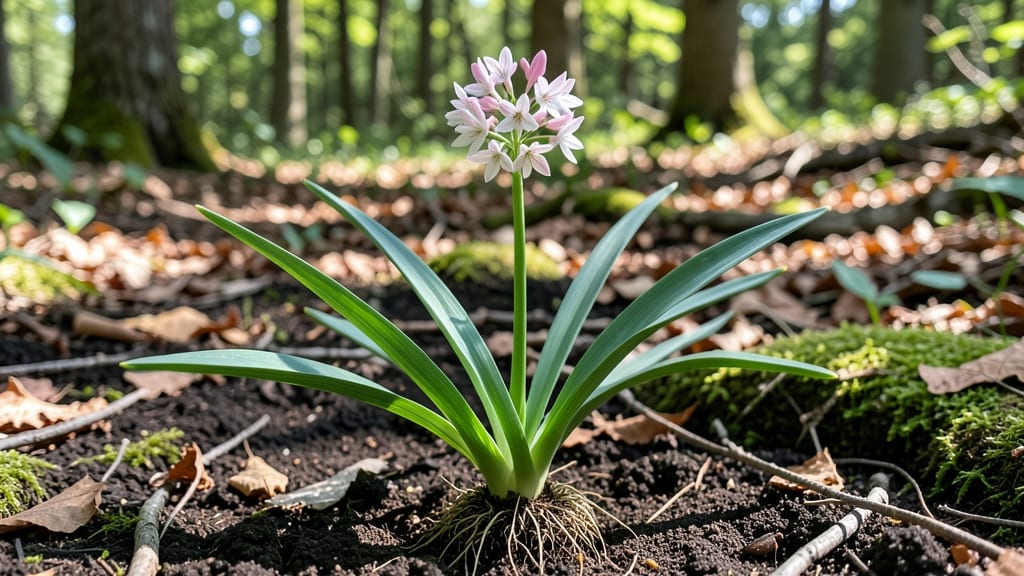
Wild onion grass weed looks like edible onions but has hollow, round stems and long, flat grass-like leaves that release a strong onion scent when crushed. Remove it by pulling entire roots when soil is damp to stop regrowth, and wear gloves to protect against skin irritation from its sap.
This invasive weed thrives in lawns and gardens, often mistaken for harmless green onions or chives. 🌱 The key difference lies in its grass-like foliage—wild onion grass never forms true bulbs like edible onions, instead sending up thin, tubular stems that spread aggressively.
I’ve found that even small patches can multiply rapidly, so early identification is critical. The sharp odor helps distinguish it from ornamental grasses, which typically smell neutral or slightly sweet.
For removal, timing matters most—target the weed after rain when roots loosen easily from the soil. Manual extraction works best for small infestations, while larger areas may require a combination of vinegar spray (20% acetic acid) and repeat applications over several weeks.
Always test a small area first, as vinegar can damage nearby plants.
💡 In This Article
- Identifying Wild Onion Grass Weed vs Edible Onions
- Safe and Effective Wild Onion Grass Removal Methods
Identifying wild onion grass weed vs edible onions
The most telling difference between wild onion grass and cultivated onions lies in their leaf structure. Wild onion grass produces long, flat, grass-like leaves that grow in clusters from a single base, measuring 12-24 inches tall with a width of just 1/8-1/4 inch.
These leaves have a distinctive V-shaped cross-section when viewed edge-on, unlike the rounded, tubular leaves of chives. The edges also have a slightly jagged appearance, while edible onions typically have smooth, straighter leaf margins.
Another key identifier is the absence of true bulbs. Wild onion grass forms a small, fibrous root system but never develops the layered, papery bulbs found in edible onions or green onions. Instead, it produces thin, hollow stems that grow 6-18 inches tall and contain a milky sap when broken.
This sap contains allicin, the same compound that gives onions their pungent aroma, but in higher concentrations that can irritate skin—hence the need for gloves during removal. The scent is strongest when leaves are crushed, releasing that sharp, onion-like odor that lingers in the air.
Botanically, wild onion grass belongs to the Allium family but exhibits traits more similar to wild garlic than cultivated onions. Its flowers form round, umbel-shaped clusters (like chives) but with star-shaped white or pink flowers that appear in late spring to early summer.
Edible onions, in contrast, produce spherical flower heads with six tepals and often have a more robust, bulbous base. This floral difference is crucial—wild onion grass spreads primarily through seed production, making early identification critical to prevent garden takeover.
For visual comparison, imagine holding a green onion and a blade of wild onion grass side by side. The green onion’s leaves will feel thicker and more cylindrical, while the wild onion grass leaves will feel flatter and more flexible—almost like a blade of grass.
The stems also differ: wild onion grass stems are hollow and round, while green onion stems are solid and slightly flattened. This structural contrast is your best field test when identifying unknown plants in your yard.
One common mistake is confusing wild onion grass with ornamental grasses like fountain grass or maiden grass. The key distinction is the onion-like scent—crush a leaf between your fingers, and if it smells strongly of onions, you’ve identified wild onion grass.
Ornamental grasses typically have little to no odor. This scent test is especially useful in shaded areas where visual differences might be harder to spot due to lighting variations.
Understanding these botanical differences isn’t just academic—it directly impacts your removal strategy. Wild onion grass’s grass-like growth habit means it spreads through both seeds and underground runners, while edible onions grow from bulbs.
This growth difference explains why pulling wild onion grass by the roots is so critical: even small root fragments can regenerate into new plants, whereas onion bulbs don’t spread this way.