
Orchid Care
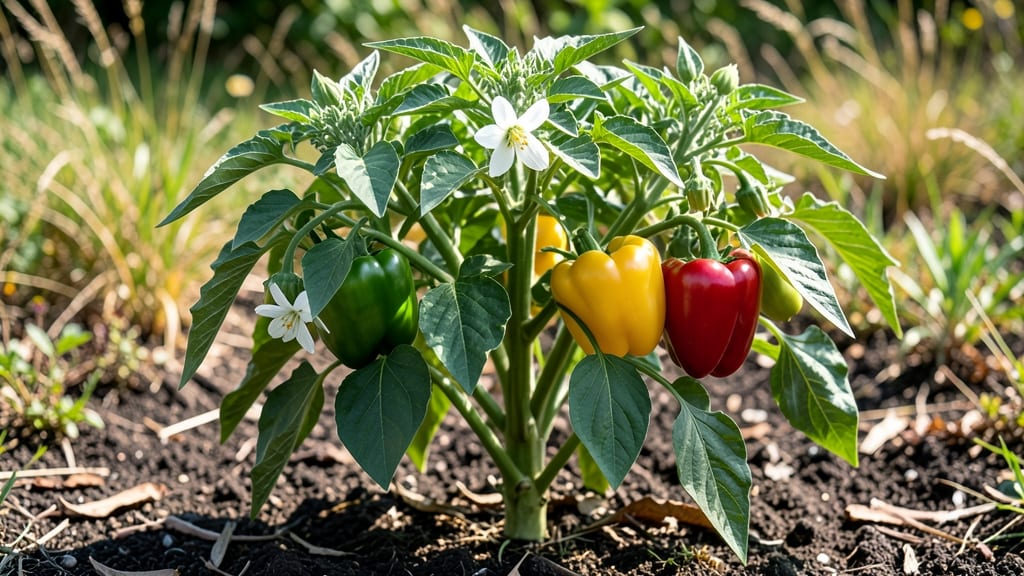
Bell peppers are technically perennials but grown as annuals in most climates because cold temperatures kill their tops, though their roots survive underground for regrowth in warmer zones like USDA 9-11 or tropical regions.
Bell peppers are perennial plants in their native tropical environments, meaning they can live multiple years if conditions stay warm. 🌱 However, in cooler climates, frost and freezing temperatures trigger dieback, killing the above-ground growth but leaving roots intact.
This is why gardeners in temperate zones treat them as annuals—replanting each spring after the last frost. The key difference lies in their hardiness: while roots can endure mild winters in protected areas, the tops simply can't survive prolonged cold.
What's fascinating is how this survival strategy mirrors other tropical plants like tomatoes or eggplants. The roots store energy to regrow when temperatures rise, but only if they're shielded from extreme cold.
In zones 9-11, you can actually coax peppers to return year after year, while gardeners in colder areas must either dig up and overwinter plants indoors or accept the annual cycle.
💡 In This Article
- Why Bell Peppers Die Back in Cold Climates
- How to Overwinter Bell Peppers for Year-Round Harvests
Why bell peppers die back in cold climates
Bell peppers belong to the Capsicum annuum family, which evolved in tropical regions where temperatures rarely drop below 50°F. Their above-ground growth is highly sensitive to cold because the plant's cellular structure lacks the protective mechanisms found in true perennials like asparagus or rhubarb.
When temperatures fall below 32°F, the plant's water transport system—its xylem—freezes and ruptures, effectively killing the stems and leaves. This is why gardeners in zones 3-8 treat them as annuals: the tops die back completely, even though the roots may linger in the soil.
The roots themselves are surprisingly resilient, capable of surviving light frosts down to 25°F if protected by mulch or snow cover. This is because the root zone stays warmer near the ground's surface, and the root crown (where stems meet roots) contains dormant buds that can regrow when conditions improve.
In warmer climates like USDA zones 9-11, these buds often sprout again in spring, proving the plant's perennial nature. The key difference is that in colder zones, the roots don't get enough energy reserves to sustain regrowth without human intervention.
What's fascinating is how this dieback mechanism mirrors other tropical plants like tomatoes or basil. All three share a similar sensitivity to cold because their native ecosystems lack seasonal temperature swings.
Unlike hardy perennials that develop woody stems or thick bark to insulate against cold, bell peppers rely entirely on their root systems for survival.
This is why gardeners in marginal zones (8-9) often see peppers "come back" after mild winters—the roots survived, but the plant needed warmer soil to trigger regrowth.
Temperature thresholds are critical here: peppers begin showing cold damage at 40°F (leaves yellow), and dieback becomes irreversible below 28°F. The plant's metabolic rate slows dramatically in cold, but it doesn't enter true dormancy like true perennials.
Instead, it enters a state of suspended animation where only the roots remain active. This explains why you might find pepper plants "popping up" unexpectedly in spring—the roots were waiting for warmth to restart growth.
For gardeners in transitional zones (8-9), this biology offers hope: with proper protection (mulch, row covers), the roots can survive winters and produce new growth. The challenge is maintaining enough soil warmth (60°F+) to trigger regrowth.
In colder zones, however, the roots often starve without new top growth to photosynthesize, making annual replanting the practical choice.
One visual clue to this biology is how pepper plants regrow: new shoots emerge from the base of old stems, not from seed. This confirms the plant's perennial nature—it's using its stored energy reserves to produce new growth rather than starting from scratch.
The only way to truly "kill" a pepper plant is to freeze its roots, which requires temperatures below 20°F for extended periods.