
Plants
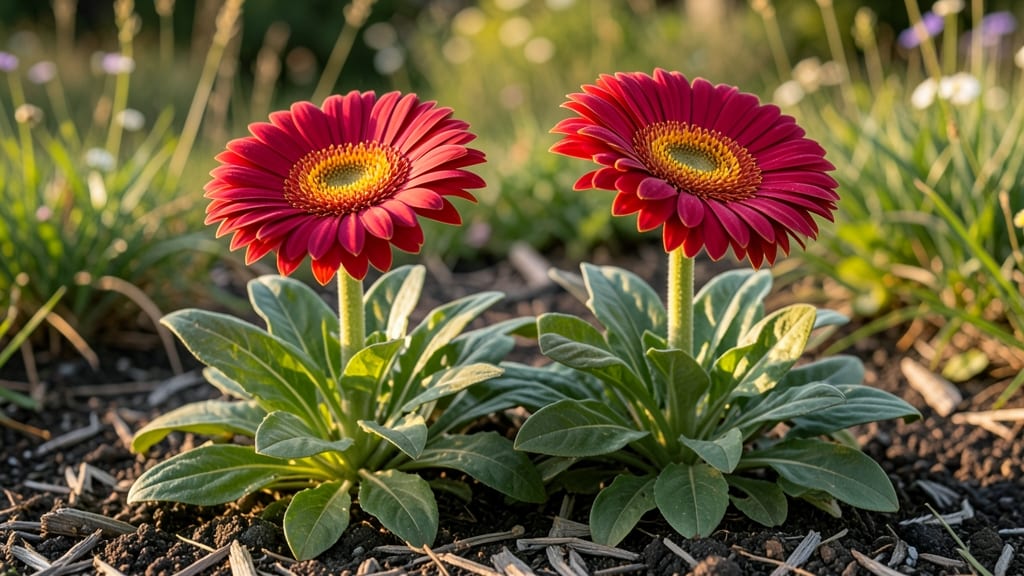
These gerbera daisies are not true perennial plants in most climates, though they behave like perennials in frost-free zones. Their foliage dies back in winter but regrows from the root crown when temperatures warm, often returning with vibrant blooms each spring if conditions are ideal.
Are gerbera daisies perennial plants? They are classified as tender perennials, meaning they survive winter only in warm climates (USDA zones 8-11). 🌱 Their tropical origins make them sensitive to frost, causing above-ground growth to die back—but the roots remain dormant until spring. This behavior mimics perennials, though they lack the hardiness of true perennials like peonies. In colder regions, they typically die completely each winter and must be replanted annually, which is why many gardeners treat them as annuals despite their perennial-like regrowth potential.
What sets them apart is their root crown survival strategy. Unlike annuals that die entirely, gerbera roots stay alive underground, ready to sprout new foliage when conditions improve. This explains why they often return year after year in mild winters—though their longevity depends heavily on winter protection and soil conditions.
💡 In This Article
- Why Gerbera Daisies Act Like Perennials Despite Being Annuals
- How to Overwinter Gerbera Daisies for Repeat Blooms
Why gerbera daisies act like perennials despite being annuals
Gerbera daisies are classified as tender perennials, not hardy perennials like peonies or hostas. Their tropical origins from South Africa mean they evolved in climates where temperatures rarely drop below 50°F (10°C).
When exposed to frost, their above-ground foliage and stems die back—but the root crown (the thickened base where roots and shoots emerge) remains alive and dormant. This root survival mechanism is what makes them behave like perennials in frost-free zones.
The key difference between gerbera daisies and true annuals (like marigolds) is their root system. Annuals die completely after one growing season, while gerbera roots store energy in the form of starches and sugars. When spring arrives, these stored reserves fuel new growth.
In colder climates, however, the roots often succumb to prolonged freezing, which is why gardeners in USDA zones 7 and below typically treat them as annuals. 🌿 The distinction lies in their ability to enter dormancy rather than face total mortality.
This dormancy strategy is similar to other tender perennials like canna lilies or elephant ears, which also rely on root survival. The difference is that gerbera roots are less cold-hardy—typically surviving only brief cold snaps down to 28°F (-2°C).
True hardy perennials, by contrast, can withstand winters as cold as -20°F (-29°C) or lower. This explains why gerbera daisies thrive in greenhouses or containers that can be moved indoors during winter.
What makes their behavior fascinating is the photoperiod sensitivity of gerbera daisies. As daylight shortens in fall, they naturally prepare for dormancy by slowing growth and redirecting energy to root storage.
This physiological response is triggered by the same hormonal changes that help other perennials survive winter—just with less cold tolerance. In ideal conditions (like USDA zone 10), they can live for 3-5 years or longer, producing vibrant blooms each season.
One common misconception is that gerbera daisies are true perennials like daylilies. The confusion arises because they often return year after year in mild climates, but their survival depends entirely on winter protection.
Without it, they behave exactly like annuals. This dual nature is why they're sometimes called "semi-perennials" in gardening circles—a term that better reflects their conditional survival strategy. 💫
For gardeners in transitional climates (like zone 8), the challenge is creating conditions that mimic their native tropical environment. This often involves strategic overwintering techniques, from mulching to container growing, which we'll explore in the next section.
The ability to regrow from roots is what gives them their perennial-like reputation—but it's a delicate balance between nature and human intervention.