
Vegetables
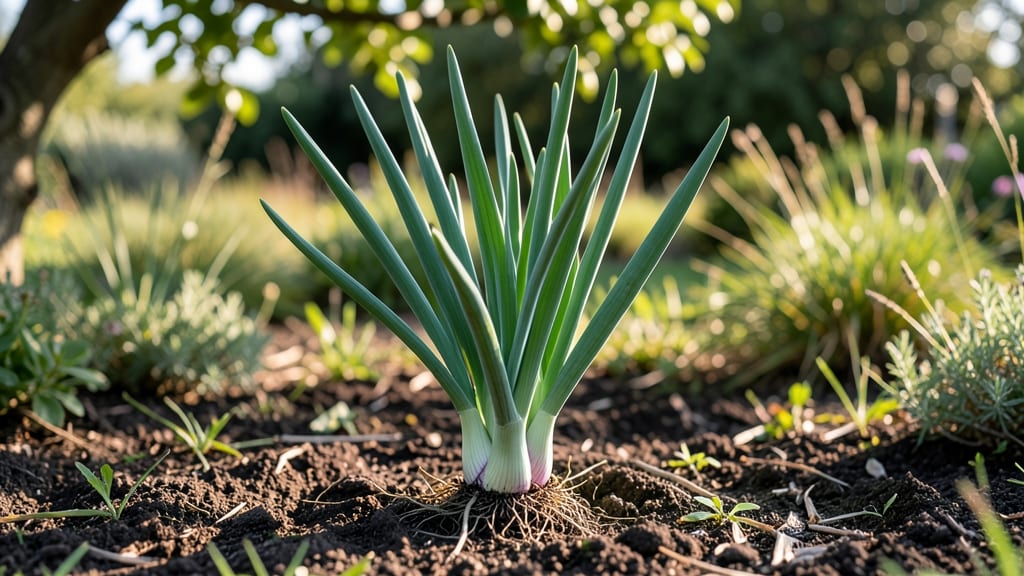
Bunching onions are perennial plants that regrow each spring, though gardeners often treat them as annuals because their foliage dies back in winter.
These hardy vegetables store energy in their roots during winter dormancy, allowing them to push out fresh green shoots when temperatures rise. 🌱 The key difference from true annuals is their ability to survive freezing conditions in zones 3-9, though heavy frost or poor soil can weaken their resilience.
Many gardeners extend their growing season by mulching or harvesting lightly before winter sets in.
For best results, plant bunching onions in well-draining soil with consistent moisture. Their perennial nature means they'll often produce smaller harvests year after year, but with proper care, they can thrive for several seasons without replanting.
💡 In This Article
- How Bunching Onions Survive Winter as Perennials
- Tips to Encourage Year-Round Bunching Onion Growth
How bunching onions survive winter as perennials
Bunching onions, scientifically known as Allium fistulosum, have evolved a clever survival strategy that lets them persist through cold winters. Unlike true annuals that complete their life cycle in one season, these onions enter a state of dormancy when temperatures drop below 40°F.
During this period, their above-ground foliage yellows and dies back, but the root system remains alive and active below the frost line, storing carbohydrates like starch and sugars in specialized root cells.
The root system acts like a biological battery, converting sunlight energy into stored nutrients throughout the growing season. Studies show that well-established bunching onions can accumulate up to 20% more stored energy in their roots compared to annual onions.
This stored energy fuels regrowth when spring arrives, with new shoots emerging as soon as soil temperatures reach 50°F and daylight increases. The plant's ability to photosynthesize even in cool conditions (down to 32°F) gives it a significant advantage over more delicate vegetables.
Cold hardiness plays a crucial role in their perennial behavior. Bunching onions thrive in USDA zones 3-9, meaning they can survive winters where temperatures dip to -40°F with proper protection. The key mechanism here is their ability to produce antifreeze proteins that prevent ice crystal formation in their cells.
In zones 10 and above, however, they behave more like annuals since winter temperatures rarely drop enough to trigger true dormancy. This explains why gardeners in warmer climates often replant them each year.
Light exposure during winter also influences their survival. While dormant, bunching onions require minimal light, but they'll begin regrowth when daylight exceeds 12 hours per day—typically in late winter or early spring. This photoperiod sensitivity ensures they don't waste energy growing too early when frost is still possible.
The combination of stored root energy and light cues creates a precise timing mechanism for their annual resurgence, much like how daylilies (Hemerocallis) time their blooming cycles.
What makes this survival strategy particularly interesting is how it compares to other alliums. Unlike garlic or onions that produce bulbs for storage, bunching onions rely on their fibrous root systems. This adaptation allows them to regrow from the same root base year after year, producing smaller but consistent harvests.
In ideal conditions, a single bunching onion plant can live for 3-5 years, though its productivity gradually declines as the root system ages.
The science behind this perennial behavior extends to their genetic makeup. Research published in the Journal of Horticultural Science found that bunching onions have a unique combination of genes that regulate both their growth habit and cold tolerance.
These genes allow them to balance between rapid growth during warm seasons and efficient energy storage during cooler periods—a dual adaptation that explains why they thrive in diverse climates from northern Europe to Pacific Northwest gardens.