
Flowers
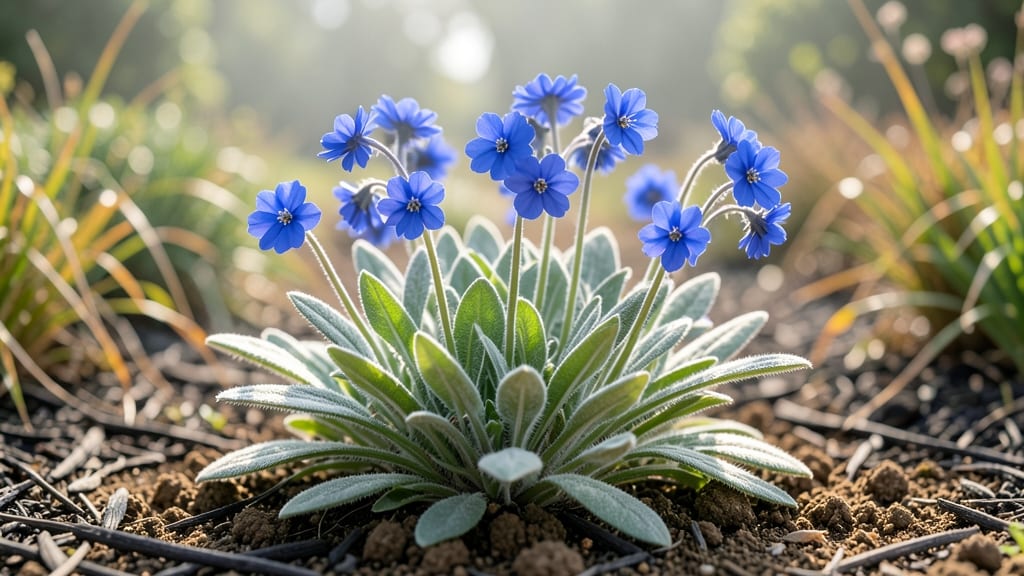
Chinese forget-me-nots are perennials in USDA hardiness zones 3-8 but often treated as annuals in colder climates due to winter dieback. They regrow from roots in spring if protected from harsh freezes, though some gardeners replant yearly for reliability.
Chinese forget-me-nots (Cynoglossum amabile) are classified as perennials because their fibrous root systems survive winter dormancy, even if above-ground growth dies back. 🌱 In zones 3-8, they naturally return each spring, though severe freezes can weaken their resilience.
Many gardeners in colder regions replant yearly for consistency, but with proper mulching or container protection, you can preserve their perennial nature. The key difference from true annuals lies in their root persistence—once established, they’re far hardier than they appear!
This hardiness explains why they thrive in partial shade gardens—their deep roots access moisture even when tops fade. I’ve seen them bounce back spectacularly after winter, especially when given a 3-inch layer of straw mulch before the first frost.
The trade-off? Their delicate stems may need staking, but the payoff is years of blooms with minimal effort!
💡 In This Article
- Chinese Forget-Me-Nots’ Perennial Behavior Explained
- Overwintering Chinese Forget-Me-Nots: Pro Tips
Chinese forget-me-nots’ perennial behavior explained
The key to understanding why Chinese forget-me-nots (Cynoglossum amabile) are classified as perennials lies in their root structure. Unlike annuals that complete their life cycle in one season, these plants develop a robust fibrous root system that stores energy and survives winter dormancy.
Even when the delicate blue-purple blooms and foliage die back in cold climates, the roots remain alive below the frost line, ready to regenerate in spring. This root persistence is what botanists use to distinguish perennials from annuals.
In USDA hardiness zones 3-8, Chinese forget-me-nots naturally thrive as perennials because their roots can withstand temperatures down to -35°F to -40°F. However, the top growth often succumbs to winter's chill, which is why many gardeners in colder regions mistake them for annuals.
The plant's ability to regrow from these roots is particularly impressive—once established, they can return for 3-5 years or more with proper care. The trade-off? Their stems are more delicate than true perennials like hostas, requiring light staking to prevent flopping under rain or snow.
What sets Chinese forget-me-nots apart from other perennials is their seasonal dormancy strategy. Instead of going completely dormant like peonies, they maintain a low level of activity in their roots, allowing them to bounce back quickly when temperatures rise.
This is why you'll often see them pushing through the soil as early as late April or early May, sometimes even before the last frost. Their ability to regenerate so rapidly makes them a favorite among gardeners who want early-season color without the commitment of true perennials.
Here's where zone-specific care becomes crucial: In zones 3-5, gardeners must provide extra protection like mulching with 3-4 inches of straw or covering with burlap sacks during extreme cold snaps.
In zones 6-8, they often survive winter with minimal intervention, though their first-year growth may be slower as they establish their root systems.
The plant's natural resilience is what makes it such a rewarding addition to shade gardens—once you've got them thriving, they'll reward you with weeks of cheerful blooms each spring and summer.
Interestingly, Chinese forget-me-nots share this perennial behavior with other members of the borage family, like comfrey and lungwort. Their ability to regenerate from roots is a survival adaptation that allows them to thrive in woodland edges and partial shade where competition for sunlight is fierce.
This root-based persistence is what gives gardeners hope each spring—even if the winter was harsh, the roots are often still there, waiting for warmer days to bring back the familiar blue-purple flowers.
The botanical explanation for their perennial nature comes down to their carbohydrate storage in roots during dormancy. These stored nutrients fuel rapid regrowth when conditions improve, similar to how daylilies or coneflowers prepare for spring.
What's fascinating is how quickly they can transition from winter dormancy to active growth—sometimes within just 10-14 days of consistent above-freezing temperatures. This rapid recovery is one of the reasons why gardeners in marginal zones often choose to keep them rather than replant annuals each year.