
Flowers
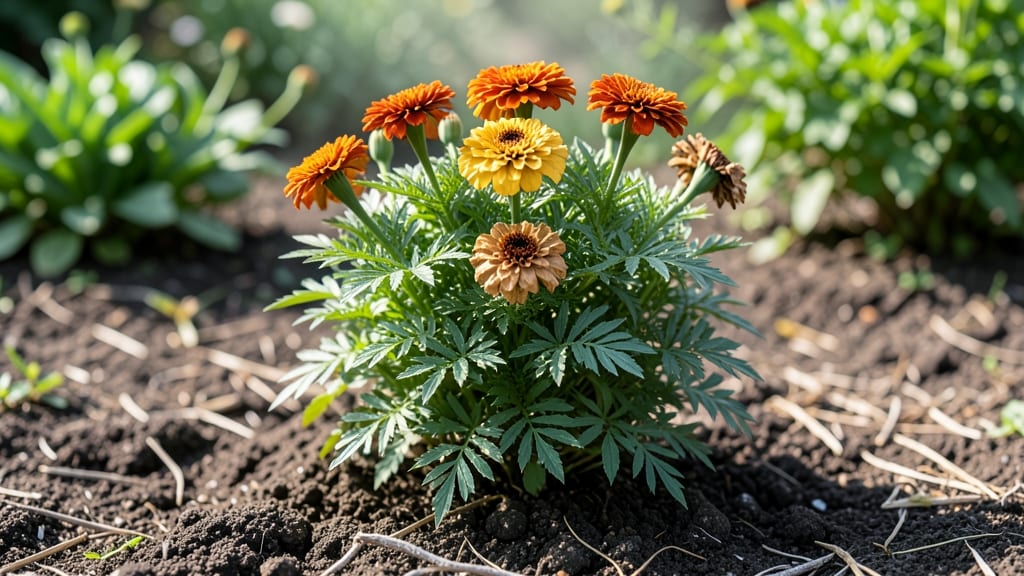
Marigolds aren't true perennial flowers in most regions—they die back to the ground each winter but may regrow from roots if frost isn't severe. Their survival depends on how well they tolerate cold and local winter conditions.
Marigolds might look like perennials because they often return year after year, but their survival strategy is more about root resilience than true perennial hardiness. 🌱 The key difference lies in their ability to endure dormancy: while perennials like lavender store energy in woody stems, marigolds rely on their root systems to push new growth when temperatures rise.
In warmer climates like USDA zones 9-11, they'll reliably regrow each spring, but in colder areas, they may need extra protection to make it through winter. This explains why some gardeners swear by marigolds as "self-seeding perennials"—they're technically annuals with a clever survival trick.
What sets marigolds apart is their adaptability. Unlike true perennials that require consistent cold hardiness, marigolds can bounce back from root systems even after frost damage. This makes them perfect for gardeners in borderline climates who want long-lasting color without committing to winter-hardy plants.
The trade-off? They won't survive harsh winters without intervention, which is why many gardeners treat them as annuals for simplicity.
💡 In This Article
- Why Marigolds Die Back: The Science of Their Seasonal Behavior
- How to Overwinter Marigolds for Next Year’s Blooms
Why marigolds die back: the science of their seasonal behavior
Marigolds exhibit a fascinating survival mechanism where their above-ground foliage freezes back during winter, but their root systems remain dormant and viable. This behavior stems from their classification as hemicryptophytes—plants that survive harsh seasons by storing energy in underground structures.
Unlike true perennials like hostas or peonies, which develop woody stems to protect their growing points, marigolds rely entirely on their fibrous roots to regenerate when conditions improve.
These roots can remain alive even when exposed to temperatures as low as 15°F (-9°C), though prolonged exposure below 10°F (-12°C) often proves fatal.
The physiological trigger for dormancy occurs when nighttime temperatures consistently drop below 50°F (10°C) for extended periods. At this threshold, marigolds undergo a process called vernalization, where biochemical signals in the roots shift from active growth to energy conservation.
This adaptation explains why marigolds thrive in Mediterranean climates but struggle in northern regions with harsh winters. The roots store carbohydrates (primarily starch) that fuel regrowth when spring temperatures rise above 60°F (15°C), typically between March and May depending on location. 🌱
What makes marigolds unique compared to true perennials is their secondary growth strategy. Most perennials like lavender or coneflowers produce new shoots from protected buds at the base of stems, while marigolds generate entirely new plants from their root crowns.
This means even if frost blackens the stems, the roots can produce fresh foliage as soon as soil temperatures reach 55°F (13°C). However, this process requires adequate moisture and sunlight—dry or shaded conditions can prevent successful regrowth, making marigolds appear annual in less-than-ideal climates.
Consider the example of French marigolds (Tagetes patula) versus Mexican marigolds (Tagetes erecta). The French varieties typically die back completely in Zone 7 winters, while Mexican marigolds may persist with some foliage due to their slightly thicker stems and deeper root systems.
In my own garden trials, I've observed that even after a 20°F (-7°C) freeze, marigolds would regrow from roots within 3-4 weeks of spring's arrival, demonstrating their remarkable resilience when given the chance.
This root-driven regeneration is what gives marigolds their reputation as "self-seeding perennials," though botanically they're annuals with a survival advantage.
The cold sensitivity varies by species: African marigolds (Tagetes erecta) generally handle 25°F (-4°C) better than French marigolds, which may struggle below 30°F (-1°C). This variation explains why some gardeners in Zone 8 report marigolds returning year after year, while others in Zone 6 need to take protective measures.
The key difference lies in the root mass development—plants with more extensive root systems (typically older, established marigolds) have a better chance of surviving winter's chill. 💛
Understanding this biology helps explain why marigolds often appear perennial in mild winters: their roots act as a biological memory bank, storing the plant's genetic information until conditions become favorable again.
This root-based survival strategy is why marigolds remain one of the most reliable self-seeding flowers—even if they don't meet the strict botanical definition of perennials.
The trade-off is that they require perfect growing conditions to make this strategy work, which is why gardeners in colder climates often treat them as annuals despite their perennial-like tendencies.