
Flowers
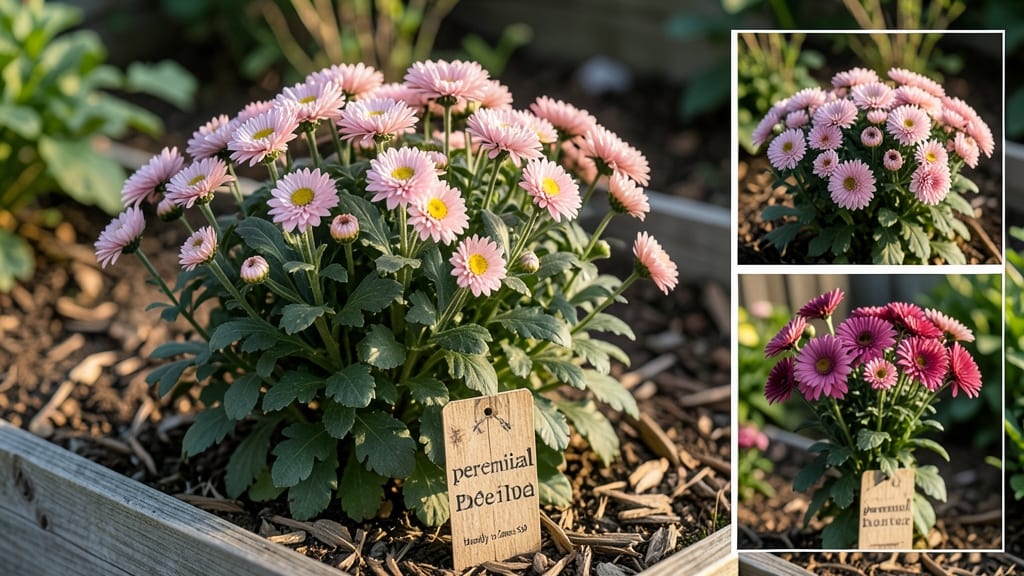
Pelee mums aren't true perennials—they're cold-hardy annuals that enter dormancy each winter, only to regrow from their roots when spring arrives. Their ability to return year after year depends on proper winter protection, soil health, and choosing varieties suited to your local climate.
Pelee mums might fool you into thinking they're perennials because they return each year, but their survival strategy is different. 🌱 Unlike true perennials that maintain above-ground growth through winter, these mums go completely dormant, relying on their root systems to store energy.
This means they need extra care—like deep mulching and well-draining soil—to survive freezing temperatures. In colder zones (5-7), you'll often need to dig up and overwinter them indoors, while milder climates (8-9) may allow them to stay in the ground with proper protection.
What sets Pelee mums apart is their ability to bloom more prolifically than regular mums, but only if you give them the right conditions. The key is mimicking their natural dormancy cycle—cutting back foliage in fall, insulating the roots, and avoiding spring pruning until after new growth appears.
This annual "reset" actually strengthens their roots, leading to bigger, more vibrant blooms each season when done correctly.
💡 In This Article
- Why Pelee Mums Die Back in Winter (And How Climate Affects Survival)
- Step-by-Step Guide to Overwintering Pelee Mums for Repeat Blooms
Why Pelee mums die back in winter (and how climate affects survival)
Pelee mums enter dormancy because they're genetically adapted to survive cold winters through a process called cold acclimation. Unlike true perennials like hostas or daylilies, which maintain some above-ground growth, these mums shut down completely—leaving only their roots and a small crown alive.
The roots store carbohydrates (like starches) that fuel regrowth when temperatures rise. This dormancy is triggered by shorter daylight hours and dropping temperatures below 50°F for extended periods.
Their survival hinges on USDA hardiness zones: in zones 8-9, Pelee mums often overwinter naturally with 3-4 inches of mulch, while zones 5-7 require more aggressive protection.
For example, in zone 6 where winters dip to 0°F, the roots need insulation equivalent to a heavy blanket—think 6+ inches of straw or leaves over the crown.
The key difference from true perennials is that Pelee mums lack the same cold-resistant foliage structures, making them more vulnerable to freeze damage above ground.
What most gardeners miss is how soil temperature affects root survival. The roots stay active until the ground freezes solid—typically when air temps hit 20°F for 3+ days. In colder zones, this means you must act before the first hard freeze.
The roots themselves can tolerate temps down to -10°F, but the crown (where new growth emerges) is far more delicate. This is why you'll see Pelee mums in nurseries labeled as "tender perennials"—they're not built for harsh winters without help.
Climate plays a surprising role in their revival timing too. In warmer zones (8-9), mums often break dormancy by early February, while zone 5 gardens may not see regrowth until late April. The warmer the winter, the earlier the roots start converting stored starches back into energy for new shoots.
This explains why some gardeners in mild climates forget they even need winter care—the mums just "come back to life" on their own. But in colder regions, this natural process can fail without proper insulation.
Here's the science: Pelee mums produce antifreeze proteins in their roots during fall, similar to how woody perennials survive winter. However, these proteins are less concentrated than in true perennials, which is why they need human intervention in colder zones.
The trade-off? Their ability to produce more flowers each year makes the extra care worthwhile for gardeners who love abundant blooms.
Consider this comparison: A true perennial like a peony can lose its leaves but keeps its buds protected underground, ready to shoot up when conditions improve. Pelee mums, however, rely entirely on their root system's stored energy—like a plant version of hibernation.
This is why their revival depends so heavily on winter soil conditions. Even a slight freeze-thaw cycle can wake the roots prematurely, depleting their energy reserves before spring.