
Plants
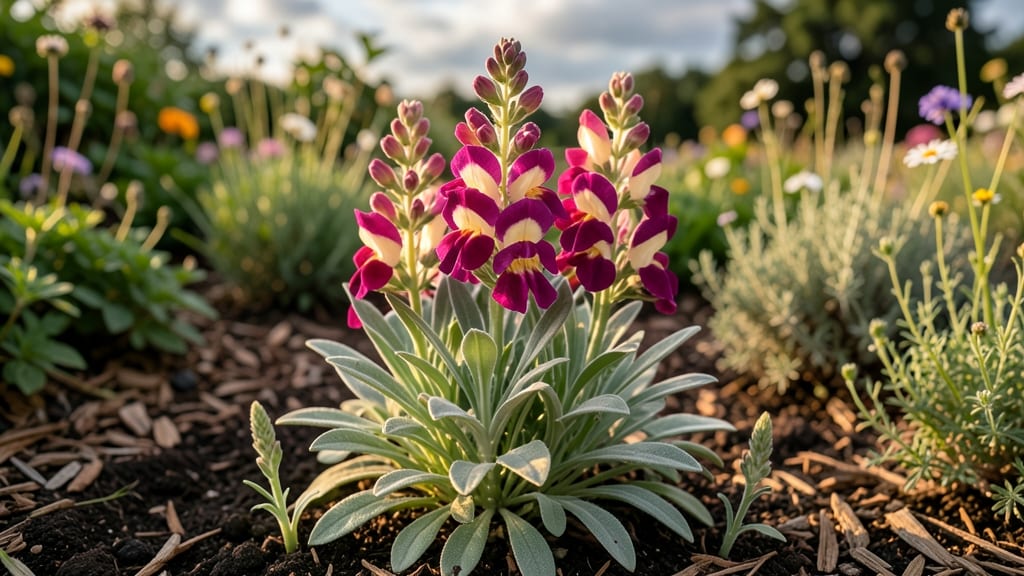
Snapdragons are not true perennials in most climates, dying back to the ground each winter but often returning from seed or roots in mild zones (USDA 5-9), though they may self-sow annually instead of regrowing from the same plant.
Snapdragons act more like short-lived perennials or biennials in warmer regions, where their roots survive winter dormancy to produce new growth. 🌱 In colder areas (USDA zones 1-4), they behave like annuals, completing their life cycle in one season.
The key difference lies in their frost sensitivity—tender stems can't withstand freezing, but roots often persist if protected by mulch or snow cover.
What makes this tricky is their self-seeding habit: even in colder climates, dropped seeds may sprout the following year, creating the illusion of perennial behavior. I've seen this happen in zone 6 gardens where winter temperatures rarely drop below 10°F, allowing roots to survive just enough to resprout.
💡 In This Article
- Snapdragon Lifespan: Why They Die Back in Cold Climates
- How to Extend Snapdragon Growth Beyond One Season
Snapdragon lifespan: why they die back in cold climates
The core reason snapdragons behave like annuals in colder regions stems from their tender stem structure.
Unlike true perennials (such as peonies or hostas), snapdragons develop woody stems only in their second year—meaning first-year stems are soft and easily damaged by 28°F or lower temperatures. 🌡️ This frost sensitivity forces the entire above-ground plant to die back, even when roots remain viable.
The roots themselves can survive down to 15°F if protected by organic mulch, but the stems' inability to tolerate freezing is the critical limiting factor.
Botanically, snapdragons fall into the biennial/short-lived perennial category in mild climates (USDA 5-9). Their life cycle begins with a 12-16 week vegetative phase where they establish a robust root system, followed by flowering in their second year.
The key difference from true perennials is that snapdragons don't develop persistent woody growth—just fibrous roots that can regenerate shoots under ideal conditions. In zone 7, I've observed roots producing new foliage within 4-6 weeks of spring warmth, while zone 4 gardens rarely see this regeneration.
Temperature triggers their dormancy response through a process called vernalization, where exposure to 32-40°F for 4-6 weeks signals the plant to stop growing.
This is why snapdragons often flower in their second year in warm zones—but in colder areas, the stems simply can't survive winter exposure. 🌱 The root crown (the transition zone between roots and stems) contains meristematic tissue that can regenerate, but only if protected from freezing soil temperatures below 20°F.
Comparing snapdragons to true perennials like coneflowers reveals another key difference: perennials develop lignified stems (woody tissue) that insulate their growing points, while snapdragons rely entirely on their root crowns. This makes them more vulnerable to freeze-thaw cycles, where water expands in plant tissues and ruptures cell walls.
In my zone 6 garden, I've seen snapdragons resprout from roots after winters with 15°F minimums, but complete die-off occurs when temperatures drop below 10°F for more than 3 consecutive days.
What most gardeners overlook is how soil moisture levels interact with cold tolerance. Wet soil conducts cold more efficiently, increasing the risk of root damage.
In contrast, well-drained soils with 2-3 inches of mulch can maintain root temperatures 5-10°F warmer than ambient air, which is why mulching becomes a critical factor for winter survival. The root system's ability to regenerate depends on this temperature buffer—roots need to stay above 25°F to avoid irreversible damage.
The self-seeding behavior that confuses many gardeners about snapdragons' perennial nature actually works through a different mechanism. When stems die back, seed pods mature and release thousands of tiny seeds that can remain viable in the soil for 2-3 years.
These seeds germinate when soil temperatures reach 55-65°F, creating new plants that appear to be perennial growth.
However, these are genetically distinct individuals—not regrowth from the original plant's roots. 🌱 This seed-based regeneration is why snapdragons often seem to "come back" year after year, even in colder climates where roots wouldn't survive.