
Plants
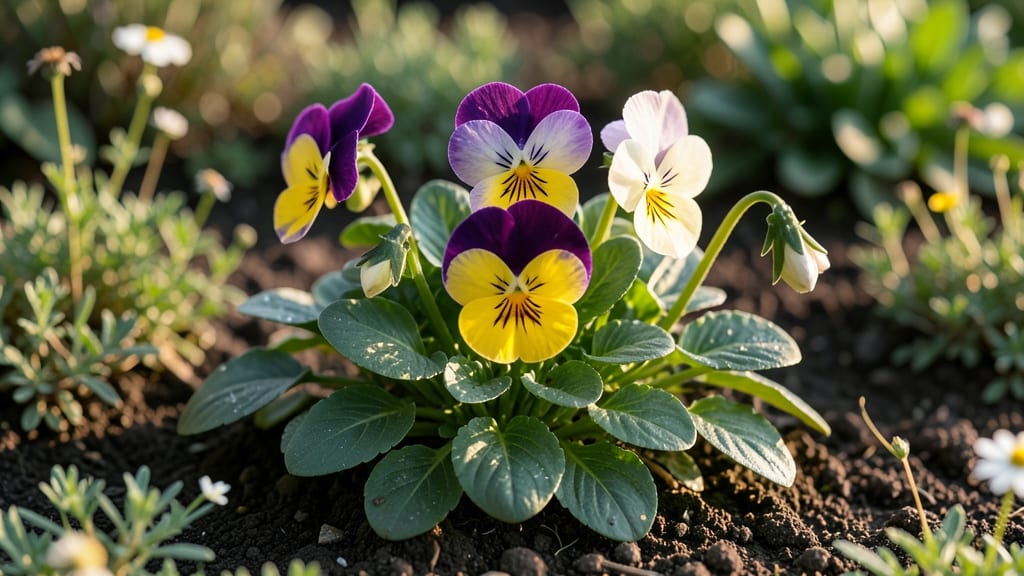
Violas are perennials in USDA Zones 8-11, where they regrow year-round, but act as cool-season annuals in colder zones due to winter dieback. Proper mulching and fall planting extend their lifespan beyond one season in marginal climates.
Violas' perennial status depends entirely on your climate zone. In warmer regions like Zones 8-11, they thrive as true perennials, returning reliably each spring. 🌱 However, in colder zones, their growth cycle shifts—they complete their life cycle in just one season because freezing temperatures kill the foliage.
The key difference? True perennials survive winter dormancy, while violas in cold zones only persist through seeds or protected roots.
What many gardeners don't realize is that violas often behave like biennials in marginal zones—they focus on leaf growth their first year, then bloom and set seed in their second year before dying back. This explains why they seem to disappear after one season in cooler climates.
The good news? With the right care—like heavy mulching and strategic fall planting—you can push violas to behave more like perennials, even in Zone 7 or colder.
💡 In This Article
- Viola Plant Lifespan: How Cold Zones Affect Perennial Behavior
- Extending Viola Growth: Planting, Mulching, and Seasonal Care Tips
Viola plant lifespan: how cold zones affect perennial behavior
Violas belong to the Viola genus, which includes both true perennials and biennials, but their behavior shifts dramatically based on winter temperatures.
In USDA Zones 8-11, where winters rarely drop below 10°F (-12°C), violas store energy in their roots and crowns, allowing them to regrow from the same plant year after year.
The key mechanism is their ability to enter dormancy—a survival strategy where metabolic activity slows to conserve energy while still maintaining viable tissue.
The turning point occurs at 20°F (-7°C), the critical threshold where viola foliage begins to suffer frost damage. Below 10°F (-12°C), even the crown (the thickened stem base) can die back completely, forcing the plant to rely on seeds for regeneration.
This explains why violas appear annual in colder zones—they complete their life cycle in one season, blooming profusely in spring and early summer before dying back. 🌡️ What's fascinating is how violas prioritize seed production in colder climates, often skipping the perennial growth phase entirely.
Gardeners in Zones 5-7 often encounter violas that behave like biennials: they focus on leaf growth their first year, then bloom and set seed in their second year before dying.
This two-year cycle occurs because the plant invests energy into building strong roots during mild winters, then flowers aggressively the following spring. The confusion arises because biennial violas can look identical to perennial varieties until they reach their second year.
What truly distinguishes perennial violas is their ability to produce new shoots from the crown each spring, even after winter dieback. In warmer zones, these shoots emerge from the same root system that survived dormancy, while in colder zones, new plants must grow from seeds dropped the previous year.
This biological difference explains why violas in Zone 9 might return for three years while identical plants in Zone 6 disappear after one season.
Consider the example of Viola sororia (wood violet), which thrives as a perennial in Zone 8 but often acts as a biennial in Zone 7. The difference comes down to just 5°F (3°C) of winter temperature—enough to push the plant into its seed-producing survival mode.
This temperature sensitivity makes violas particularly responsive to microclimates within gardens, where sheltered spots might support perennial growth while exposed areas see annual behavior.
The science behind this involves photoperiodism—the plant's response to daylight changes. In shorter winter days, violas detect the approaching growing season and begin preparing for bloom, even if they're still dormant.
This dual response to both temperature and light explains why violas often bloom earlier in cold climates than in warm ones—they're essentially racing against time to complete their life cycle before summer heat arrives.