
Flowers
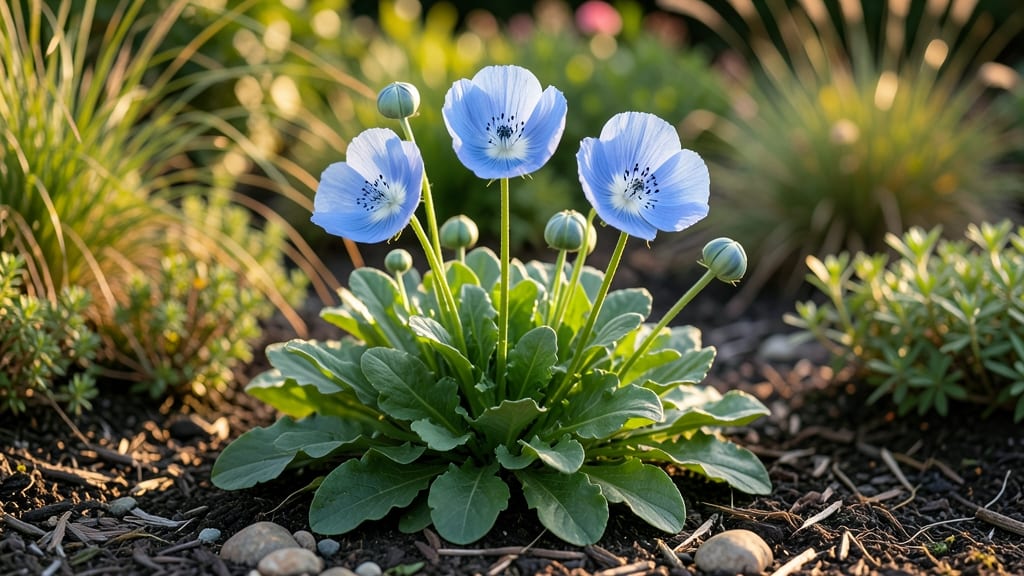
Whether balloon flower (Platycodon grandiflorus) is annual or perennial depends on your climate: it thrives as a hardy perennial in USDA Zones 3-8, regrowing each spring from its deep roots, but often dies back in extreme cold. In warmer Zones 9+, it behaves like an annual, requiring yearly replanting due to heat sensitivity.
Balloon flowers in cooler climates survive winter underground, where their roots stay protected from freezing. 🌱 This dormancy strategy lets them bounce back quickly in spring, often producing blooms just weeks after the first warm days.
In hotter regions, though, the lack of winter dormancy causes stress—roots can't recover, and the plant may wilt without proper care. I've seen gardeners in Zone 9 extend its life by planting in partial shade and keeping soil consistently moist during summer's peak heat.
For those in borderline zones (like Zone 8b), mulching with 3-4 inches of straw or wood chips adds critical insulation during winter. The key difference between annual and perennial behavior comes down to temperature extremes: perennials handle freezing, while annuals can't survive prolonged heat without replanting.
Even in cold zones, a harsh winter might kill off the foliage, but the roots often persist below the frost line.
💡 In This Article
- Balloon Flower’s Dormancy Cycle Explained
- Zone-Specific Care for Year-Round Balloon Flower Growth
Balloon flower’s dormancy cycle explained
The balloon flower's survival strategy hinges on its ability to enter dormancy—a natural, energy-conserving state triggered by cold temperatures. In USDA Zones 3-8, frost signals the plant to shut down its above-ground growth, allowing roots to store carbohydrates and nutrients underground.
These roots can survive -20°F to -30°F temperatures, thanks to natural antifreeze compounds called cryoprotectants that prevent cell damage. The deeper the roots go (often 6-12 inches below soil), the better they withstand freezing, which explains why established plants bounce back stronger than young ones.
Heat, however, disrupts this cycle entirely. In Zones 9+, balloon flowers lack the winter dormancy period, and prolonged exposure to 85°F+ temperatures stresses the roots by accelerating respiration and depleting stored energy.
Without a cold period to reset the plant, it struggles to regenerate foliage in spring. 🌡️ The soil's moisture level also plays a critical role: dry heat exacerbates stress, while consistent moisture helps maintain root vitality.
This is why gardeners in warm climates often treat balloon flowers as annuals, replanting each season before summer's peak heat arrives.
Above-ground vs. below-ground survival is where the magic happens. Perennial balloon flowers in cold zones rely on their thick, fleshy roots to act as biological batteries, storing up to 30% starch during the growing season. These roots can remain viable for years, even if the foliage dies back completely.
In contrast, annual balloon flowers in warm zones never develop this robust root system because they never experience the cold-induced dormancy that triggers root thickening. Without this adaptation, they're far more vulnerable to summer die-off.
Consider this comparison: a balloon flower in Zone 5 might lose all its leaves by December but still produce fresh shoots by April, while one in Zone 10 could wilt and die by July without intervention.
The difference isn't just about temperature—it's about the plant's ability to time its dormancy correctly. Cold zones give balloon flowers the perfect winter reset, while warm zones leave them in a constant state of stress.
Even a single hard freeze in Zone 9 can sometimes "trick" the plant into behaving more like a perennial, though this isn't reliable.
Here's what's actually happening at the cellular level: cold temperatures increase the production of abscisic acid, a hormone that signals dormancy. This hormone helps the plant redirect resources to its roots while shutting down leaf production.
In heat, however, ethylene gas accumulates, which promotes aging and death in plant tissues. This hormonal imbalance is why balloon flowers in warm climates often show signs of premature aging—yellowing leaves, stunted growth—long before winter arrives.
For gardeners in marginal zones (like Zone 8b), the battle against heat stress begins with soil preparation. Amending the soil with organic matter improves moisture retention and provides insulation.
I've seen balloon flowers thrive in these zones when planted in partial shade (30-50% sunlight) and protected by a 2-3 inch layer of mulch during summer's hottest months.
The mulch doesn't just conserve moisture—it also moderates soil temperature, creating a microclimate that mimics the cooler conditions the plant evolved to handle.