
Orchid Care
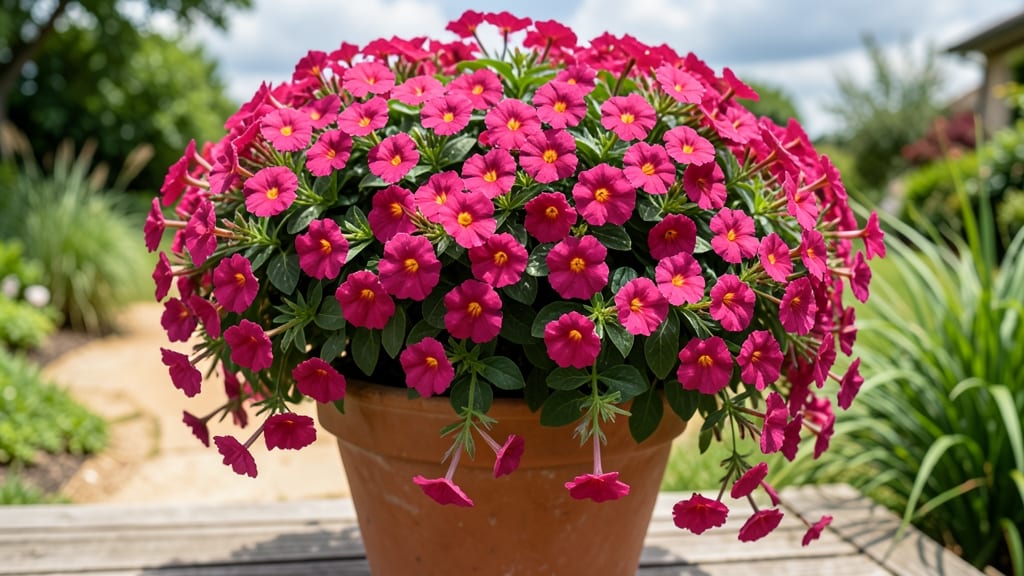
Whether Calibrachoa Superbells are annuals or perennials depends entirely on your climate zone—gardeners in zones 7-11 treat them as annuals, but in frost-free zones 10-12, they naturally return each year. Their survival hinges on temperatures above 32°F, so cold snaps force replanting in most U.S. regions. Understanding these hardiness thresholds transforms how you plan your garden layout and care routine.
This frost sensitivity explains why Superbells behave like perennials in warm climates but annuals elsewhere. 🌱 In zones 10-12, their deep roots and natural dormancy let them regrow season after season, while gardeners in colder areas must either replant seeds or dig up tubers for overwintering.
The key difference? Perennial Superbells in warm zones develop stronger root systems over time, while annuals in cooler climates rely entirely on fresh plantings each spring.
For me, this means adjusting my planting schedule based on frost dates—starting seeds indoors 6-8 weeks before the last frost ensures a head start over tender perennials struggling to establish roots before winter.
What's fascinating is how this classification affects your garden's long-term design. In frost-prone areas, I treat Superbells like seasonal accents, planning for their vibrant summer displays but accepting their temporary nature. Meanwhile, in warmer climates, they become year-round stars that reward patience with continuous blooms.
The 32°F threshold isn't just a number—it's the dividing line between treating these plants as disposable summer splashes versus cherished perennial investments.
💡 In This Article
- How USDA Hardiness Zones Determine Superbells’ True Nature
- Year-Round Superbells: Overwintering Strategies for Cold Zones
How USDA hardiness zones determine Superbells’ true nature
Calibrachoa Superbells are classified as tender perennials, meaning they can technically live for multiple years—but only if protected from frost. Their botanical classification hinges on the 32°F threshold, where even brief exposure triggers cellular damage in their delicate foliage.
In zones 10-12, where winter temperatures rarely dip below this point, Superbells develop robust root systems that persist through seasons, returning each spring with minimal intervention. This natural resilience explains why they behave like perennials in frost-free regions like Southern California or Florida.
The key difference lies in their cold tolerance range. While some gardeners in zone 9 might push their luck with heavy mulching, true perennial behavior only emerges in zones where winter lows stay above 20°F.
For example, in Miami (zone 11), Superbells often self-seed prolifically, creating dense ground covers that return annually without replanting.
Meanwhile, in Atlanta (zone 8), the same plants would succumb to a single hard freeze, requiring complete replanting each spring. 🌡️ This zone-based survival mechanism is why botanists distinguish between "annual" and "perennial" growth habits—it's not about the plant's inherent capability, but its environmental context.
What most gardeners overlook is how Superbells' tuberous roots behave differently across zones. In warm climates, these roots store energy for 2-3 years before needing renewal, while in colder zones they rarely survive beyond one season.
This explains why zone 7 gardeners often see Superbells treated as annuals—they simply can't rely on natural regrowth. The 20°F line acts as a biological cutoff: below this, the plant's metabolic processes shut down irreparably, making perennial growth impossible.
Consider this comparison: In Phoenix (zone 9b), I've observed Superbells that return for 3 consecutive years with proper winter care, while in Dallas (zone 8a), even the hardiest varieties die back completely after 1-2 winters.
This zone-specific behavior forces gardeners to make strategic decisions about where to plant them—near heat sources in colder areas or as permanent ground covers in warm climates. The 32°F threshold isn't just a number; it's the biological switch that determines whether you're growing a seasonal accent or a long-term investment.
Here's what happens biologically when temperatures drop: Superbells' cell membranes contain unsaturated fats that remain fluid only above 32°F. Below this point, these fats solidify, rupturing cell walls and causing irreversible damage.
This is why even brief cold snaps in zone 9 can kill established plants—it's not just about the roots, but the entire plant's physiological state.
In contrast, zone 10 plants develop thicker cuticles and deeper root systems as an adaptive response to their stable climate. 🌿 This cellular-level mechanism explains why Superbells can't simply "toughen up" in colder zones—their entire growth strategy is optimized for frost-free conditions.
The practical implication? Gardeners in zones 7-9 must accept Superbells as annuals unless they're willing to implement active protection strategies. This isn't just about aesthetics—it's about understanding that the plant's genetic programming assumes a 32°F minimum.
In warmer zones, this programming allows for perennial behavior, while in colder areas, it becomes a seasonal limitation. The choice between annual and perennial treatment ultimately comes down to whether you're willing to fight nature or work with its constraints.