
Landscaping
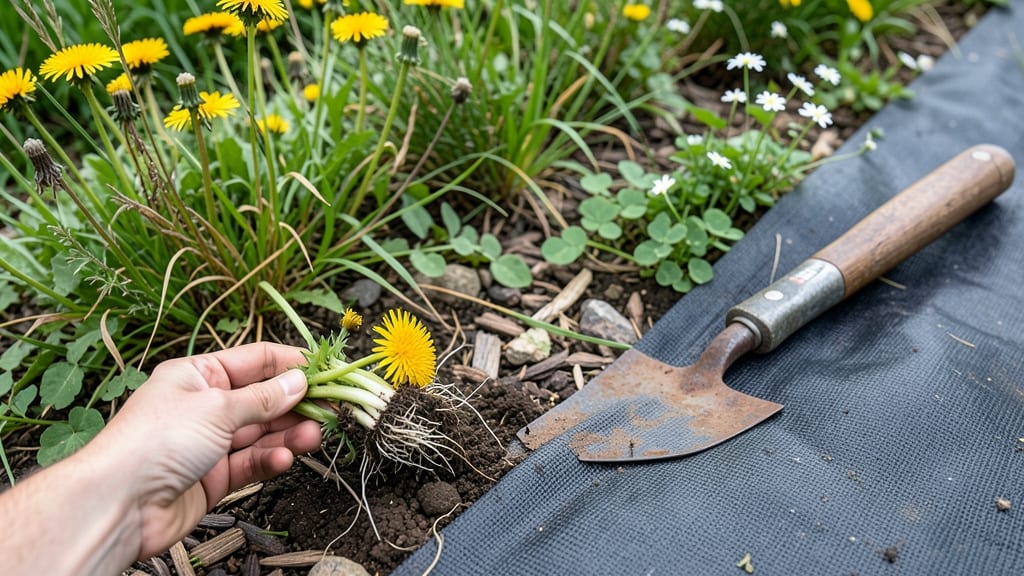
Landscape fabric does stop weeds by blocking sunlight and preventing seeds from sprouting, but its success depends on proper installation and ongoing maintenance. Weeds often find their way through tears, along edges, or where fabric wasn't properly secured.
Landscape fabric works primarily by creating a physical barrier that cuts off sunlight to weed seeds, which need light to germinate. Think of it like a blackout curtain for your soil—without light, most weeds can't survive.
However, fabric isn't foolproof. Over time, weeds can still emerge if the edges aren't properly secured or if the fabric tears, allowing seeds to take root. I've seen cases where homeowners installed fabric but forgot to overlap the seams, creating gaps where weeds thrived. 🌱
For best results, pair fabric with 2-4 inches of mulch to block any remaining light and suppress growth. The key is treating fabric as part of a system—not a standalone solution. Even high-quality fabric degrades over 5-7 years, so regular inspections and maintenance are crucial to keep your landscape weed-free.
💡 In This Article
- How Landscape Fabric Blocks Weeds and Its Limitations
- Proper Installation and Maintenance for Weed Control
How landscape fabric blocks weeds and its limitations
Landscape fabric suppresses weeds through a two-step process: light deprivation and root restriction. The fabric's dense weave blocks 90-95% of sunlight from reaching the soil, which is critical since most weed seeds require light to germinate.
This is why you'll see fewer weeds in areas covered with fabric compared to bare soil. The material also acts as a physical barrier, preventing established weed roots from spreading laterally through the soil.
The effectiveness varies based on fabric composition. Permeable fabrics (like woven polypropylene) allow water and air to pass through while blocking light, making them ideal for most gardens. Impermeable fabrics (like thick plastic sheets) stop weeds completely but can suffocate plant roots if not used carefully.
I've noticed that 3-5 ounce fabrics provide the best balance—thick enough to block light but still breathable for plants. The fabric's UV resistance also matters; lower-quality options degrade faster in sunlight, creating gaps where weeds exploit.
Weeds still appear because fabric has clear limitations. The edges are prime invasion zones since sunlight reaches the soil there. Tears or punctures from rocks or tools create entry points for seeds. Even with perfect installation, fabric lasts only 5-7 years before breaking down.
I've seen crabgrass and nutsedge push through degraded fabric because their roots are aggressive enough to penetrate weakened fibers. The solution? Combine fabric with 3-4 inches of mulch to create an extra light-blocking layer.
Material thickness and quality play a surprising role. Cheap fabric (under 1 ounce) tears easily, while premium options (like 7 ounce woven polypropylene) resist punctures better. The weave pattern matters too—tighter weaves block more light but may restrict water flow.
For example, a 1/4-inch weave stops most weeds but allows moisture through, while a 1/8-inch weave might block light better but risks suffocating plants. Always check the fabric's "light-blocking percentage" on the packaging.
Improper installation is the #1 reason fabric fails. I've seen homeowners lay fabric directly on top of grass clippings or leaves, creating air pockets that allow weed seeds to germinate. The fabric must sit on bare soil or a thin layer of landscape fabric staples to prevent gaps.
Overlapping seams by 6-12 inches is crucial—many weeds sneak through when seams are only butted together. Even a 1-inch gap can become a weed highway over time.
Here's what actually happens when fabric degrades: UV rays break down the fibers, creating tiny holes (often 1/16-inch wide). These microscopic gaps let light through, triggering weed seeds to sprout. The degradation process accelerates in hot climates or under direct sunlight.
For long-term results, consider UV-stabilized fabric with a 5+ year warranty, especially in sunny regions. Regular inspections every 6-12 months catch tears before weeds take hold.