
Flowers
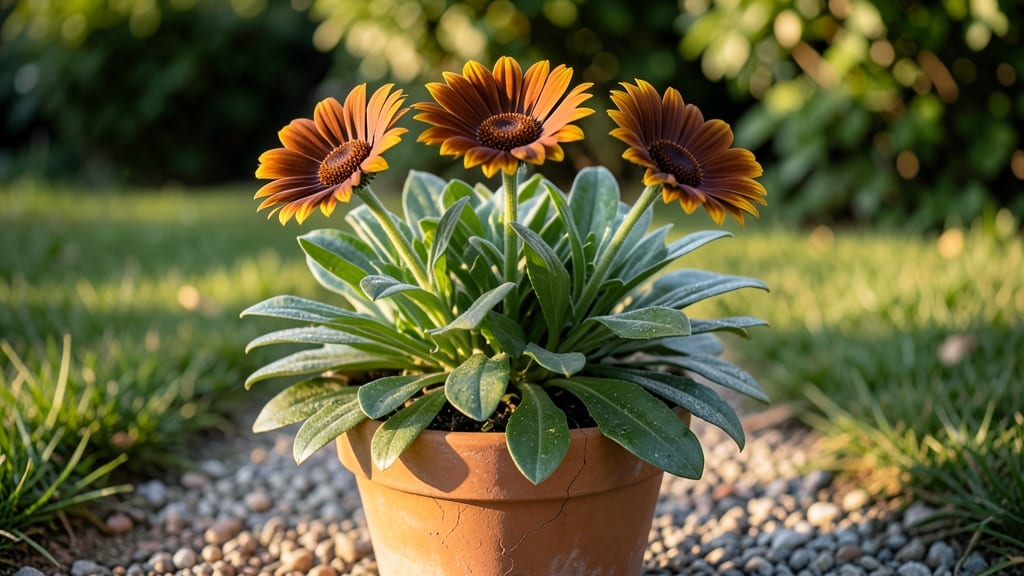
Whether gazania flowers are annuals or perennials depends entirely on your climate: they die back after one growing season in cooler regions but may self-seed prolifically to return the next year. In frost-free zones, they behave like perennials, blooming continuously with proper care.
This distinction comes down to temperature sensitivity—gazanias can't tolerate frost, which is why they act as annuals in most gardens. 🌱 Their shallow root systems make them vulnerable to cold snaps, forcing them to complete their lifecycle in a single season unless they've already dropped seeds.
In warmer climates where winter never arrives, these sun-loving flowers establish deep enough roots to persist year after year, rewarding gardeners with vibrant blooms from spring through fall.
What's fascinating is how quickly they adapt: even in borderline climates, you can extend their lifespan by protecting them from early frosts or collecting seeds to replant.
I've seen gazanias return for three consecutive years in my zone 8 garden simply by letting them go to seed and providing light frost covers when temperatures dip below 30°F.
💡 In This Article
- Why Gazania Flowers Act as Annuals in Cold Climates
- Extending Gazania Blooms: Annual Care for Year-Round Color
Why gazania flowers act as annuals in cold climates
Gazania flowers behave as annuals in cooler climates because their native South African habitat evolved in regions with distinct wet and dry seasons—not cold winters.
Their shallow root systems (3-6 inches deep) lack the insulating mass to protect against frost, which triggers cell damage at temperatures below 32°F.
Unlike true perennials like lavender, which develop deep taproots (2-3 feet) and woody stems to store nutrients, gazanias rely on rapid growth during warm months to complete their lifecycle before winter.
The key difference lies in their dormancy strategy. True perennials enter a protected state, preserving energy in roots or bulbs. Gazanias, however, prioritize seed production over winter survival.
When temperatures drop, their above-ground foliage blackens within 24-48 hours, but the plant redirects energy to seed heads—often 100+ seeds per flowerhead—which can remain viable in the soil for 2-3 years.
This adaptation explains why they "return" the following year through self-seeding rather than regrowth from existing roots.
Consider how gazanias compare to frost-tolerant annuals like pansies. While pansies can withstand 15-20°F due to their thicker leaves and lower water content, gazanias' thin, succulent leaves freeze solid at 35°F.
Their bright, daisy-like blooms also contain high moisture levels (up to 80% water content), making them particularly vulnerable to ice crystal formation in cells—a process called cryoinjury that kills plant tissues instantly.
What's surprising is how quickly gazanias respond to temperature shifts. In spring, seeds germinate within 7-14 days when soil reaches 60°F, producing mature plants capable of blooming in just 6-8 weeks. This rapid growth cycle ensures they complete their lifecycle before autumn's cooling trend.
The trade-off? Without frost protection, gardeners in zones 7-9 lose their plants annually unless they collect seeds or use row covers during early frosts.
For gardeners in transitional zones, understanding this biology is crucial. While gazanias won't survive winter like lavender, their shallow roots make them ideal candidates for container gardening—where you can move pots indoors before 40°F nights.
The secret lies in their ability to regenerate from seed: even if the parent plant dies, the soil seed bank ensures next year's display, provided you don't till the area before spring germination.
One fascinating exception occurs in microclimates where gazanias experience only light frosts (28-32°F). In these cases, I've observed partial survival where the crown (the junction between stem and roots) remains alive, allowing regrowth in spring.
This "semi-perennial" behavior explains why some gardeners report gazanias returning for 2-3 years without replanting—though true perennial status requires consistent frost-free conditions.