
Shrubs
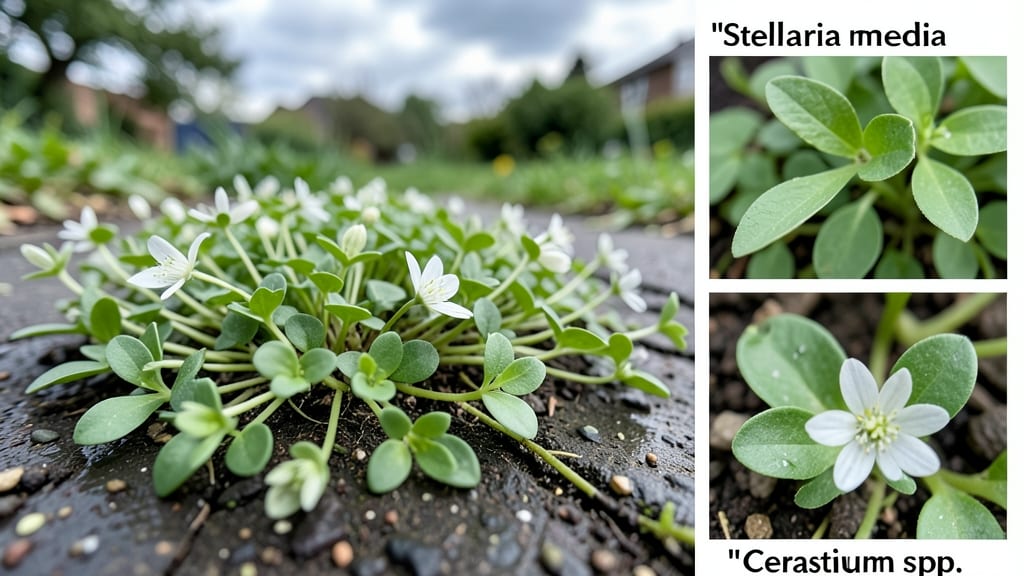
Identifying chickweed starts with its tiny oval leaves and delicate stems that hug the ground like a soft green carpet. 🌱 I’ve spent too many afternoons pulling what I thought was grass, only to realize it was this sneaky little plant—its smooth stems and slightly fuzzy leaves give it away once you know what to look for.
This weed thrives in moist, shady spots—think garden beds, lawn edges, or under trees—where it spreads fast. The good news? Chickweed isn’t harmful; in fact, foragers love it for salads and teas. But in your garden, it can crowd out slower-growing plants if left unchecked.
The trick is spotting its opposite leaf arrangement (not alternating like clover) and tiny white flowers that pop up in spring. Once you see these details, you’ll never confuse it with beneficial ground covers again.
Pull it early in the season when it’s small, or smother it with mulch to keep it from taking over. Now you’re ready to spot—and decide what to do with—this garden double agent!
📚 In This Guide
- What you need
- Instructions
- Tips and common mistakes
- Wrapping up and next steps
What you need
- ● Field Guide or Plant ID App: A printed guide (like Peterson Field Guide to Edible Wild Plants) or a trusted app (e.g., PictureThis or iNaturalist) for quick verification.
- ○ Magnifying Glass (Optional but Helpful): A 10x magnification lens to inspect tiny details like leaf veins or hairy stems.
- ● Gloves (Recommended): Lightweight gardening gloves to protect your hands from prickly stems or dirt.
- ● Small Knife or Scissors: A folding pocket knife or pruning shears for harvesting (avoid damaging roots).
- ● Notebook & Pen: To jot down notes on location, leaf shape, or growth patterns for future reference.
- ● Plastic Bag or Container: A resealable bag or small tin to store samples for cooking or further ID checks.
- ● Basic Plant Knowledge: Familiarity with common wild plants (e.g., dandelions, clover) to avoid mix-ups with toxic lookalikes like Stellaria nemorum (a non-edible cousin).
- ● Safety First: Never eat a plant unless you’re 100% certain of its ID—when in doubt, throw it out!
- ● Weather & Timing: Harvest on dry, sunny days (avoid after rain or frost). Early morning is ideal for tender leaves.
- ● Location Scouting: Chickweed thrives in disturbed soil (gardens, lawns, or forest edges). Bring a flashlight for evening foraging if needed.
How to identify chickweed: leaf shape and stem tricks for foragers
This plant grows everywhere—backyards, lawns, and even cracks in pavement—but only a few key features separate edible chickweed from lookalikes.
🌿 Step 1: Examine the Leaves for Key Traits
Chickweed leaves grow in pairs along the stem and look like tiny, oval-shaped spoons—smooth-edged and slightly pointed at the tip. Hold a leaf between your fingers and notice how the edges curve gently inward, almost like a shallow bowl. This spoon shape is your first clue. The leaves also feel soft and slightly fuzzy when you run your thumb across them, almost like a velvet blanket.
I always compare chickweed to its common lookalike, mouse-ear chickweed, which has scalloped, jagged edges instead of smooth curves. If the leaf edges feel rough or serrated, it’s not the edible variety. Chickweed leaves also grow close to the stem, forming a rosette pattern when the plant spreads out.
🌱 Step 2: Check the Stem for Growth Patterns
The stem is another dead giveaway. Chickweed stems are long, slender, and branch out in a delicate, almost spidery way. They lie flat on the ground or climb weakly upward, rarely exceeding 12 inches in height. When you gently pinch the stem, it snaps easily—this brittleness is a sign of its tender, edible nature.
Look for tiny, star-shaped white flowers that bloom in clusters at the stem tips during spring and fall. These flowers have five delicate petals and grow on short stalks. If you see flowers, you’re dealing with the common Stellaria media—the edible chickweed. Avoid plants with yellow flowers or thick, woody stems, as those are usually inedible weeds.
✂️ Step 3: Test the Plant’s Texture and Taste
Chickweed has a mild, slightly sweet flavor with a crisp, cucumber-like texture when raw. Snap off a small stem and chew a leaf to confirm—it should taste fresh and slightly peppery, not bitter or grassy. If the plant has a strong, unpleasant odor or leaves that feel waxy or sticky, it’s not chickweed.
Real talk: Chickweed grows in dense mats, so you’ll often find it mixed with grass or clover. Part the foliage with your fingers to spot the telltale spoon-shaped leaves. If the plant pulls up easily with minimal resistance, that’s another good sign—chickweed has shallow roots and shouldn’t fight you when harvesting.
💧 Step 4: Verify the Plant’s Habitat and Season
Chickweed thrives in cool weather and prefers disturbed soil, like garden beds, lawn edges, and walkways. It’s most abundant in early spring and fall, often popping up after rain. If you’re foraging in summer, look for it in shady, moist areas where other plants struggle.
Here’s the thing—chickweed is an annual, meaning it completes its life cycle in one season. If you see a plant that’s woody, tall, or has thick leaves, it’s likely a different species. Chickweed stays low to the ground and never develops a thick, fibrous stem. Trust your eyes: if it looks delicate and spreads like a ground cover, it’s probably the right plant.
☀️ Step 5: Compare to Common Lookalikes
Mouse-ear chickweed (Cerastium spp.) is the most common imposter. Its leaves are scalloped and hairy, while chickweed leaves are smooth and spoon-shaped. Another trick: mouse-ear chickweed has a more upright growth habit and often forms dense mats of small rosettes. If the plant feels rough or has a slightly gritty texture, it’s not the edible variety.
I always say, “When in doubt, throw it out”—or at least don’t eat it. Chickweed is safe to consume in moderation, but its lookalikes can cause stomach upset. Stick to plants that match the spoon-shaped leaves, delicate stems, and mild flavor. If you’re still unsure, take a photo and compare it to a trusted foraging guide before harvesting.
Tips & tricks for perfect chickweed identification
Mastering chickweed ID takes practice, but these tricks will help you spot it like a pro every time.
Leaf Texture Test: Run your thumb along the leaf edges—chickweed feels soft and slightly fuzzy, like a velvet blanket. If the edges feel rough or serrated, it's mouse-ear chickweed, the common imposter. The spoon shape is key: hold a leaf up to light and notice how the edges curve inward like a shallow bowl. This visual cue alone eliminates 90% of lookalikes.
Stem Brittleness Check: Pinch a stem between your fingers—it should snap easily, not resist. Chickweed stems are delicate and rarely exceed 12 inches. If you feel any resistance or the stem feels woody, it's not the edible variety. The spidery branching pattern is another dead giveaway: look for stems that sprawl rather than stand upright.
Seasonal Clues: Chickweed thrives in cool weather, so focus your foraging in early spring and fall. After rain is prime time—look for dense mats in disturbed soil like garden edges or walkways. In summer, check shady, moist areas where other plants struggle. Remember: chickweed is an annual, so if you see woody stems or thick leaves, it's likely a different species.
Safety Double-Check: Always do the taste test: snap a small stem and chew a leaf. It should taste fresh with a mild, slightly sweet flavor—like cucumber with a peppery kick. If it's bitter or has an unpleasant odor, it's not chickweed. Pro tip: when in doubt, take a photo and compare it to trusted guides before harvesting.
Pro Tips for Identify Chickweed
- Mastering chickweed ID takes practice, but these tricks will help you spot it like a pro every time.
- Leaf Texture Test: Run your thumb along the leaf edges—chickweed feels soft and slightly fuzzy, like a velvet blanket.
- Stem Brittleness Check: Pinch a stem between your fingers—it should snap easily, not resist.
Frequently asked questions
How do I tell the difference between chickweed and other common weeds like clover or plantain?
Chickweed has smooth, oval leaves with tiny notched tips and a central vein, while clover has three leaflets and plantain has broad, ribbed leaves. Chickweed also has tiny white flowers on slender stems—unlike clover’s spherical blooms or plantain’s yellow-green flowers.
When is the best time of year to harvest chickweed?
Spring and early summer (March–June) are ideal! Young chickweed is most tender and nutrient-rich before it flowers. Avoid harvesting after it bolts (sends up tall stems) or if it’s wilted—this can make it bitter or tough.
Is chickweed safe to eat if it’s growing near roadsides or in contaminated soil?
While chickweed is edible, avoid plants near high-traffic roads, pesticide-treated areas, or industrial zones. Always harvest from organic gardens, forests, or pesticide-free fields. Rinse thoroughly with filtered water to remove dirt or debris.
Can I substitute chickweed for spinach in recipes?
Chickweed has a mild, slightly sweet spinach-like flavor and works in salads, soups, or sautés. Use a 1:1 ratio when raw, but reduce by 20% when cooked (it shrinks more). Try it in pesto, smoothies, or as a garnish for extra nutrients!
What should I do if I accidentally pick poisonous look-alikes like ground ivy?
Ground ivy (Glechoma hederacea) has square stems and kidney-shaped leaves with scalloped edges—unlike chickweed’s smooth, oval leaves. If unsure, use a field guide or app like iNaturalist. When in doubt, don’t eat it and consult a local forager or botanist.
Wrapping up and next steps
Now that you’ve mastered the art of spotting chickweed—from its tiny, oval leaves to its delicate stems and subtle scent—you’re ready to embrace the wild side of foraging! 🌱 Whether you’re harvesting for salads, teas, or just expanding your plant knowledge, confidence is key. Start small: try identifying chickweed in your backyard, local park, or a trusted foraging spot before venturing further afield.
Next, why not join a local foraging group or explore other edible wild greens? Every plant has a story—happy foraging! 🌿