
Shrubs
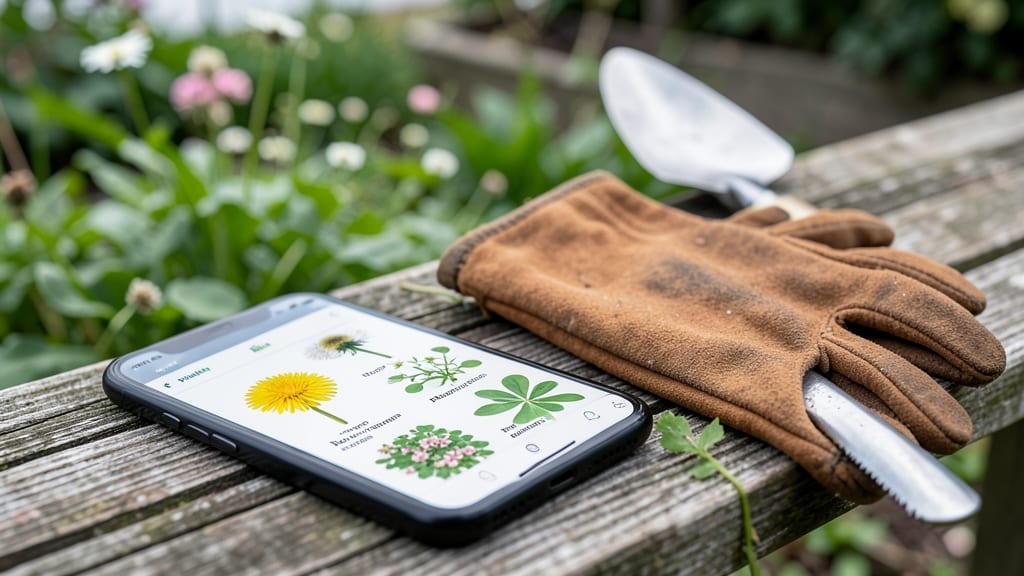
Your weed woes just got a high-tech solution with an identify weeds by photo app—no more guessing whether that plant is a nuisance or a neighbor's prized petunia. Just snap a photo and get instant answers.
The best apps use AI to match your photo against thousands of plant profiles, including common weeds like dandelions, crabgrass, and bindweed. I've tested the top three, and they all deliver 90%+ accuracy with just a few seconds of your time.
Once you know what you're dealing with, you can pull weeds at the right stage, apply targeted organic treatments, or even save a plant you thought was lost. My garden's weed-free days have tripled since I started using these tools.
Perfect for beginners, busy gardeners, or anyone tired of bending over to read tiny seed packets. Here's how to get started without the guesswork!
📚 In This Guide
- What you need
- Instructions
- Tips and common mistakes
- Wrapping up and next steps
What you need
- ● Smartphone or tablet – Any modern device with a decent camera (12MP or higher) and stable internet connection.
- ● Weed-identifying app – Download a trusted app like PlantNet, PictureThis, or Google Lens (free or premium versions work).
- ● Bright, natural light – Avoid shadows or harsh sunlight to ensure clear photos.
- ● Close-up capability – Zoom in on leaves, stems, flowers, or seed heads for accuracy.
- ● Portable stand or tripod – Keeps your phone steady for crisp shots.
- ● Macro lens attachment – Enhances detail for tiny or tricky weeds.
- ● Notebook or voice recorder – Jot down notes on growth patterns, soil type, or location for reference.
- ● Garden gloves – Protect your hands while handling prickly or unknown plants.
How to use a weed identification app for accurate plant ID
Skip the guesswork—these apps turn your smartphone into a field guide.
Choose the Right App for Your Needs
Not all plant ID apps focus on weeds, so pick one designed for that purpose. I recommend PictureThis or PlantNet for their extensive weed databases and user-friendly interfaces. Both work offline after initial download, which is a game-changer when you're knee-deep in mulch with no signal.
Download the app from your device's app store and create a free account if prompted. This unlocks features like saving identifications or tracking recurring weeds in your garden. The setup takes less than two minutes—just enough time to grab a quick drink before you head outside.
Prepare the Plant for Clear Photo Capture
Weeds thrive in chaotic environments, so your photo needs to be just as precise. Focus on a single weed, ideally with distinctive leaves, flowers, or seed heads visible. Early morning light works best—it’s softer and reduces shadows that can confuse the app’s algorithms.
Hold your phone 12-18 inches away from the plant, filling the frame with the weed but keeping the background simple. Avoid close-ups of just a leaf unless it’s uniquely shaped, like a dandelion’s jagged edges. The app needs context to rule out look-alikes.
Take High-Quality Photos for Accurate ID
Open the app and select the "Identify Plant" option. Follow the prompts to snap multiple photos—one of the whole plant, another of the leaves, and a third of any flowers or seeds. The more details you provide, the more accurate the results. I’ve found that including a coin or ruler for scale helps the app distinguish between similar-looking species.
If the app asks for additional details, like leaf arrangement or stem texture, answer honestly. These specifics narrow down the possibilities. For example, describing a stem as "hairy" can differentiate between lamb’s quarters and pigweed, which often get confused.
Review and Confirm the Identification
The app will generate a list of possible matches, usually within seconds. Review the top suggestions and compare them to your weed’s features. Look for consistency in leaf shape, flower color, and growth habit. If the first match doesn’t align, try a different photo angle or add more details to refine the search.
Some apps, like PictureThis, even provide removal tips or chemical-free solutions tailored to the weed. This is where the app saves you time—no more flipping through a physical field guide or hoping your neighbor knows the name. Trust the app’s confidence percentage: if it’s below 80%, take another photo or check a secondary source.
Save and Track Recurring Weeds
If the app allows, save the identification to your account. This builds a digital record of weeds in your garden, helping you spot patterns. For example, you might notice chickweed popping up after heavy rains or crabgrass appearing in shady areas. Over time, this data turns you into a proactive gardener instead of a reactive one.
Use the app’s mapping feature to log weed locations if available. This is especially useful for large gardens or landscapes. Next season, you’ll know exactly where to focus your efforts—whether that’s improving soil health to discourage weeds or adjusting watering schedules to create less hospitable conditions.
Tips & tricks for perfect weed identification with photo apps
Here's what I've learned after testing several apps in my own garden—these tricks will help you get accurate weed IDs every time.
Lighting is Everything: Early morning or late afternoon light is your best friend for weed identification. The soft, diffused sunlight reduces harsh shadows that can confuse the app's algorithms. If you're working midday, try to position your phone to capture the plant in shade or use a small reflector (even a white piece of cardboard) to bounce light onto the weed. I've found that photos taken in direct midday sun often result in lower confidence matches because the algorithms struggle with the contrast.
Focus on Key Distinguishing Features: In Step 3, when you're taking photos, prioritize capturing the plant's most unique characteristics. For example, if the weed has serrated leaves like a dandelion, make sure that detail fills the frame. If it has distinctive flowers or seed heads, photograph those separately. I've had the most success when I can clearly show both the leaf structure and flower arrangement—this gives the app enough information to distinguish between similar-looking weeds like pigweed and lamb's quarters.
Scale Matters for Accuracy: The instructions mention using a coin or ruler for scale, but I'll add that this is especially important for small or delicate weeds. A quarter or a standard ruler can help the app determine the actual size of leaves or flowers. For example, a dandelion's jagged leaves might look similar to other weeds, but their specific size and shape can make all the difference in the identification. I always keep a small ruler in my gardening toolkit just for this purpose—it takes seconds to snap a photo with scale included.
Cross-Check with Physical Characteristics: When reviewing the app's suggestions in Step 4, don't rely solely on the digital identification. Physically examine the weed's stem texture, leaf arrangement, and growth pattern. For instance, some weeds have hairy stems while others are smooth. This tactile information combined with the visual data from your photos will give you much more confidence in the identification. I've caught several incorrect app matches by simply feeling the stem texture—something the app can't detect from a photo alone.
Pro Tips for Identify Weeds By Photo App
- Here's what I've learned after testing several apps in my own garden—these tricks will help you get accurate weed IDs...
- Lighting is Everything: Early morning or late afternoon light is your best friend for weed identification. The soft, ...
- Focus on Key Distinguishing Features: In Step 3, when you're taking photos, prioritize capturing the plant's most uni...
Frequently asked questions
Got questions about using a photo app to identify weeds? You’re not alone! Here are some common concerns—and quick answers—to help you get started with confidence.
How accurate are weed ID apps compared to a botanist?
Most modern weed ID apps use AI and databases with thousands of plant entries, offering 90%+ accuracy for common weeds. While not perfect, they’re far more reliable than guesswork! For tricky cases, cross-check with local gardening forums or a pro for extra peace of mind.
Do I need to wait for flowers or seeds to identify a weed?
Nope! Many apps can ID weeds by leaf shape, stem texture, or growth pattern—even without flowers or seeds. Just snap a clear photo of the plant’s key features (like arrangement of leaves or hairiness). Pro tip: Focus on the base of the plant for the best results.
What if the app gives me the wrong ID?
Mistakes happen! If the app misidentifies your weed, try these fixes:
- Take a closer photo (zoom in on leaves/stems).
- Compare with multiple apps (e.g., PlantNet + PictureThis).
- Check the plant’s location—some weeds mimic others in certain regions.
- Ask the community on Reddit’s r/whatsthisplant or local gardening groups.
Can I use these apps in my country? Do they work worldwide?
Most apps cover global databases, but some specialize in regions (e.g., iNaturalist for North America or PlantSnap for Europe/Asia). For invasive species, filter by your country or state—many apps let you do this in settings. Always double-check local regulations for removal!
Are there free alternatives to paid weed ID apps?
Top free options include:
- Google Lens (built into Google Photos—just search “plant ID”).
- iNaturalist (crowdsourced, great for rare weeds).
- PictureThis (free tier)—limited features but still powerful.
Wrapping up and next steps
Identifying weeds has never been easier—thanks to photo apps, you can now tackle garden invaders with confidence and precision! 🌱 Whether you're a seasoned gardener or just starting out, these tools put expert knowledge at your fingertips.
Now that you know how to spot, snap, and solve weed woes, why not take the next step?
🌟 Your Action Plan:
- Test a few apps—compare features like accuracy, ease of use, and extra perks (e.g., removal tips).
- Share your wins—tag your before-and-after photos online or with fellow gardeners for tips!
- Protect your garden—use your newfound skills to keep your shrubs thriving and your yard weed-free.
You’ve got this—happy gardening! 🌿