
Aphids
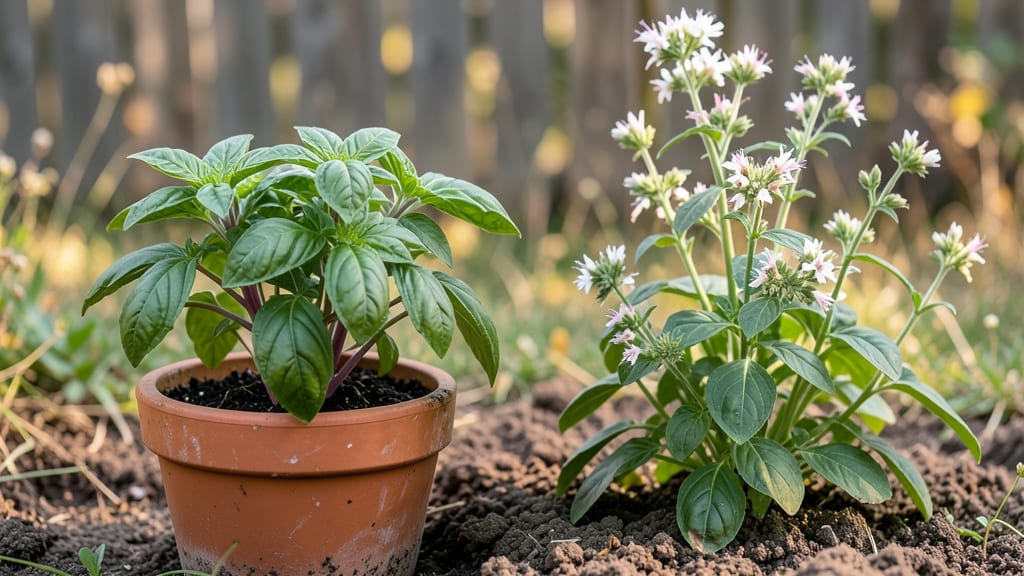
Basil is not a true perennial in most climates, as it thrives as an annual in USDA zones below 10 due to frost sensitivity. However, in warm zones (10-12), it can overwinter with proper care and may regrow each season. Cold-hardy varieties exist but require protection in marginal zones.
Basil's perennial status depends entirely on your climate zone. In colder regions (USDA zones 1-9), even the hardiest varieties won't survive winter outdoors—they simply can't tolerate temperatures below 32°F. 🌱 The good news?
With some effort, you can coax it to return year after year in zones 8-9 through indoor overwintering or cuttings. The key difference lies in how basil's cells respond to freezing: ice crystals rupture their structure, while warmer climates allow it to remain dormant but viable.
What many gardeners don't realize is that even in marginal zones, selecting the right variety makes a difference. Thai basil and purple basil varieties often show better cold tolerance than sweet basil, and mulching heavily in late fall can provide that extra degree of protection.
The trade-off? These hardier types may produce slightly less vibrant foliage compared to their tropical cousins.
💡 In This Article
- Why Basil Dies in Cold Climates: Science of Frost Sensitivity
- How to Extend Basil’s Life in Non-Tropical Zones
Why basil dies in cold climates: science of frost sensitivity
Basil's struggle with cold stems from its tropical origins in Central Africa and Southeast Asia, where temperatures rarely dip below 60°F. When exposed to freezing conditions (32°F or lower), basil's cells undergo ice crystal formation within their vacuoles—this ruptures cell walls, causing irreversible damage.
The plant's metabolism also shuts down below 40°F, halting growth and nutrient absorption. 🌱 In USDA zones 1-9, even light frosts can kill basil plants outright, which is why it's classified as an annual in these regions.
The damage isn't just superficial—it's systemic. Frozen basil plants often develop brown, mushy stems as cells collapse, while leaves turn black and crispy from dehydration.
What's fascinating is how this compares to cold-hardy herbs like rosemary or thyme: those plants have evolved antifreeze proteins that lower their cellular freezing point by up to 10°F, while basil has no such adaptation.
Even in zone 10, where winters are mild, basil may still suffer from chilling injury at temperatures between 32-40°F, showing stunted growth or yellowing leaves.
Here's where variety selection becomes critical. While sweet basil (Ocimum basilicum) is the most frost-sensitive, Thai basil (Ocimum basilicum var. thyrsiflora) and purple basil (Ocimum purpurascens) often handle cooler temperatures slightly better due to their thicker stems and waxier leaf coatings.
However, none can truly survive prolonged freezing—even these varieties will die back to the ground in zone 8 without protection. The key difference lies in their regrowth capacity after frost: hardier types may sprout new growth from the base once temperatures warm.
What most gardeners overlook is the role of soil temperature in basil's survival. Even if air temperatures stay above freezing, soil below 50°F can stress roots, limiting the plant's ability to absorb water.
This is why mulching with 4-6 inches of straw or leaves becomes essential in marginal zones—it insulates roots and maintains soil temps 5-10°F warmer than ambient air. The insulation effect creates a microclimate that can extend basil's growing season by 2-4 weeks in fall and spring.
For comparison, consider how cold-hardy annuals like calendula or nasturtium survive similar conditions—they've adapted through deep root systems that access warmer soil layers. Basil, with its shallow fibrous root system (typically 12-18 inches deep), has no such advantage.
This structural limitation explains why even well-mulched basil plants in zone 9 may still require row covers during unexpected cold snaps.
Interestingly, basil's frost sensitivity isn't absolute—it's temperature-duration dependent. A single night at 28°F might kill a potted basil plant, while the same temperature sustained for only 2-3 hours might cause only leaf damage.
This explains why gardeners in zone 9 can sometimes get away with overwintering basil outdoors if they monitor forecasts and provide temporary protection during cold snaps. The plant's ability to recover depends entirely on how quickly it can resume metabolic activity once temperatures rise.