
Planting
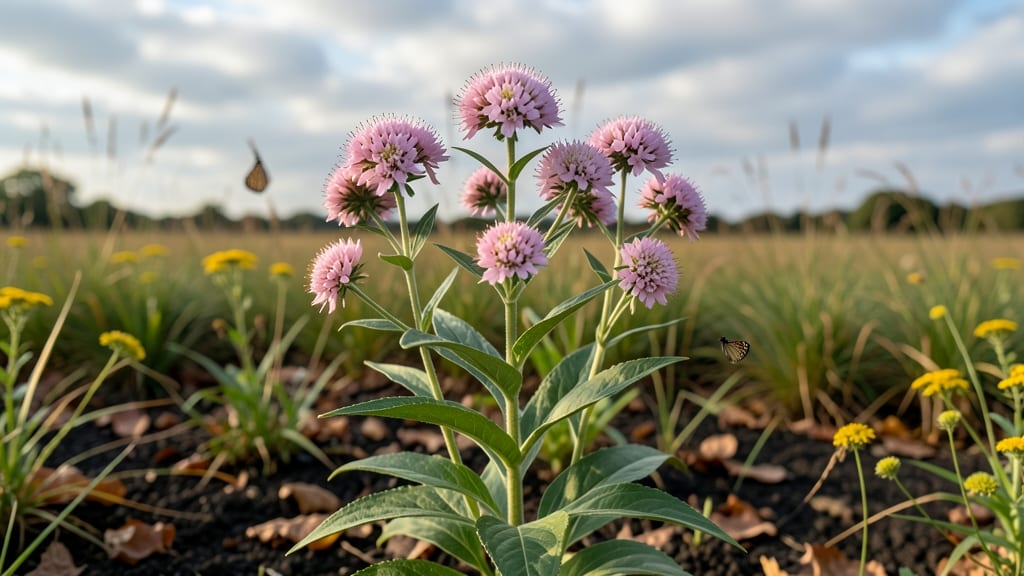
A milkweed plant looks like a tall, leafy perennial with broad, oval-shaped leaves, milky sap, and clusters of spherical seed pods. Its flowers feature five rounded petals in pink, white, or purple, and it often grows 2-5 feet tall in wild or cultivated settings.
A milkweed plant's most striking feature is its thick, waxy leaves that grow in opposite pairs along the stem, creating a distinctive zigzag pattern. 🌿 The plant's milky sap is another dead giveaway—it oozes when leaves are damaged, giving the plant its name.
Unlike thistles, milkweed leaves are smooth and not spiky, making them easier to identify at a glance. The flowers bloom in rounded clusters, often attracting monarch butterflies, which rely on milkweed as a host plant for their larvae.
One of the easiest ways to confirm you've spotted milkweed is by examining its seed pods, which are elongated and spiky when mature. These pods eventually split open to release fluffy seeds with silky tufts, perfect for wind dispersal.
Common milkweed varieties, like butterfly weed and common milkweed, vary slightly in leaf shape and flower color, but the overall structure remains consistent. Whether you're gardening or foraging, these visual clues will help you spot milkweed with confidence.
💡 In This Article
- Identifying Milkweed by Its Distinctive Leaves and Flowers
- Milkweed Seed Pods and Growth Habits for Accurate Spotting
Identifying milkweed by its distinctive leaves and flowers
The most reliable way to spot milkweed starts with its leaves, which grow in opposite pairs along the stem, creating a distinctive zigzag pattern when viewed from above. Each leaf typically measures 3-8 inches long and 1-3 inches wide, with a broad, oval shape that tapers to a point.
The edges are smooth, unlike thistle leaves which have sharp spines. 🌿 The leaves also have a slightly waxy texture that helps repel water, a trait that makes them stand out in moist environments.
One of the plant's most striking features is its milky sap, which oozes from any broken stem or leaf. This latex-like substance contains cardiac glycosides—natural toxins that deter herbivores. When you cut a stem, the sap flows freely, creating a white, sticky residue that hardens upon exposure to air.
This characteristic sets milkweed apart from similar plants like dandelions, which don't produce this type of sap.
The flowers are another key identifier, blooming in rounded clusters called umbels that can reach 4-6 inches wide. Each flower features five rounded petals in shades of pink, white, or purple, with a distinctive hooded shape that attracts pollinators.
Unlike daisy-like flowers, milkweed blooms have a more clustered, almost spherical appearance. The flowers emit a faint, sweet fragrance that becomes more noticeable on warm days, drawing in monarch butterflies and other pollinators.
To differentiate milkweed from lookalikes, focus on these three traits: opposite leaf arrangement, milky sap, and clustered umbel flowers. Thistles have spiky leaves and grow in different patterns, while dandelions have solitary flowers on long stems.
Milkweed's unique combination of these features makes it unmistakable once you know what to look for. 💫
Another helpful tip is to observe the plant's growth habit. Milkweed typically grows 2-5 feet tall, with stems that are slightly hairy and covered in a fine down. The leaves often have a bluish-green tint, especially when young, which fades to a deeper green as they mature.
This color variation can help distinguish it from other greenery in the same habitat.
If you're still unsure, check for the presence of monarch butterfly caterpillars. These bright orange-and-black striped larvae feed exclusively on milkweed, so their presence is a definitive sign you've found the right plant.
The caterpillars' distinctive markings make them easy to spot on milkweed leaves, serving as a natural indicator of the plant's identity. ✨