
Flowers
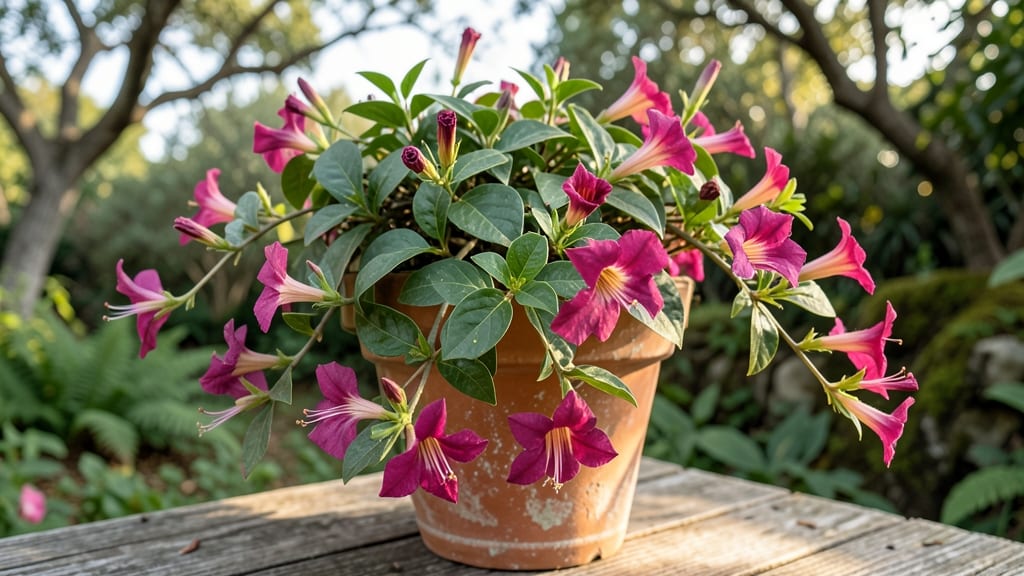
Dipladenia is not a perennial in most climates because it dies back completely when temperatures drop below 30°F (-1°C), requiring annual replanting or indoor overwintering to survive beyond one growing season.
Dipladenia's tropical roots explain why it struggles in cooler regions—its delicate vines can't withstand frost, even briefly. 🌿 Unlike hardy perennials that regrow from roots after winter, dipladenia's stems and leaves blacken and fall off when exposed to freezing temps, often killing the plant entirely if not protected.
Even in warmer zones (10-12), it's classified as a "tender perennial" because it needs winter shelter to persist year-round.
What makes this tricky for gardeners is its stunning summer blooms—many assume it's a low-maintenance perennial, only to discover the harsh reality when the first frost hits. The good news?
With proper overwintering techniques (like bringing potted plants indoors), you can enjoy dipladenia's vibrant flowers for multiple seasons, effectively turning it into a long-lived houseplant or container garden staple.
💡 In This Article
- Dipladenia’s Cold Tolerance Limits and Growth Cycle
- How to Overwinter Dipladenia for Year-Round Growth
Dipladenia’s cold tolerance limits and growth cycle
Dipladenia, also known as mandevilla, originates from tropical regions of South America where temperatures rarely dip below 50°F (10°C). This tropical heritage means its cellular structure lacks the antifreeze proteins found in cold-hardy perennials like hostas or daylilies.
When exposed to 30°F (-1°C) or lower, the plant’s thin, waxy leaves and tender stems begin to lose moisture rapidly, leading to irreversible damage within 1-2 hours of frost exposure. 🌡️
The plant’s growth cycle mirrors its tropical origins: it thrives as a vigorous, fast-growing vine during summer months when temperatures consistently stay above 60°F (15°C). In optimal conditions, dipladenia can produce 6-12 inches (15-30 cm) of new growth per week and bloom continuously from spring through fall.
However, unlike true perennials that store energy in underground rhizomes or roots, dipladenia relies entirely on its above-ground biomass for survival.
This is why gardeners in zones 10-12 classify dipladenia as a "tender perennial"—it can survive winters if protected, but its roots are only marginally frost-tolerant. Even a light freeze (28°F (-2°C)) can cause root damage, while temperatures below 20°F (-7°C) will kill the plant entirely.
The confusion arises because dipladenia’s lush, flowering habit makes it appear hardy, but its biological limitations are clear when winter arrives.
What happens when frost hits? First, the leaves turn black and crisp within hours, followed by stem desiccation. Unlike perennials that regrow from dormant roots, dipladenia’s entire structure must be preserved through overwintering to restart growth in spring.
This is why gardeners in cooler climates must treat it as an annual unless they implement protective measures. 🌱
Interestingly, dipladenia’s cold sensitivity varies slightly between cultivars. For example, Dipladenia sanderi (common mandevilla) is marginally more cold-tolerant than Dipladenia citrifolia, which may survive brief exposures to 25°F (-4°C) but still requires protection.
This variation explains why some gardeners report limited success overwintering dipladenia outdoors in microclimates with mild winters.
In its native habitat, dipladenia’s growth cycle is continuous year-round, with no dormant period. This biological trait makes it particularly vulnerable in temperate climates where winter dormancy is essential for perennial survival.
The plant’s inability to enter true dormancy means it cannot weather freezing temperatures like cold-hardy species, which is why it’s often excluded from perennial plant lists in most gardening guides.