
Flowers
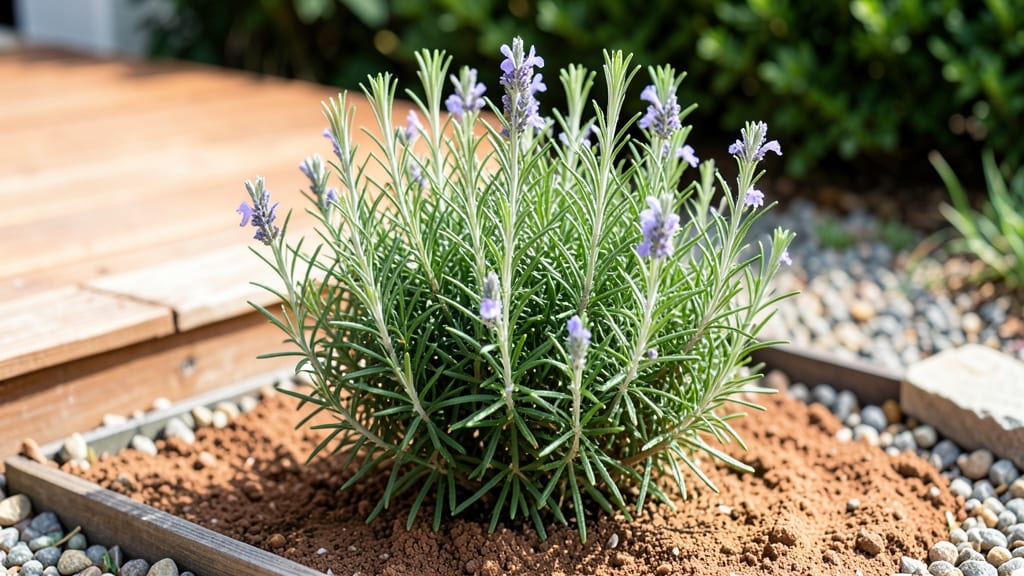
Rosemary herb acts as a perennial in USDA zones 7-10, where it thrives year-round with minimal care, but dies back to the ground in colder regions unless protected. Once established, its woody stems allow it to regrow vigorously when conditions improve.
This hardy Mediterranean herb's perennial nature comes from its deep root system and drought-resistant growth habit. 🌿 In warmer climates, rosemary grows as a woody shrub, often reaching 3-6 feet tall, while in colder zones, gardeners typically treat it as an annual because frost damages its tender leaves and stems.
The key to its survival lies in its ability to regenerate from the base once temperatures rise again, making it a resilient plant for gardeners willing to adapt their growing strategies.
What sets rosemary apart is its adaptability—whether you're growing it in a sunny Mediterranean climate or a colder region where winters drop below freezing, proper care can transform it from a seasonal plant to a long-lived perennial.
The difference between zones 7-10 and colder areas often comes down to protection during winter months, which we'll explore in the next section.
💡 In This Article
- Rosemary’s Perennial Lifespan and Cold Hardiness Zones
- Overwintering Rosemary in Cold Climates: Step-by-Step Survival Guide
Rosemary’s perennial lifespan and cold hardiness zones
Rosemary's perennial nature stems from its Mediterranean origins, where it evolved to thrive in hot, dry conditions with minimal water. This hardy herb develops a thick, woody base that stores nutrients and moisture, allowing it to survive droughts and heatwaves that would kill less resilient plants.
The woody stems act like a built-in survival mechanism, protecting the plant's core from environmental stress. In USDA zones 7-10, where winter temperatures rarely drop below 10°F, rosemary remains evergreen and continues growing year-round.
The key difference between rosemary's perennial behavior in warm climates and its annual treatment in colder regions comes down to frost sensitivity.
When temperatures fall below 20°F, the herb's tender leaves and stems suffer from ice crystal formation within plant cells, causing irreversible damage. 🌡️ In zones 7-10, rosemary's natural hardiness allows it to maintain its structure through mild winters, while in zones 5-6, even a single hard freeze can kill back the entire plant to the ground.
The plant's ability to regenerate from its woody base explains why it often returns in spring—those sturdy stems contain dormant buds capable of producing new growth when conditions improve.
What makes rosemary particularly interesting is its ability to adapt its growth form based on climate. In warmer zones, it grows as an upright shrub reaching 3-6 feet tall, while in cooler climates, it often stays smaller (1-3 feet) unless given winter protection.
The plant's drought resistance also plays a role—its silvery-green needles are covered in tiny hairs that reduce water loss, a trait developed over centuries in arid Mediterranean conditions.
This combination of woody structure and moisture conservation explains why established rosemary plants can survive for decades with minimal care in suitable climates.
For gardeners in marginal zones (6-7), rosemary's perennial potential becomes a matter of strategic protection. The plant's cold hardiness rating is typically USDA zone 8, meaning it can survive brief exposures to 10°F but struggles with prolonged cold.
In these areas, gardeners often use mulching techniques or container growing to extend the plant's lifespan. The secret lies in protecting the woody base—when this remains undamaged, the plant can regenerate new growth as soon as temperatures rise above 40°F in spring.
An often overlooked factor is rosemary's root system. Unlike many herbs, rosemary develops a deep, extensive root network that can reach 3-4 feet underground, anchoring the plant and providing additional cold protection.
This root system also explains why transplanted rosemary often struggles initially—disturbing these deep roots can take months to recover. In optimal conditions (zones 7-10), this root system works in tandem with the woody stems to create a plant that can live for 20+ years with proper care.
Consider this comparison: In California's coastal regions (zone 9), rosemary grows as a lush, evergreen shrub with minimal winter care, while in New England (zone 5), the same plant would die back completely each winter unless protected.
The difference isn't in the plant's genetics but in how we adapt our growing strategies to match its natural hardiness limits. 🌿 This adaptability is what makes rosemary such a rewarding herb to grow—with the right techniques, even gardeners in colder climates can enjoy its perennial benefits.