
Aphids
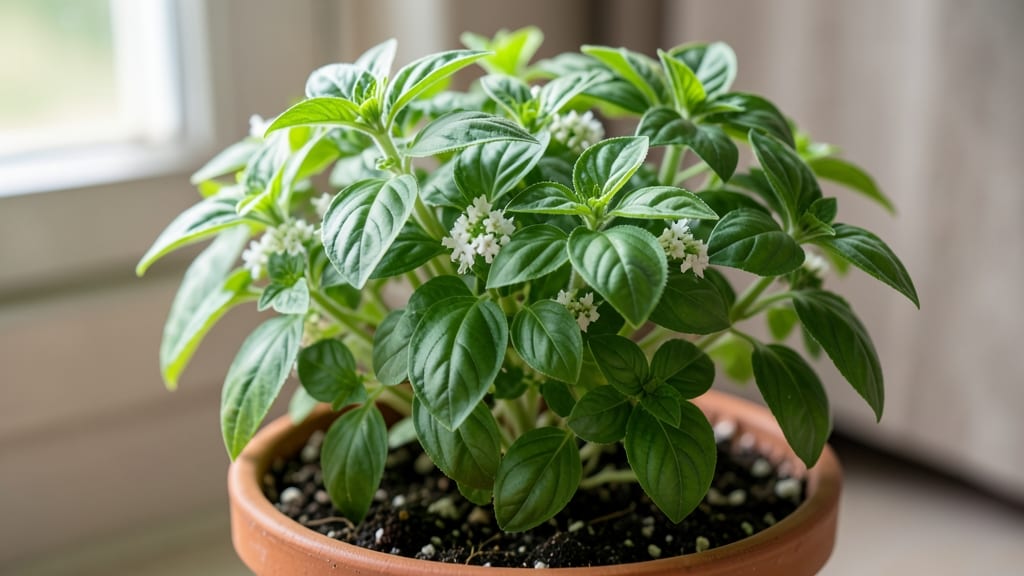
Sweet basil isn't a true perennial in most climates, though it often returns from its roots in warmer zones like USDA 10-11 after frost damage. In colder regions, it behaves as an annual or requires indoor overwintering to survive.
Whether sweet basil survives winter depends entirely on your hardiness zone. 🌱 In frost-free areas (USDA 10-11), the plant's roots often endure winter and sprout fresh growth in spring, earning it semi-perennial status.
However, in colder zones (USDA 8 or below), even the hardiest varieties typically die back completely after the first frost, requiring replanting each season.
The key difference lies in root resilience—warmer climates allow the crown to survive, while colder areas need protective measures like mulching or container transfers to give the plant a fighting chance.
This behavior explains why gardeners in northern climates often treat basil as an annual, while those in milder zones can enjoy multiple harvests from the same plant.
The plant's ability to regenerate from roots makes it more adaptable than many herbs, but without proper winter care, even the hardiest varieties will struggle to persist through freezing temperatures.
💡 In This Article
- Sweet Basil’s Perennial Behavior in Different Climates
- Tips to Extend Sweet Basil’s Lifespan Beyond One Season
Sweet basil’s perennial behavior in different climates
Sweet basil's survival strategy hinges on its root system and temperature tolerance. In USDA zones 10-11, where winter temperatures rarely drop below 30°F, the plant's crown (the base where stems meet roots) often survives frost, allowing regrowth in spring.
This makes it behave like a semi-perennial—technically dying back but returning from its roots. The root zone can tolerate brief cold snaps down to 25°F if protected by mulch or soil insulation.
In colder zones (USDA 8 or below), sweet basil's roots struggle to endure prolonged freezing. When temperatures hit 28°F or lower, the plant's cell membranes rupture from ice crystal formation, killing both foliage and root systems.
This is why most gardeners in these areas treat it as an annual. The exception is Genovese basil, which has slightly better cold tolerance but still rarely survives winters below 30°F without protection.
The plant's frost sensitivity stems from its tropical origins. Sweet basil evolved in warm Mediterranean climates where temperatures rarely drop below 40°F.
Its leaves contain high levels of essential oils (like eugenol), which can actually increase frost damage by making cell walls more brittle. 🌡️ This explains why even a light frost can turn leaves black and mushy within hours—it's not just cold damage, but a chemical reaction within the plant.
What makes sweet basil unique among herbs is its ability to regenerate from root fragments. Even if the top growth dies back completely, a 2-inch root section can often sprout new shoots when conditions warm up.
This is why you'll sometimes see basil "volunteering" in garden beds the following spring—it survived in a dormant state. However, this only works if the roots weren't completely frozen solid.
Zone-specific examples highlight these differences dramatically. In USDA zone 10 (like coastal California), sweet basil plants often produce two full harvests per year with minimal care. In zone 7 (like Washington D.C.), the same plant will die back completely after the first 28°F night, requiring full replanting.
The transition zone (zone 8) shows the most variability—some years it survives, other years it doesn't, depending on winter severity.
Understanding these mechanics helps explain why gardeners in colder climates often use basil as a "bridge plant"—growing it quickly in spring, harvesting heavily before summer heat, and then replacing it with more cold-tolerant herbs like oregano or thyme.
The plant's short-term productivity makes it worthwhile even as an annual in many regions.