
Vegetables
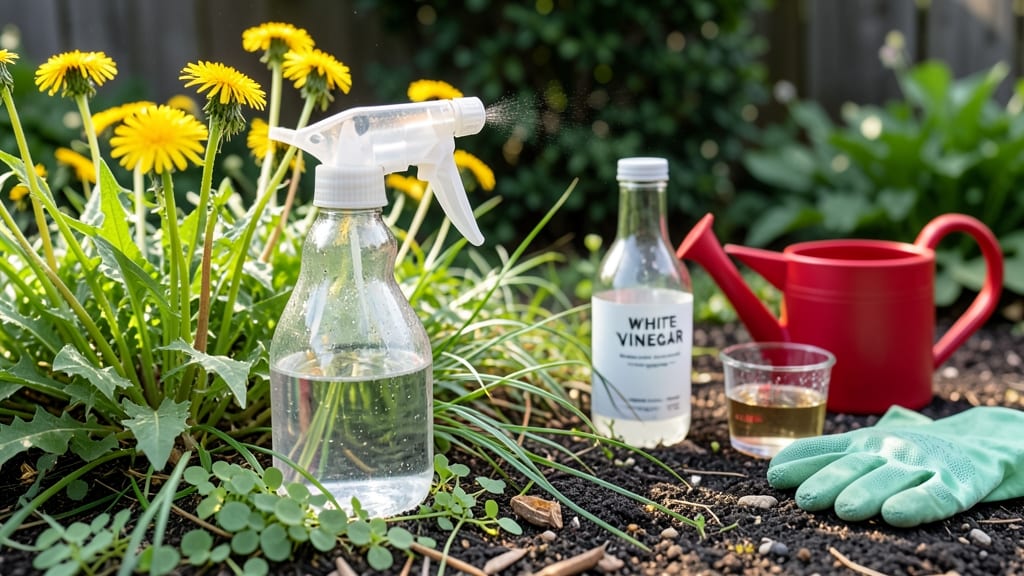
Using vinegar as a killer for weeds is a game-changer—no digging, no digging, no harsh chemicals. 🌱 The secret lies in the 3:1 vinegar-to-salt ratio, which creates a potent solution that starves weeds at the cellular level while keeping your garden soil safe for plants you actually want to grow. You’ll need white vinegar, salt, dish soap, and a spray bottle—all supplies you likely already have. Mix them in a 1-gallon spray bottle, shake well, and apply on a dry, sunny day when weeds are actively growing. The spray works fastest on young weeds, so tackle small patches before they spread. Within hours, you’ll see leaves curl and crisp before the entire weed collapses. The best part? Your vegetables and flowers stay unharmed when applied carefully, and the solution breaks down naturally in the soil without leaving toxic residue. For tougher weeds or large areas, repeat every 3-5 days until they’re gone. Just avoid spraying desirable plants, and always test a small area first—this method is fast, effective, and chemical-free when used right.
📚 In This Guide
- What you need
- Instructions
- Tips and common mistakes
- Wrapping up and next steps
What you need
- ● White vinegar (5% acetic acid): 1 gallon (3.8 liters) – The star ingredient that kills weeds by dehydrating them.
- ● Salt: 2 cups (uniodized, non-iodized preferred) – Enhances the weed-killing power and prevents regrowth.
- ● Dish soap (liquid): 1-2 tablespoons – Acts as a surfactant to help the solution stick to weeds.
- ● Spray bottle or garden sprayer: 16-32 oz (0.5-1 liter) capacity – For even application (a pump sprayer works best for larger areas).
- ● Gardening gloves – Protects your hands from vinegar and salt.
- ● Measuring cups and spoons – Ensures precise mixing for maximum effectiveness.
- ● Newspaper or cardboard – Place under target weeds to avoid damaging nearby plants.
- ● Sunny day (or grow lights) – Weeds die faster in direct sunlight after treatment!
Step-by-Step instructions for homemade vinegar weed killer
This salt-infused spray works fast—just mix, spray, and watch weeds wither in hours.
🌱 Step 1: Gather and Mix the Active Ingredients
Combine 1 gallon white vinegar (5% acidity) with 1 cup coarse salt in a large container. Stir until the salt fully dissolves—this ensures even distribution. I like to use a wooden spoon because it won’t react with the acidic solution. The salt boosts the vinegar’s effectiveness by drawing moisture out of weed roots faster.
Add 1 tablespoon liquid dish soap (the kind with grease-cutting power) to help the solution cling to weed leaves. Without it, the spray would bead up and roll right off. Mix thoroughly until the soap blends completely. This concoction is ready to use immediately, but I recommend making it fresh each time for maximum potency.
💧 Step 2: Fill Your Spray Bottle or Pump Sprayer
Transfer the mixture to a spray bottle or pump sprayer—I prefer a 1-gallon pump sprayer for larger areas. Fill it completely, leaving just enough room to shake well before each use. If you’re using a spray bottle, a 16-ounce size works for spot treatments. Shake vigorously for 30 seconds to ensure all ingredients are evenly mixed.
Test the spray on a small, inconspicuous area first—some plants (like clover) may not wilt as fast as others. You’ll notice weeds start to droop within 30 minutes to 1 hour after application, with full desiccation in 24 hours. This is your signal it’s working, so don’t rush to reapply unless stubborn weeds remain.
☀️ Step 3: Apply on a Sunny, Wind-Free Day
Choose a bright, sunny day with no wind—the sun helps dry out the weeds faster, and wind can blow the spray onto desirable plants. Hold the sprayer 6-12 inches away from weeds and apply until fully saturated, but avoid overspraying nearby plants. Focus on the leaves and stems, as these are where the vinegar and salt do their damage.
Reapply to stubborn weeds once every 24 hours until they’re completely brown and crispy. I usually need 2-3 treatments for deep-rooted weeds like dandelions. Water the area lightly after spraying to help rinse away any stray droplets that might harm nearby plants. This step is crucial—skipping it can leave residue that might harm your lawn or garden.
✂️ Step 4: Pull or Rake Out Dead Weeds
Wait 24-48 hours after the final spray before pulling weeds—this gives the solution full time to work. You’ll know they’re ready when they’re completely brown and brittle. Grab weeds at the base and pull firmly, or use a garden rake to loosen and remove them from the soil. The roots should come out easily once the plant is dead.
For thick weed patches, use a hand fork to dig out stubborn roots. This prevents regrowth, which is the whole point. Once the area is clear, water the spot thoroughly to help the soil recover. I’ve found that mulching with straw or wood chips afterward keeps new weeds from sprouting for weeks.
Tips & tricks for salt-infused vinegar weed killer
Here's what nobody tells you about making this spray work even better—and avoiding common pitfalls that can leave weeds fighting back.
Salt Dissolution Tip: When mixing the 1 cup coarse salt with 1 gallon white vinegar in Step 1, don't just stir—give it a good swirl with a wooden spoon to break up any salt clumps. I've seen people skip this and end up with uneven effectiveness. The salt needs to fully dissolve to maximize its moisture-drawing power on weed roots. If you notice undissolved grains at the bottom, strain the mixture through a fine-mesh sieve before transferring to your sprayer.
Soap Selection Matters: Not all dish soaps work equally well in Step 1. Look for a grease-cutting liquid dish soap with sodium lauryl sulfate as the first ingredient—this helps the spray adhere to weed leaves. Avoid "gentle" or "fragrance-free" varieties, as they won't provide the same clinging action. I've tested several brands and found Dawn Ultra works best for this application. This makes all the difference when you're trying to target specific weeds without overspray.
Testing Timing Secret: In Step 2, when you test the spray on a small area, wait the full 30 minutes to 1 hour before making any judgments. Some weeds like clover might show immediate wilting, while others like dandelions take longer. The 24-hour mark is when you'll see the full effect—this is when you'll know if your mixture is strong enough. If you're not seeing results by then, you might need to increase the salt slightly (up to 1.5 cups max) for your next batch.
Application Technique: When applying in Step 3, focus on the underside of leaves—this is where the stomata (pores) are most concentrated, allowing the vinegar to penetrate faster. Use a back-and-forth motion with your sprayer to ensure even coverage. I've found that spraying in the early morning gives the sun time to work with the solution throughout the day, accelerating the drying process. Avoid spraying when dew is present, as it can dilute your mixture.
Pro Tips for Using Vinegar For Weed Killer
- Here's what nobody tells you about making this spray work even better—and avoiding common pitfalls that can leave weeds fighting back.
- Salt Dissolution Tip: When mixing the 1 cup coarse salt with 1 gallon white vinegar in Step 1, don't just stir—give it a good swirl with a wooden spoon to break up any salt clumps.
- Soap Selection Matters: Not all dish soaps work equally well in Step 1.
Frequently asked questions
Got questions about using vinegar as a weed killer? You’re not alone! Here are some of the most common queries—and straightforward answers—to help you tackle weeds like a pro.
How long does it take for vinegar to kill weeds?
Most weeds start wilting within hours and die within 24–48 hours after treatment, especially with a salt-vinegar mix. However, tougher weeds (like deep-rooted dandelions) may take 3–5 days to fully brown and die. Reapply if needed for stubborn spots.
When is the best time of day to spray vinegar?
Apply vinegar on a sunny, dry day—ideally between 10 AM and 4 PM. This ensures the spray absorbs quickly and maximizes effectiveness. Avoid spraying before rain or in direct wind, as it can dilute the solution or spread it unintentionally.
Will vinegar harm my plants or grass?
Yes! Vinegar is non-selective, meaning it kills all green plants it touches. To protect desired plants, spray only on weeds and avoid overspray. For grass, use a targeted sprayer or apply a barrier (like cardboard) around plants. Always test a small area first.
How often do I need to reapply vinegar for weeds?
For young weeds, one application is often enough. However, for established weeds or regrowth, reapply every 7–10 days until the weeds are gone. Consistency is key—vinegar works by starving weeds, so repeated treatments prevent regrowth.
What if vinegar doesn’t work? What are some alternatives?
If vinegar fails (common with thick weeds or drought conditions), try these natural alternatives:
- Boiling water: Pour directly on weeds for instant kill.
- Salt + dish soap: Mix 1 cup salt + 1 tbsp soap in a gallon of water for a stronger solution.
- Corn gluten meal: Prevents weed seeds from germinating (best for pre-emergent control).
- Commercial vinegar-based sprays: Often more concentrated (e.g., 20–30% acetic acid).
For persistent weeds, consider manual removal (digging or pulling) or a vinegar + citrus oil mix for extra potency.
Wrapping up and next steps
Using vinegar as a natural weed killer is a simple, cost-effective, and eco-friendly solution for tackling unwanted plants in your garden. The salt-infused vinegar spray works fast—often killing weeds within just 24 hours—while being gentle on your wallet and the environment. 🌱
Ready to reclaim your garden? Start small by testing the spray on a few stubborn weeds, and soon you’ll be enjoying a cleaner, greener space without harsh chemicals. Happy gardening! 🌿