
Pests and Diseases
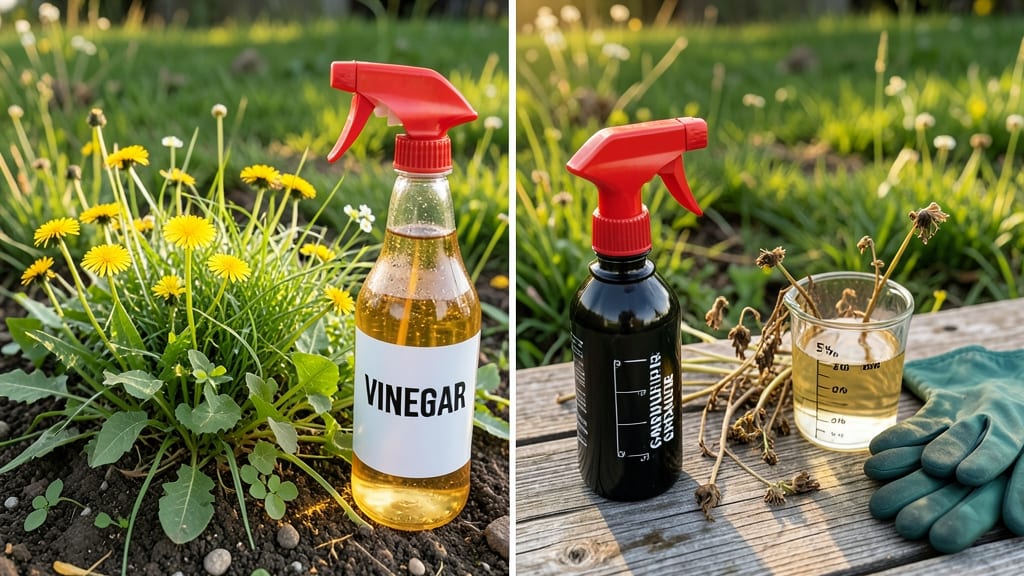
For vinegar and weed control, use a 5-20% acetic acid solution applied directly to weeds during sunny conditions for fastest results. Higher concentrations (20-30%) tackle tougher weeds but risk harming nearby plants or soil.
Vinegar's acetic acid disrupts weed cell structures by breaking down membranes and proteins, causing rapid dehydration. 🔥 Household vinegar (5%) works for small weeds, while stronger solutions (20-30%) handle deep-rooted invaders like dandelions.
The key is timing—apply when weeds are actively growing and the sun is shining to boost evaporation and absorption. I've found that adding a drop of dish soap helps the solution stick better, especially on waxy leaves like those on clover.
For best results, spray weeds on a dry, sunny day—this prevents vinegar from diluting in rain and maximizes the acid's effectiveness. Always test a small area first, as concentrated vinegar can damage desirable plants or alter soil pH over time.
A simple spray bottle works for small areas, but larger gardens benefit from a pump sprayer for even coverage.
💡 In This Article
- How Vinegar’s Acidity Kills Weeds at the Cellular Level
- Best Vinegar Weed Killer Recipes and Application Tips
How vinegar’s acidity kills weeds at the cellular level
Vinegar's power lies in its acetic acid content, which acts like a chemical scalpel on weed cells. When applied, the acid penetrates the plant's cuticle (its protective outer layer) and disrupts the phospholipid bilayer of cell membranes.
This creates microscopic holes that allow vital fluids—like water and nutrients—to leak out, causing rapid dehydration. 🔥 For example, household vinegar (5% acetic acid) can kill small weeds within 24-48 hours by breaking down these membranes, while concentrated solutions (20-30%) accelerate the process to just 6-12 hours by increasing osmotic pressure inside cells.
The pH of vinegar plays a critical role in its effectiveness. Household vinegar has a pH of around 2.5, which is acidic enough to denature proteins within weed cells, including enzymes that drive photosynthesis. This stops the plant from producing energy and repairing damage.
However, the lower the pH (higher acidity), the faster the kill—but also the greater risk of harming nearby plants or soil microbes. For instance, a 10% acetic acid solution (pH ~1.5) works well for broadleaf weeds like dandelions, while 5% vinegar (pH ~2.5) is safer for delicate garden edges.
Sunlight amplifies vinegar’s effects by increasing evaporation, which concentrates the acid on the weed’s surface. On a sunny day, the vinegar dries faster, leaving a crusty residue that blocks light and further stresses the plant.
This is why morning applications are ideal—the dew has evaporated, but the heat of the day hasn’t yet caused the vinegar to dilute. Without sunlight, the process slows dramatically, as the acid lingers longer on the leaves without the same dehydrating impact.
One critical factor is the weed’s waxy cuticle thickness. Plants like clover or chickweed have thicker cuticles, requiring 20-30% acetic acid for effective penetration. In contrast, young weeds or those with thin cuticles (like crabgrass) succumb to even 5% vinegar.
The key is matching the vinegar strength to the weed’s resilience—think of it like choosing a knife for cutting through tough vs. tender ingredients.
Here’s what happens under the microscope: The acetic acid disrupts the plant’s vacuoles (water-filled organelles), causing them to collapse. This triggers a cascade of cellular damage, including the breakdown of chloroplasts (the sites of photosynthesis).
Within hours, the weed’s leaves turn brown and crispy as its internal structures fail. For tough weeds like bindweed, reapplication every 3-5 days ensures the roots also absorb enough acid to die back completely.
For gardeners concerned about soil health, note that vinegar’s effects are largely surface-level. While it won’t permanently alter soil pH (which requires much stronger acids), repeated applications can temporarily lower pH in the top inch of soil, potentially stressing beneficial microbes.
To mitigate this, always apply vinegar directly to weeds and avoid overspraying surrounding areas. 💫