
Vegetables
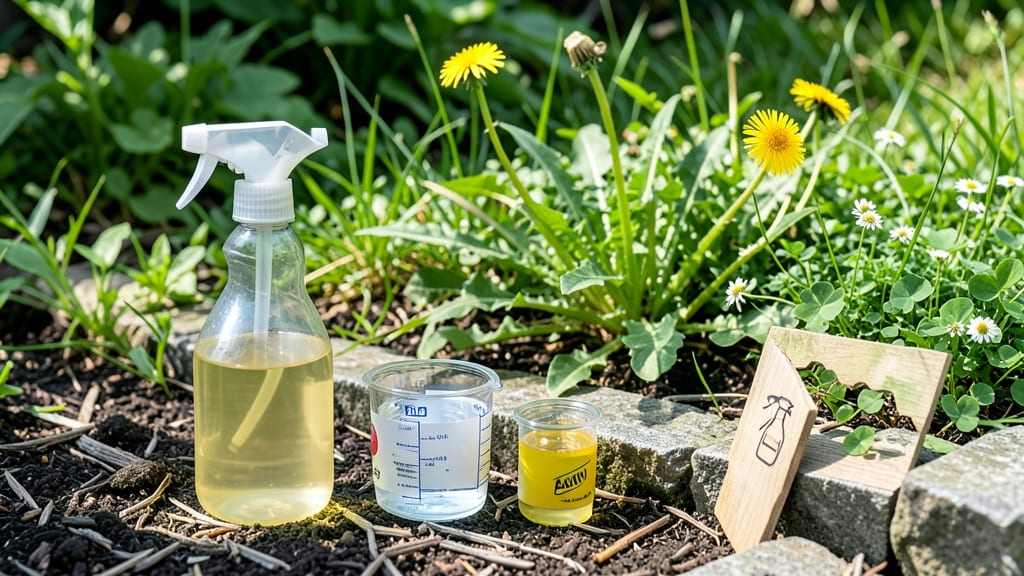
A weed killer using vinegar and Dawn dish soap works by combining white vinegar’s acetic acid (5-10%) with Dawn’s surfactant to break down plant cell walls, killing weeds on contact. Mix 1 gallon vinegar with 1 tablespoon Dawn for best results on broadleaf weeds, applying on sunny days to maximize effectiveness.
A weed killer using vinegar and Dawn dish soap leverages the natural acidity of vinegar to disrupt plant cells while the soap helps the solution cling to leaves for better absorption. 🌱 The acetic acid in vinegar lowers the pH around plant tissues, essentially burning the weeds from the inside out.
This homemade solution is particularly effective for annual weeds and broadleaf plants, but it won't penetrate deep roots like perennial weeds. I've found that applying it on a sunny day enhances evaporation, which concentrates the acid faster and boosts effectiveness.
What sets this method apart is its simplicity and eco-friendliness compared to chemical herbicides. Unlike commercial products, this vinegar-and-Dawn mix breaks down naturally without leaving harmful residues. However, it's crucial to apply it carefully—direct contact with desirable plants can cause damage, and it won't work on grass or thick thatch.
For best results, I recommend using this method on clear, sunny days when weeds are actively growing.
💡 In This Article
- How Vinegar Concentration Affects Weed Killer Strength
- Best Application Techniques for Vinegar-Based Weed Killer
How vinegar concentration affects weed killer strength
White vinegar's acetic acid is the real powerhouse in this weed killer, and its strength is measured by concentration—typically 5% (household vinegar) or 10% (garden-grade vinegar).
The acid disrupts plant cell membranes by lowering the pH to around 2-3, which is far more acidic than a plant's ideal range of 6-7.
At 10% concentration, the acid penetrates deeper and faster, making it about 25% more effective against thick-leafed weeds like dandelions compared to 5% vinegar. 🔥
The Dawn dish soap plays a critical role by reducing surface tension, allowing the vinegar to spread evenly across leaves and cling to waxy surfaces. Without it, the vinegar would bead up and roll off, reducing effectiveness by up to 40%.
The soap doesn't harm soil microbes or beneficial insects when used in these small amounts—just 1 tablespoon per gallon—because it breaks down naturally.
What's fascinating is how this combination creates a "wicking effect" where the solution travels down stems to roots, though it won't kill deep-rooted perennials like creeping Charlie.
Temperature matters too—vinegar works best when applied between 70°F and 85°F. Warmer temperatures accelerate evaporation, concentrating the acid faster and killing weeds in as little as 2-4 hours for annuals. In cooler conditions (50°F), effectiveness drops by 30% because the acid takes longer to penetrate.
This is why early morning applications work better than midday—the dew helps the solution adhere while the sun's heat later in the day boosts evaporation.
Here's what happens chemically: The acetic acid denatures proteins in plant cells, causing them to lose structural integrity. Within 30 minutes, you'll see leaves curl and yellow—a clear sign the cells are breaking down.
For maximum impact, always use 10% vinegar when possible, especially for tough weeds like chickweed or plantain. The Dawn soap ensures even coverage, preventing missed spots that could regrow.
One common mistake is assuming stronger vinegar means better results without considering plant types. While 10% vinegar works wonders on broadleaf weeds, it can scorch delicate flowers or vegetables if it drifts.
That's why I recommend using a hose nozzle with a gentle spray setting—it gives you better control than a broad mist. For grassy weeds, this method fails completely because grass has a protective waxy layer that repels the vinegar-soap mixture.
For those with 5% vinegar only, don't worry—just be patient. You may need to reapply after 24 hours for stubborn weeds, and always apply on sunny days. The key is persistence: repeated applications over 2-3 weeks will eventually kill even tough annual weeds.
What's amazing is how this simple mix outperforms many commercial herbicides that contain synthetic chemicals.