
Plants
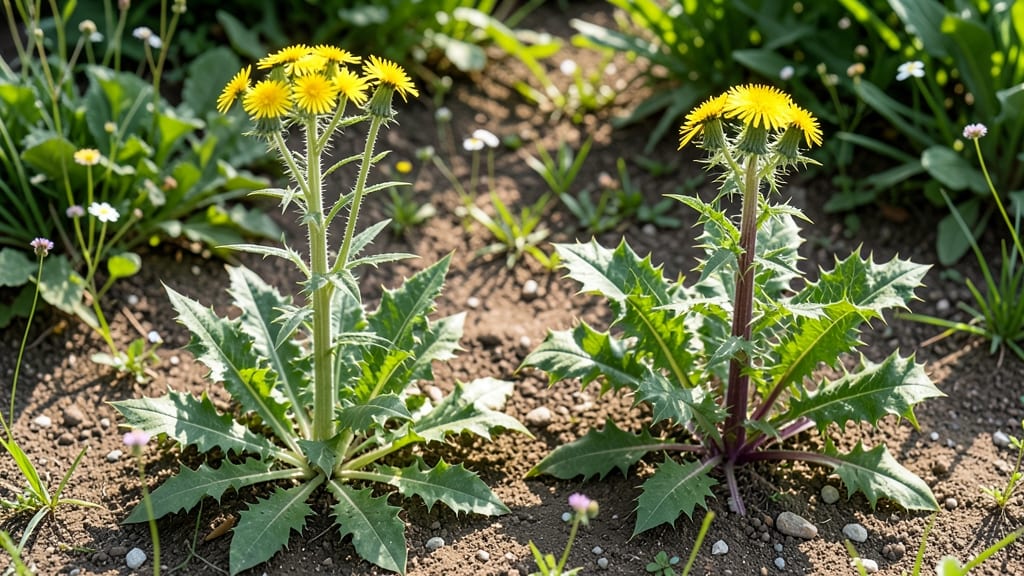
Weeds that look like lettuce can turn your salad greens into a wild mix. 🌱 I’ve pulled more of these sneaky lookalikes than I’d like to admit—especially wild lettuce and chickweed, which mimic young lettuce leaves almost perfectly.
The key is learning their subtle differences: wild lettuce has a milky sap when broken, while chickweed grows in mats and tastes slightly bitter.
Start by examining the leaf shape and growth pattern. Real lettuce has smooth, crisp edges and grows upright, while weeds often sprawl or have jagged edges. Pull weeds early—before they seed—using your hands or a hand trowel for stubborn roots.
A quick mulch layer (straw or grass clippings) smothers new sprouts and saves you from weekly weeding.
Once you spot the differences, removal becomes foolproof. Snip weeds at soil level to prevent regrowth, and compost them (if not already seeded). For prevention, interplant lettuce with radishes or carrots—their dense growth crowds out weeds naturally.
Within a few weeks, your beds stay clean enough to harvest straight from the garden.
This method works for any leafy green bed, whether you’re growing butter lettuce, arugula, or spinach. The trick is consistency: check your plants twice a week during warm months, and you’ll keep those weeds from ruining your harvest. No more mystery greens in your salad!
📚 In This Guide
- What you need
- Instructions
- Tips and common mistakes
- Wrapping up and next steps
What you need
- ● Garden gloves – A pair of durable, nitrile-coated gloves (size medium to large) to protect your hands from prickly stems or sap.
- ● Hand lens or magnifying glass – A 10x magnification lens (or smartphone magnifier app) to inspect leaf details, veins, and textures.
- ● Field guide or plant ID app – A printed guidebook like The Weed Identification Guide or a trusted app (e.g., PictureThis or PlantNet) for quick comparisons.
- ● Small trowel or pruners – A compact, stainless-steel pruner (or trowel) to carefully dig up or trim suspect plants for closer inspection.
- ● Notebook & pencil – A small notebook to jot down observations (leaf shape, growth pattern, location, etc.).
- ● Spray bottle with water – A 16 oz. spray bottle to dampen leaves for better visibility of veins and edges.
- ● Ruler or measuring tape – A 6-inch ruler to measure leaf width, stem thickness, and plant height.
- ○ Camera (optional but helpful) – A smartphone with a macro mode or a basic digital camera to snap photos for later reference.
- ● pH test kit – To check soil acidity (some weeds thrive in specific pH levels).
- ● Garden journal – For tracking recurring weeds and their locations over time.
- ● Disposable gloves – Extra pairs for handling toxic plants (e.g., Jimsonweed or Poison Hemlock).
- ● Compost bin or trash bag – To safely dispose of weeds (especially invasive ones).
Quick ID guide for weeds that mimic lettuce
Here’s how to spot the most common lettuce lookalikes before they crowd out your garden.
🌱 Step 1: Examine Leaf Shape and Texture
True lettuce leaves are smooth, slightly crinkled, or lobed with a buttery texture. Weeds like wild chicory or dandelion greens often have jagged, serrated edges and a slightly hairy or waxy coating. Run your fingers over the leaves—if they feel rough or gritty, it’s likely not lettuce.
Check the base of the plant too. Lettuce forms a tight rosette of leaves close to the ground, while weeds like prickly lettuce (Lactuca serriola) grow taller with more spaced-out leaves. Look for any milky sap—this is a dead giveaway for milkweed or wild lettuce varieties.
🌿 Step 2: Inspect Growth Patterns and Stems
Lettuce stays low to the ground, rarely exceeding 6 inches in height unless it’s bolting. Weeds like shepherd’s purse or purslane grow upright with slender, wiry stems. If you see a plant with a thick, hollow stem or a branching structure, it’s not lettuce.
Dig gently at the base. Lettuce roots are shallow and fibrous, while many weeds—like chickweed—have deep, taproots. If you pull and the plant resists with a tough root system, it’s a weed. Also, watch for any yellowing or purple-tinged leaves—a sign of stress or a different plant entirely.
☀️ Step 3: Check for Flowering Structures
Lettuce flowers are small, yellow, and appear only when the plant bolts (usually after heat stress). Weeds like wild radish or wild carrot produce tall, distinctive flower stalks with umbrella-shaped clusters (umbels) long before they’re harvestable. If you spot any flower buds or stems elongating, remove the plant immediately.
Pay attention to seed heads too. Weeds like lamb’s quarters develop puffball-like seed clusters, while lettuce seeds are tiny and clustered in a loose head. If you see a plant producing seeds before it’s mature, it’s almost certainly a weed.
✂️ Step 4: Test for Taste (Safely!)
This is the final check—only after visual inspection. Snip a small leaf and taste a tiny piece. True lettuce has a mild, slightly sweet, or earthy flavor. Weeds like wild garlic or wild onion have a sharp, pungent taste, while others—like bittercress—are intensely bitter.
If you’re unsure, avoid eating it. Some weeds, like poison hemlock, can be deadly. When in doubt, research the plant using a field guide or app like iNaturalist before consuming anything from your garden.
🪴 Step 5: Remove Weeds Properly to Prevent Regrowth
Pull weeds by the roots to avoid regrowth. Lettuce has shallow roots, so a quick tug usually works, but weeds like bindweed or bindweed relatives have deep, creeping roots. Use a hand fork to loosen stubborn weeds without disturbing nearby lettuce.
Drop pulled weeds into a sealed bag or compost pile only if it’s weed-free. Many weeds resprout if left in the soil, and some—like chickweed—can self-seed aggressively. Mulch heavily around lettuce beds to suppress future weed growth.
Tips & tricks for identifying garden weeds that mimic lettuce
Real talk: Even experienced gardeners can get fooled by these sneaky lookalikes. Here’s how to sharpen your eye for the subtle differences that separate lettuce from its imposters.
Leaf Texture is Your First Clue: Lettuce leaves should feel smooth and slightly buttery to the touch. If you run your fingers over the leaf and feel any roughness, hairiness, or waxy coating—like on wild chicory or dandelion greens—you’re dealing with a weed. I’ve pulled out what I thought was butter lettuce only to discover prickly lettuce (Lactuca serriola) with its jagged edges that can leave tiny cuts on your fingers.
Growth Habits Reveal the Truth: Lettuce stays compact, rarely exceeding 6 inches unless it’s bolting. If you’re seeing plants with wiry stems, hollow centers, or branching structures—like shepherd’s purse or purslane—you’ve got weeds. Digging at the base is key: lettuce roots are shallow and fibrous, while weeds like chickweed have deep, stubborn taproots that resist pulling. I once spent 20 minutes trying to uproot what I thought was romaine, only to realize it was bindweed with its creeping roots.
Flowering Structures Give It Away: True lettuce only flowers when bolting, producing small yellow blooms after heat stress. Weeds like wild radish or wild carrot develop distinctive umbrella-shaped flower clusters (umbels) long before harvest time. I learned this the hard way when I almost harvested a plant with these flowers, only to realize it was wild carrot—bitter and inedible. Keep an eye out for any elongating stems or seed heads, which are dead giveaways for weeds like lamb’s quarters.
Safety First: The Taste Test: Only after visual inspection should you consider tasting. True lettuce has a mild, slightly sweet flavor, while weeds like wild garlic or wild onion pack a sharp, pungent punch. Bittercress is another red flag—its intense bitterness is unmistakable. I’ve seen gardeners accidentally harvest bittercress, which can ruin a salad. When in doubt, use a field guide or app like iNaturalist to confirm before consuming anything from your garden.
Pro Tips for Weeds That Look Like Lettuce
- Real talk: Even experienced gardeners can get fooled by these sneaky lookalikes.
- Leaf Texture is Your First Clue: Lettuce leaves should feel smooth and slightly buttery to the touch.
- Growth Habits Reveal the Truth: Lettuce stays compact, rarely exceeding 6 inches unless it’s bolting.
Frequently asked questions
How can I tell if my lettuce is actually a weed?
Check the leaf shape and growth pattern: True lettuce has soft, tender leaves with a rosette shape close to the ground. Weeds like dandelion or purslane often have tougher stems, jagged edges, or grow taller. Pull a leaf—if it’s bitter or fibrous, it’s likely a weed!
When is the best time to remove these weeds?
Remove weeds early—as soon as you spot them! Young weeds are easier to pull by hand. If they’ve gone to seed, wear gloves and dig deep to avoid regrowth. Pro tip: Check your garden weekly during spring and fall when weeds sprout most aggressively.
Are there any edible weeds that look like lettuce?
Yes! Purslane and lamb’s quarters resemble lettuce but are edible (and nutritious!). Purslane has thick, succulent leaves, while lamb’s quarters have a slightly grainy texture. Always confirm ID before eating—when in doubt, toss it out!
What’s the best way to prevent weeds from growing in my lettuce patch?
Use a mulch layer (straw or grass clippings) to block sunlight. Hand-pull weeds regularly, and space lettuce plants 3–6 inches apart to reduce competition. For stubborn weeds, try vinegar spray (5% acetic acid) on hot days.
What should I do if I accidentally eat a weed that looks like lettuce?
Most common "lettuce lookalikes" (like wild radish) are harmless, but poison hemlock or water hemlock are deadly—never eat unidentified greens. If you’re unsure, skip it. For mild stomach upset, drink water and monitor symptoms; seek help if they worsen.
Wrapping up and next steps
Identifying weeds that mimic lettuce can save your garden from unwanted surprises—and now, you’re equipped with the knowledge to spot the difference! 🌱 Whether it’s prickly lettuce, dandelions, or wild radish, a closer look at leaf shape, growth patterns, and seed heads will keep your salad greens safe. Don’t let a few sneaky lookalikes ruin your harvest—stay vigilant and enjoy a thriving, weed-free garden!
Ready to take action? Next, grab your gardening gloves and inspect your beds today! 🌿 Share your finds (or victories) in the comments—we’d love to hear how your garden’s shaping up!