
Planting
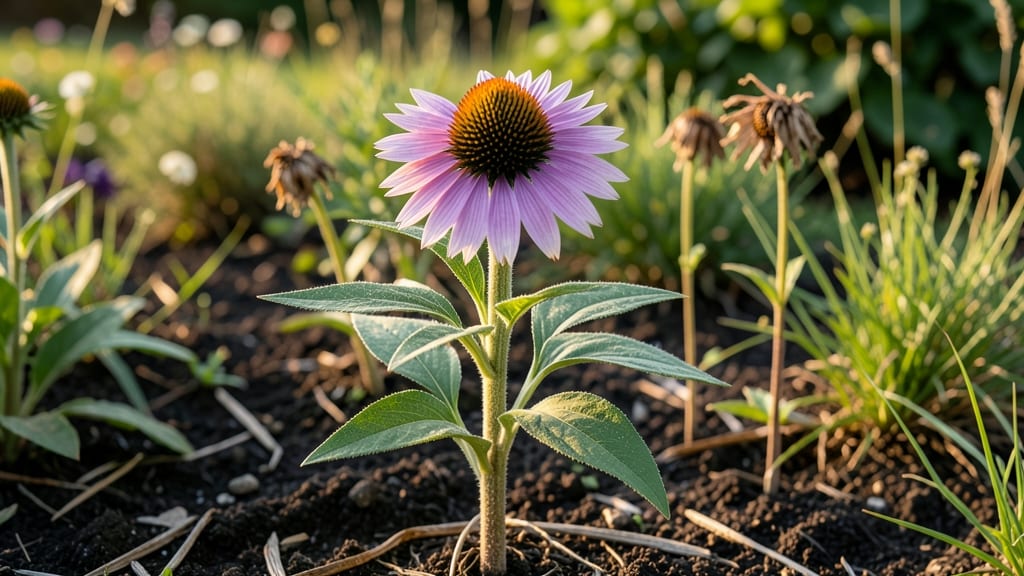
A perennial plant is a flowering or non-flowering species that lives for three or more years, regrowing from its root system each spring after dying back in winter or dormancy periods. Unlike annuals or biennials, perennials return season after season with proper care.
A perennial plant thrives because its root systems store energy underground during cold months, allowing it to push new growth when conditions improve. 🌱 This hardiness makes them ideal for gardeners seeking long-term beauty with minimal replanting—think of peonies or hostas that bloom year after year.
The trade-off? Some perennials need winter protection in colder zones, while others thrive with just basic soil prep and occasional pruning.
What sets them apart from annuals is their resilience: while annuals complete their life cycle in one season, perennials focus energy on root development first. This means slower initial growth but rewards with decades of color and texture.
For example, lavender and coneflowers often outlive their containers if given proper drainage and sunlight.
💡 In This Article
- How Perennial Plants Survive Winter and Regrow Each Year
- Best Perennial Plants for Gardens and Landscapes
How perennial plants survive winter and regrow each year
The secret to a perennial's longevity lies in its underground root system, which acts like a biological battery. During winter, when above-ground growth dies back, the roots store carbohydrates—sugars and starches produced through photosynthesis—as energy reserves.
These reserves can sustain the plant for months, even in freezing temperatures. For instance, a well-established peony root system can store enough energy to produce 50-100 buds the following spring, all from a single crown.
Perennials employ two key survival strategies: dormancy and hardiness zones. Dormancy is a metabolic slowdown triggered by shorter daylight and colder temperatures. The plant's cells produce antifreeze proteins that prevent ice crystal formation in tissues, similar to how some fish survive Arctic winters.
Meanwhile, hardiness zones (like USDA zones 3-10) determine which species thrive in your climate—hostas, for example, can survive -30°F winters, while tropical perennials like cannas need above 20°F protection.
What sets perennials apart from annuals is their growth priority: roots first. Annuals like marigolds focus all energy on above-ground growth and reproduction in one season, while perennials like black-eyed Susans allocate 60-70% of their energy to root development during their first year.
This underground investment pays off when spring arrives, as the roots quickly regenerate leaves and flowers. The trade-off? Initial growth may appear slower compared to annuals, but the long-term payoff is decades of blooms with minimal replanting.
Seasonal adaptations go beyond roots. Many perennials develop insulating leaf litter around their bases, while others like sedums store water in thick, fleshy leaves to survive drought. Even the timing matters: most perennials begin root growth in late summer when temperatures drop, preparing for winter.
This pre-winter root flush ensures they're ready to burst upward as soon as soil temperatures reach 50°F in spring.
Consider how asparagus demonstrates this perfectly. Its first-year crowns produce only roots, while second-year plants push 10-20 spears from the same root system. By year three, a mature asparagus plant can yield 200+ spears annually—all from roots that survived multiple winters.
This persistence contrasts sharply with annuals, which must be replanted every season, and biennials like carrots, which only flower in their second year before dying.
For gardeners, this means choosing perennials with root systems suited to your climate. In colder regions, deep-rooted plants like Russian sage (with roots extending 3-4 feet deep) outperform shallow-rooted varieties.
In warmer climates, drought-tolerant perennials like yarrow thrive with minimal watering because their fibrous roots spread widely to access moisture.
Understanding these mechanisms helps explain why perennials often outlive their gardeners. With proper care—like mulching to insulate roots and avoiding over-fertilizing in late summer—many perennials can persist for 20-50 years or more. The key is working with nature's design rather than against it. 🌿