
Propagation
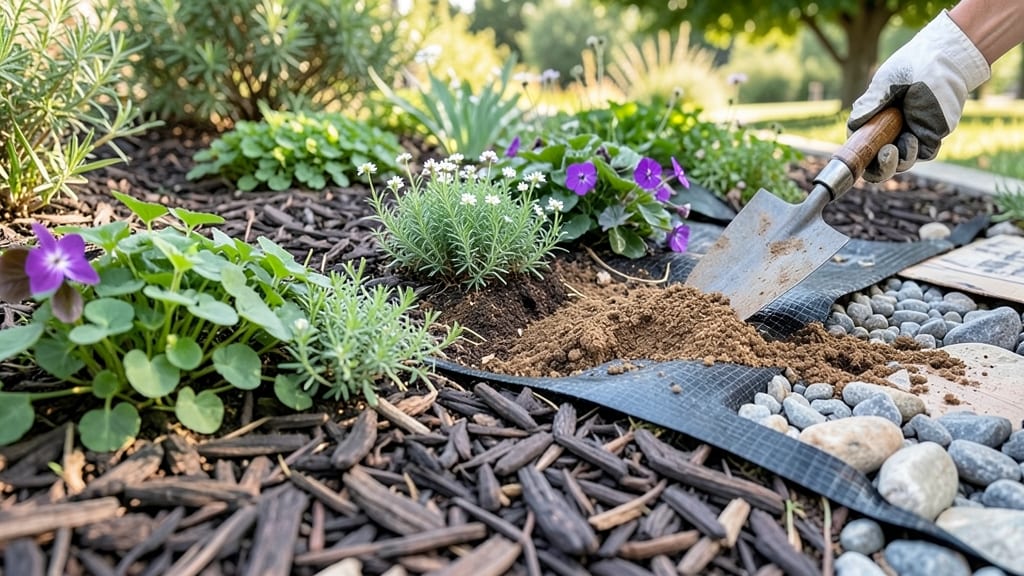
What prevents weeds from growing is blocking sunlight and root penetration using barriers like landscape fabric, cardboard, or mulch, while also maintaining consistent coverage to prevent soil germination.
Weeds thrive when they get sunlight and room to spread their roots, so cutting off both is the key to stopping them. Physical barriers like cardboard or landscape fabric smother weeds by blocking light, which disrupts their photosynthesis process.
Even organic options like mulch work by creating a dense layer that chokes out weeds while also retaining moisture—something weeds need to sprout. The trick is keeping coverage consistent; even small gaps let weeds sneak through. 🌱
For best results, combine a barrier with a thick layer of mulch (at least 3-4 inches) to maximize effectiveness. This dual approach not only blocks light but also prevents seeds from reaching the soil where they can germinate.
Over time, the organic material in mulch breaks down, adding nutrients to your garden while keeping weeds at bay.
💡 In This Article
- How Light Blocking and Root Barriers Stop Weed Growth
- Best Natural and Synthetic Weed Barriers for Gardens
How light blocking and root barriers stop weed growth
Weeds grow because they rely on sunlight for photosynthesis—the process that converts light into energy for growth. When you cover the soil with materials like landscape fabric or cardboard, you create a physical barrier that blocks 90-95% of sunlight from reaching weed seeds and sprouts.
This disruption starves existing weeds and prevents new ones from germinating. Without light, weeds can't produce chlorophyll, their growth slows, and they eventually die. 🌱
The science behind this involves two key mechanisms: photosynthesis inhibition and moisture regulation. Light-blocking barriers also alter soil temperature and humidity, creating conditions that are less hospitable for weed seeds.
For example, cardboard breaks down over time, adding organic matter to the soil while maintaining a stable moisture level—something weeds need to sprout. Meanwhile, synthetic fabrics like landscape fabric allow water to penetrate while keeping light out, striking a balance between suffocation and hydration.
Root barriers work by restricting the physical expansion of weed roots. Materials like plastic sheeting or dense mulch create a hard surface that prevents roots from penetrating deeper into the soil. This is especially effective for perennial weeds, which spread through underground rhizomes.
When roots can't grow, the weed's energy reserves deplete, and it weakens over time. For instance, dandelions—common garden invaders—rely on deep taproots to access water and nutrients; cutting off this access forces them to rely on surface-level growth, which is far less effective.
Moisture retention plays a surprising role in weed suppression. Organic mulches like straw or wood chips absorb and slowly release water, keeping the soil consistently damp. Weed seeds require fluctuating moisture levels to germinate, so a stable environment prevents them from sprouting.
This is why a 3-4 inch layer of mulch is often recommended—it creates a buffer zone that suffocates weeds while feeding your plants. The added bonus? Mulch also regulates soil temperature, preventing extreme heat or cold that could otherwise trigger weed seed germination.
Not all barriers are created equal, though. For example, black plastic blocks nearly all light but can overheat soil in sunny climates, while biodegradable paper mulches break down faster and may require replenishment. The choice depends on your garden's specific conditions and long-term goals.
Whether you're aiming for a temporary solution or permanent suppression, understanding these mechanisms helps you pick the right tool for the job. 💫
One often-overlooked factor is the role of seed dormancy. Many weed seeds remain dormant in the soil until conditions—like light exposure—trigger germination. By consistently blocking light, you're not just killing existing weeds but also preventing future ones from getting started.
This is why gardeners who use barriers year-round see fewer weeds over time, as the seed bank in the soil gradually diminishes. The key is persistence; even a small gap in coverage can let sunlight through, giving weeds the chance they need to take root.