
Flowers
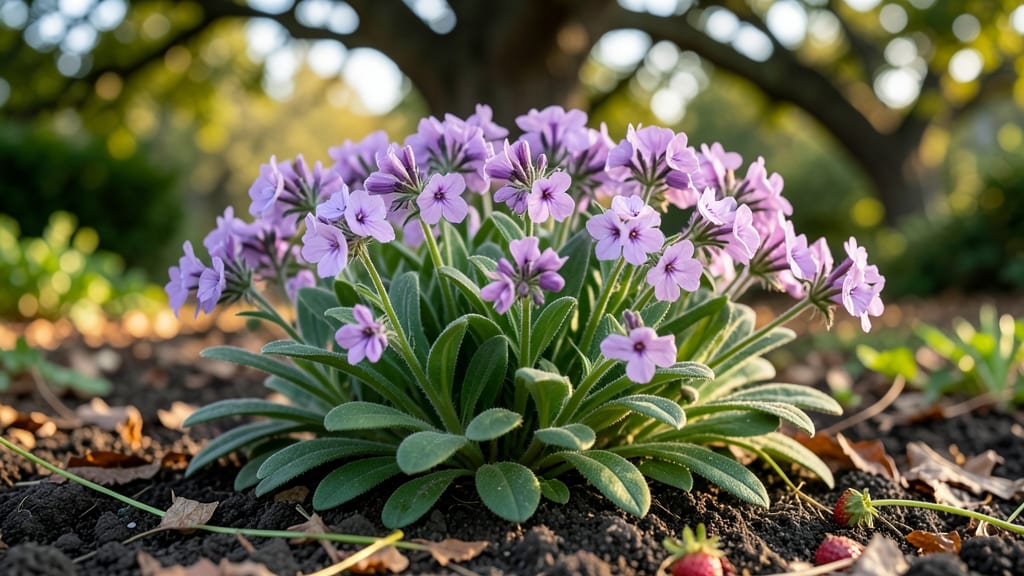
The woodland phlox perennial thrives in shaded gardens with its fragrant lavender or pink blooms, spreading effortlessly through underground runners while demanding almost no maintenance. For best results, plant it in consistently moist yet well-draining soil to encourage vigorous growth and abundant springtime flowers.
The woodland phlox perennial is a shade-lover's dream, perfect for understory plantings where sunlight is limited. 🌿 Its broad leaves capture even faint light, while its fibrous root system efficiently stores moisture—ideal for woodland gardens.
Unlike its sun-loving cousins, this variety thrives in dappled light conditions, making it a low-maintenance ground cover that spreads naturally without becoming invasive. The key to its success lies in its adaptability: it tolerates partial shade while still producing those signature delicate blooms that perfume the air in early spring.
What sets woodland phlox apart is its ability to create naturalizing colonies through its underground runners. This means once established, it requires minimal intervention—just occasional division every few years to control spread.
The plant's resilience extends to soil preferences too: it performs best in humus-rich, well-drained soil that stays consistently moist but never waterlogged. For gardeners seeking effortless beauty in shady corners, woodland phlox delivers both visual interest and fragrance with virtually no upkeep required.
💡 In This Article
- Why Woodland Phlox Thrives in Shade Gardens
- Planting and Maintaining Woodland Phlox for Natural Spread
Why woodland phlox thrives in shade gardens
Woodland phlox has evolved to dominate shaded understories thanks to its specialized leaf structure. The broad, slightly fuzzy leaves (measuring about 1-3 inches wide) create a larger surface area for capturing dim light, while their vertical orientation minimizes self-shading.
This adaptation allows the plant to photosynthesize efficiently in 20-50% sunlight conditions, where most garden flowers would struggle. The leaves' waxy coating also helps reduce water loss, making them perfectly suited for woodland environments where moisture is abundant but direct sun is scarce.
The real secret lies in its root system. Unlike sun-loving phlox varieties, woodland phlox develops a dense network of fibrous roots that spread horizontally just beneath the soil surface.
These roots create a moisture reservoir during wet periods, allowing the plant to survive dry spells that might stress other shade-loving species. The roots also produce those characteristic underground runners that enable natural spread—a process called stolon formation.
This growth habit creates colonies that gradually fill in garden spaces without becoming invasive, unlike aggressive ground covers.
What most gardeners don't realize is how woodland phlox's growth form actually improves its shade tolerance. The plant typically grows 12-18 inches tall but sprawls outward rather than upward, creating a low, dense mat that shades its own roots.
This self-shading effect maintains cooler soil temperatures, which is crucial in hot climates where even partial shade can become stressful. The trade-off?
Its blooms (typically 1/2-3/4 inch wide) are smaller than sun-loving phlox varieties, but their fragrance more than makes up for it—releasing a sweet, honey-like scent that's most intense on cool spring mornings.
Comparing woodland phlox to its sun-loving relatives reveals fascinating differences. Garden phlox (Phlox paniculata), for example, develops deep taproots to access water and produces taller stems (up to 3 feet) to reach sunlight.
Woodland phlox's shallow roots and sprawling habit make it far more drought-tolerant once established, but it won't produce the same dramatic flower spikes. The trade-off is a plant that thrives where others fail, creating lush ground cover in areas that would otherwise remain bare.
This makes it particularly valuable in woodland gardens where sunlight is filtered through tree canopies.
The plant's natural habitat provides clues to its care requirements. Native to eastern North America's woodlands, it grows alongside ferns, trillium, and other shade-tolerant species in soil that's rich in organic matter but never waterlogged.
The key to replicating these conditions is maintaining consistent moisture without soggy soil—a balance that's easier to achieve with mulch. A 2-3 inch layer of wood chips or leaf mold helps retain moisture while preventing the soil from becoming compacted, which woodland phlox roots particularly dislike.
One surprising advantage of woodland phlox's shade adaptation is its pest resistance. The fuzzy leaf surface deters many common garden pests that would otherwise target softer foliage. While it's not completely immune to slugs or aphids, these problems are far less severe than with sun-loving varieties.
The plant's natural resilience means you'll spend less time on pest control and more time enjoying its effortless beauty. This makes it an ideal choice for gardeners seeking low-maintenance solutions for shady areas.