
Plants
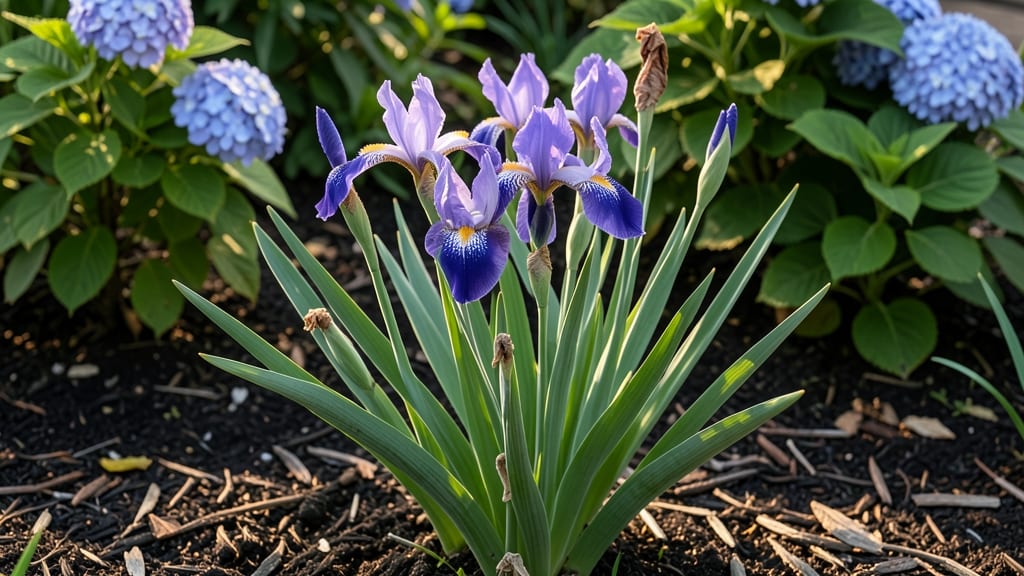
Dutch irises aren't true perennials—they go dormant each year but regrow from underground bulbs, acting like perennials while technically being rhizomatous plants with seasonal cycles.
While they don't produce new foliage from the same roots year after year like classic perennials, Dutch irises store energy in their thick, fleshy bulbs during dormancy. 🌱 This underground survival strategy lets them bounce back reliably each spring, often outlasting true perennials in harsh conditions.
The key difference is their bulb-based growth pattern rather than persistent root systems—think of them as "bulb perennials" that reset annually while maintaining their long-term presence in gardens.
This unique cycle explains why gardeners frequently mistake them for traditional perennials. The misconception stems from their reliable annual return rather than their botanical classification. Their ability to self-propagate through bulb offsets also contributes to their persistent garden presence, creating dense clumps that mimic perennial behavior over decades.
💡 In This Article
- Why Dutch Irises Die Back and Regrow
- Caring for Dutch Iris Bulbs Over Seasons
Why Dutch irises die back and regrow
Dutch irises rely on a specialized survival mechanism: their thick, fleshy bulbs act as natural energy reserves. Unlike true perennials that maintain active root systems year-round, Dutch irises store carbohydrates, proteins, and water in these underground structures during dormancy.
This stored energy fuels their rapid regrowth each spring, often within 3-4 weeks after frost ends. The bulbs can remain dormant for months in winter, with metabolic activity dropping to nearly 1-2% of summer levels—a survival adaptation seen in many bulbous plants like tulips and daffodils.
The dormancy cycle begins when foliage yellows in late summer, signaling the plant to redirect nutrients back to the bulbs. This process, called nutrient translocation, occurs over 6-8 weeks and is triggered by shortening daylight hours.
What makes Dutch irises unique is their rhizomatous growth habit—while they produce bulbs, they also develop horizontal underground stems (rhizomes) that form new bulblets. This dual system explains why they spread aggressively while maintaining their annual dieback pattern, unlike true perennials that rely solely on persistent roots.
In cold climates, Dutch irises enter a deeper dormancy phase where bulbs harden and protect against freezing. Their optimal winter survival range is 20-40°F, with bulbs able to withstand brief exposures to -10°F if properly planted.
This cold tolerance contrasts with tropical perennials like cannas, which die back in freezing conditions. The bulb's protective layers (tunics) prevent moisture loss and insulate against temperature fluctuations, allowing them to remain viable for 5-10 years with proper care—a lifespan comparable to many true perennials.
Botanically, Dutch irises belong to the Iris × hollandica group, which combines traits from European and North American species. Their growth cycle differs fundamentally from true perennials like daylilies (Hemerocallis), which maintain continuous root growth throughout the year.
While daylilies may show some winter dieback, they never achieve the complete dormancy state of Dutch irises. This fundamental difference explains why gardeners often classify Dutch irises as perennials—they return reliably each year despite their technical bulb-based growth pattern.
What most gardeners miss is the seasonal reset these plants undergo. Each spring, Dutch irises emerge from the same bulb that went dormant the previous year, unlike true perennials that develop new shoots from established roots.
This annual regeneration explains their ability to "reboot" after neglect or harsh winters, making them more resilient than many perennial alternatives. Their bulb system also allows them to self-propagate through offsets, creating dense clumps that persist for decades—a characteristic often associated with perennial plants.
Consider this comparison: A hosta perennial may produce new leaves from the same crown each year, while a Dutch iris produces entirely new foliage from a freshly energized bulb.
This bulb-based regeneration is why Dutch irises can recover from damage that would kill true perennials, such as severe winter heaving or summer drought.
Their survival strategy combines the reliability of perennials with the protective dormancy of bulbs, creating a hybrid growth pattern that explains their enduring popularity in gardens worldwide.