
Vegetables
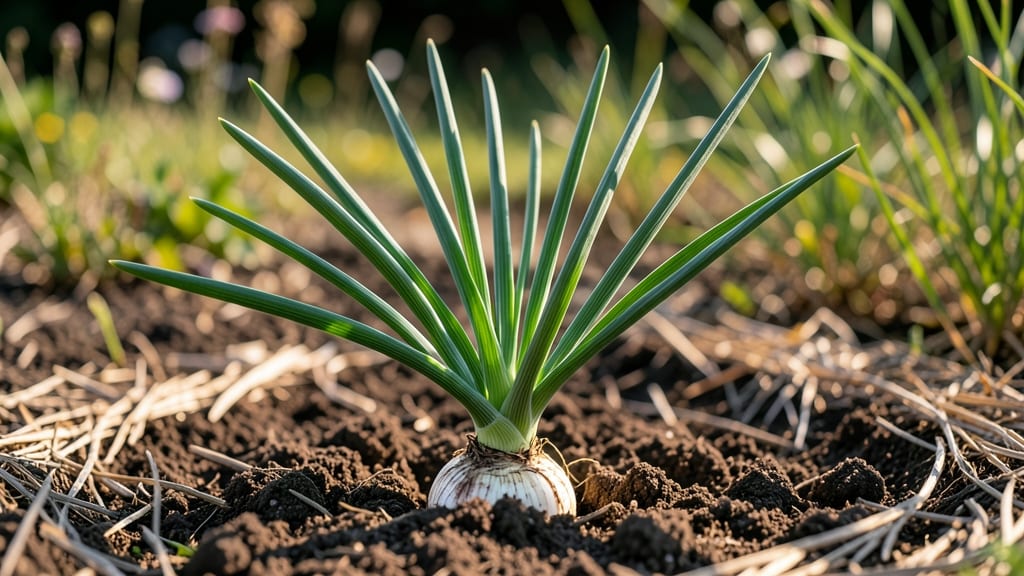
Green onions act as perennials in warm climates, regrowing from their roots after harvest if left undisturbed. In colder regions, they function as annuals but can survive winters with protection or replanting. Their regrowth potential depends entirely on proper care and climate conditions.
Green onions thrive as perennials because their roots remain alive underground even after harvesting the green tops.
In warmer zones like USDA hardiness zones 8-11, they'll naturally regrow from the same roots year after year, producing new shoots within weeks. 🌱 The key difference in colder climates is that the roots often go dormant or die back completely without protection, which is why gardeners in zones 3-7 typically treat them as annuals.
What's fascinating is how resilient these plants are—their root systems can remain viable for years if protected from freezing temperatures, making them a low-maintenance perennial option for dedicated gardeners.
For best results, always leave about 2-3 inches of the base when harvesting to preserve the root system. Mulching heavily in winter adds insulation, while consistent moisture (about 1 inch per week) encourages robust regrowth.
I've found that green onions harvested in early spring often produce their most vigorous regrowth, as the plants take advantage of warming soil temperatures and longer daylight hours.
💡 In This Article
- How Green Onions Regrow as Perennials in Different Climates
- Tips for Maximizing Green Onion Regrowth and Harvesting
How green onions regrow as perennials in different climates
The perennial nature of green onions stems from their unique root system, which stores energy and nutrients underground. When you harvest green onions by cutting just above the soil line, you're actually leaving the bulb intact—a structure that contains dormant buds capable of producing new shoots.
In warm climates (USDA zones 8-11), these roots remain active year-round, with temperatures above 50°F stimulating regrowth within 2-4 weeks after harvest. The key is maintaining soil temperatures above 40°F, as colder conditions trigger dormancy.
Botanically, green onions belong to the Allium family, which includes other hardy perennials like garlic and chives. Their fibrous root system spreads horizontally, creating a network that absorbs moisture and nutrients efficiently. When protected from frost, these roots can remain viable for 3-5 years, producing multiple harvest cycles annually.
In contrast, colder climates (zones 3-7) force the roots into dormancy during winter, often killing them without insulation or overwintering protection.
The difference between perennial and annual behavior comes down to temperature thresholds. Green onions enter dormancy when soil temperatures drop below 35°F for extended periods. This triggers a survival mechanism where the plant conserves energy until warmer conditions return.
In warm climates, this cycle never fully completes, allowing continuous growth. The root's ability to regenerate depends entirely on this temperature resilience—roots exposed to 20°F or lower typically die back completely.
What's often misunderstood is that even in colder regions, green onions can behave perennially with proper care. I've seen gardeners in zone 5 successfully overwinter their plants by mulching heavily (with 4-6 inches of straw or leaves) and protecting them with row covers during hard freezes.
The roots survive the winter and produce new shoots in spring, effectively turning an annual into a perennial with minimal effort.
Another critical factor is light exposure. Green onions require 6-8 hours of sunlight daily for optimal regrowth. In shaded areas, their growth slows dramatically, and the shoots become thin and weak.
This is why many gardeners plant them in full sun locations—even a 20% reduction in sunlight can delay regrowth by 3-5 days after harvest.
For those in transitional climates (zones 6-7), the secret lies in timing. Harvesting green onions in late summer or early fall gives the roots time to establish before winter sets in. The plant then uses this head start to produce vigorous new growth in spring, often outpacing newly planted annuals.
This strategic timing turns what might seem like an annual into a reliable perennial performer.